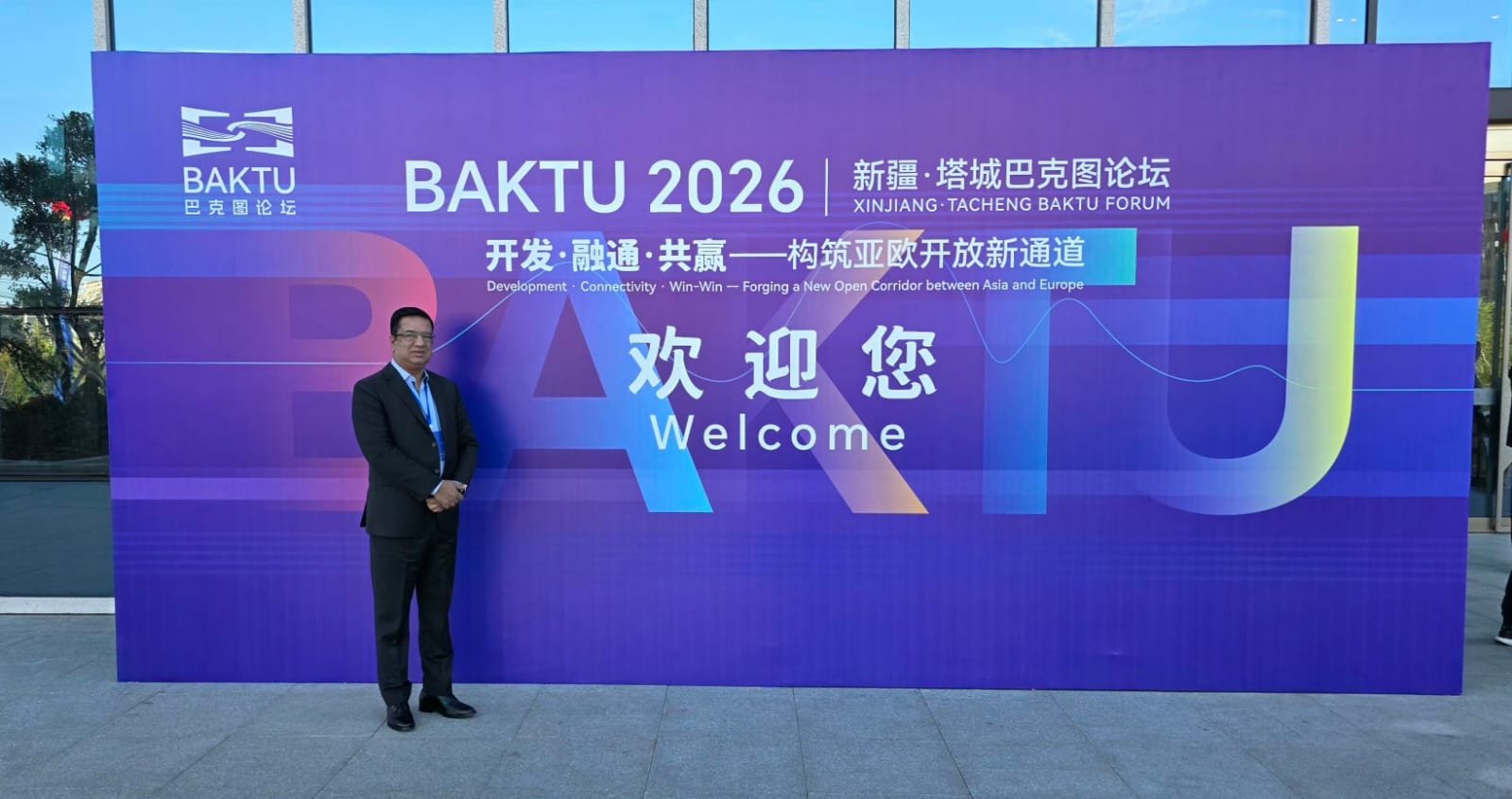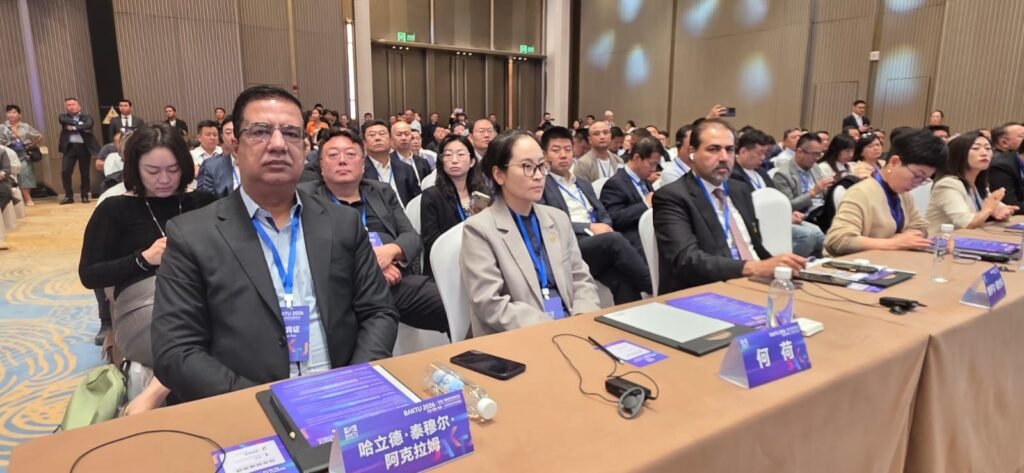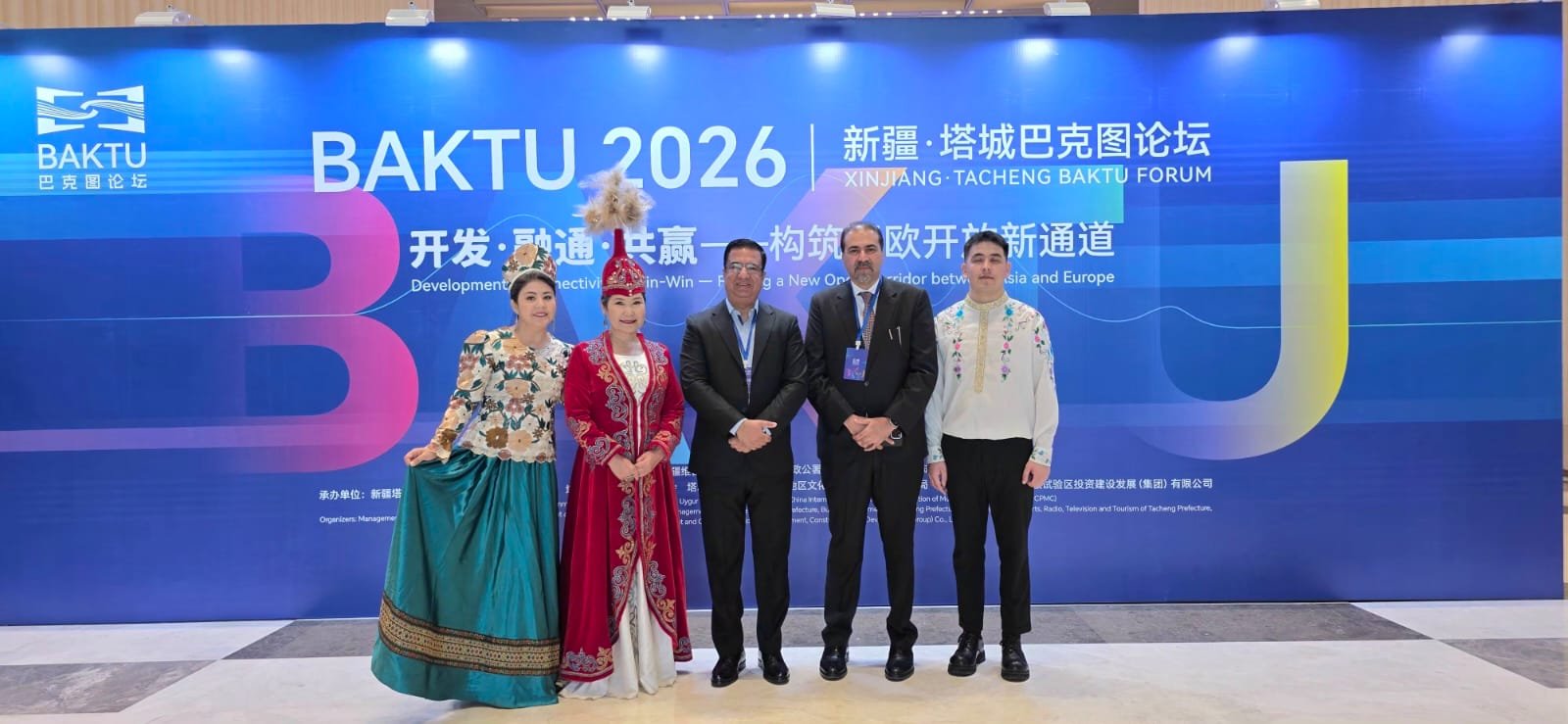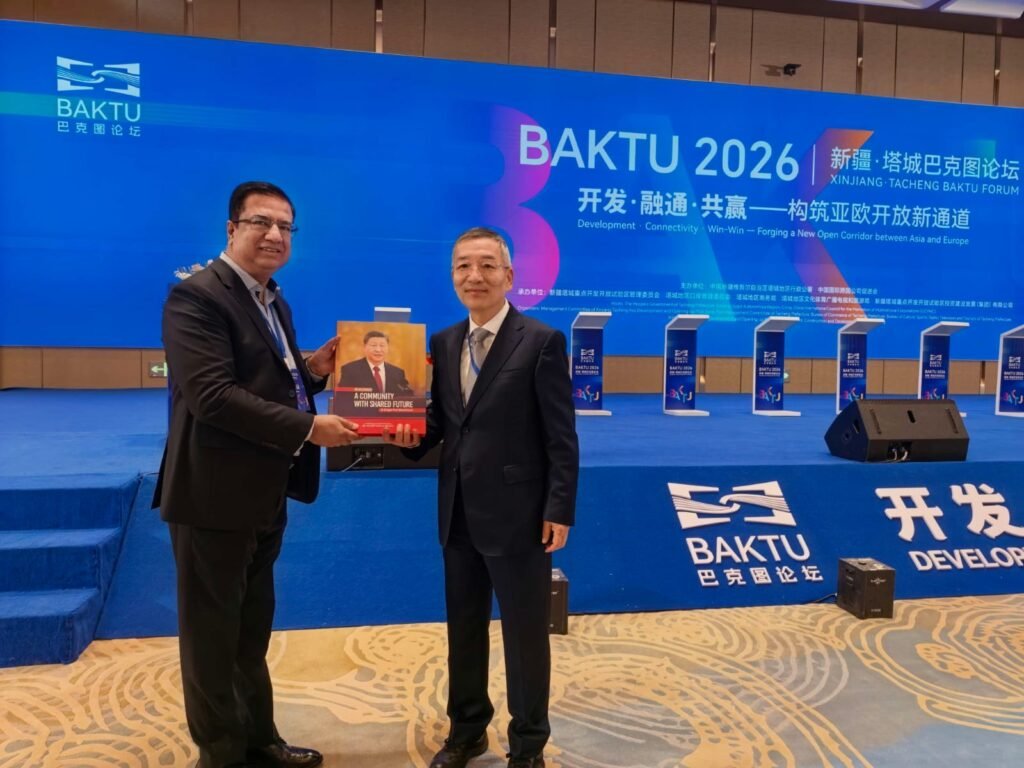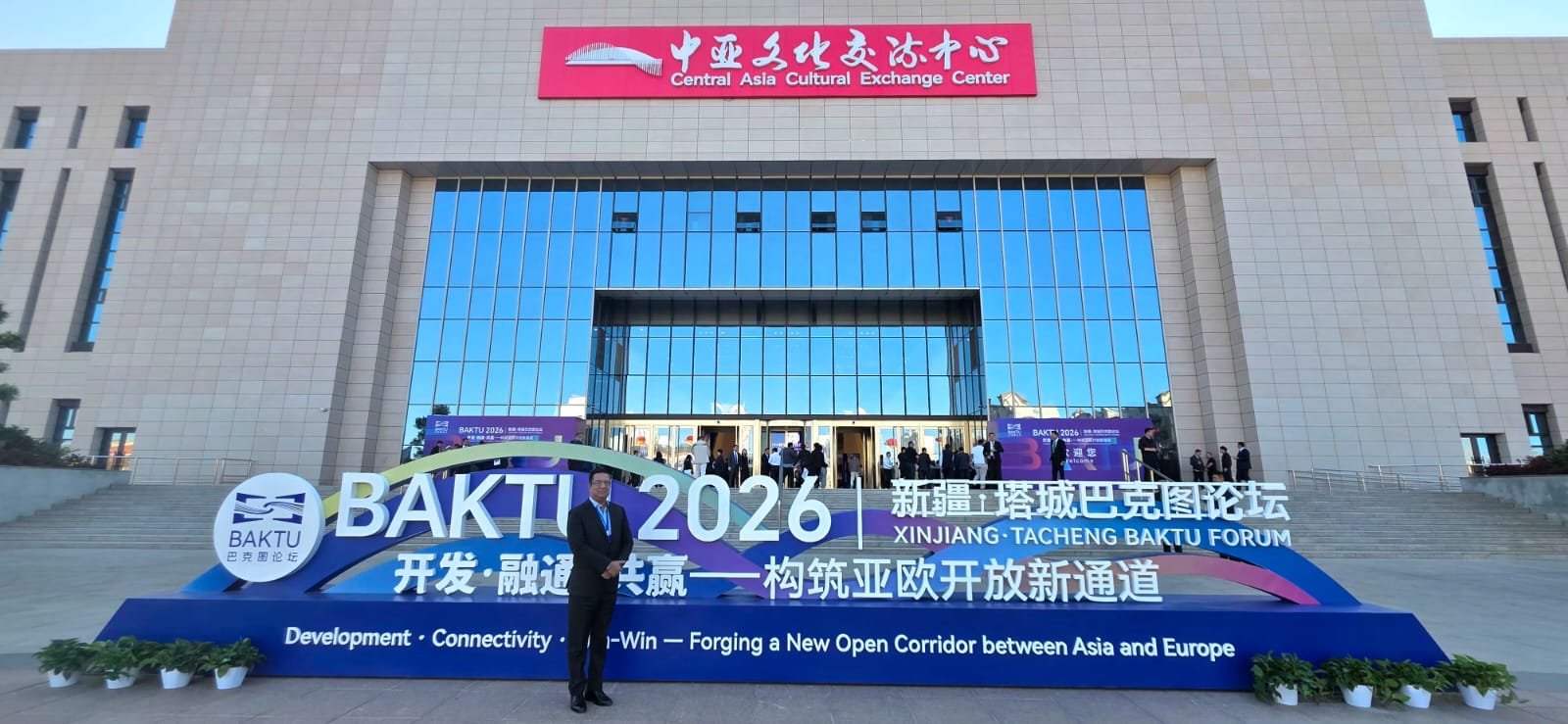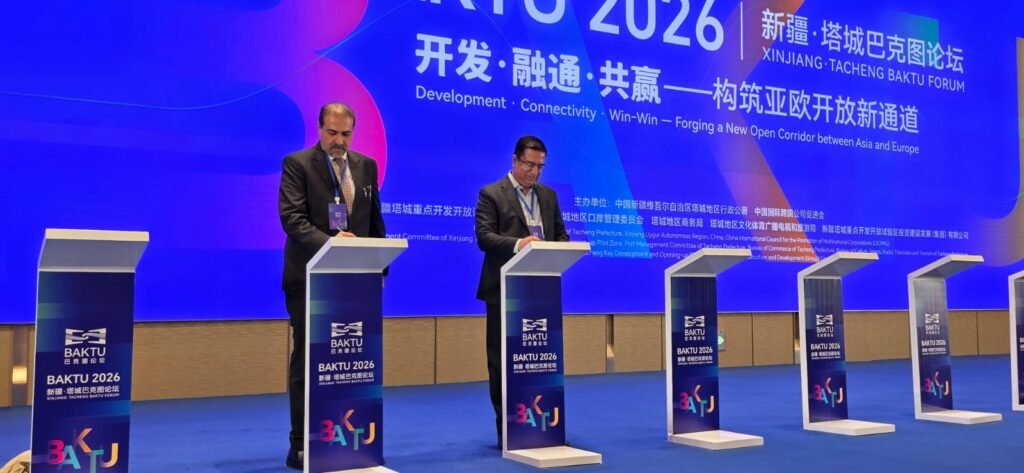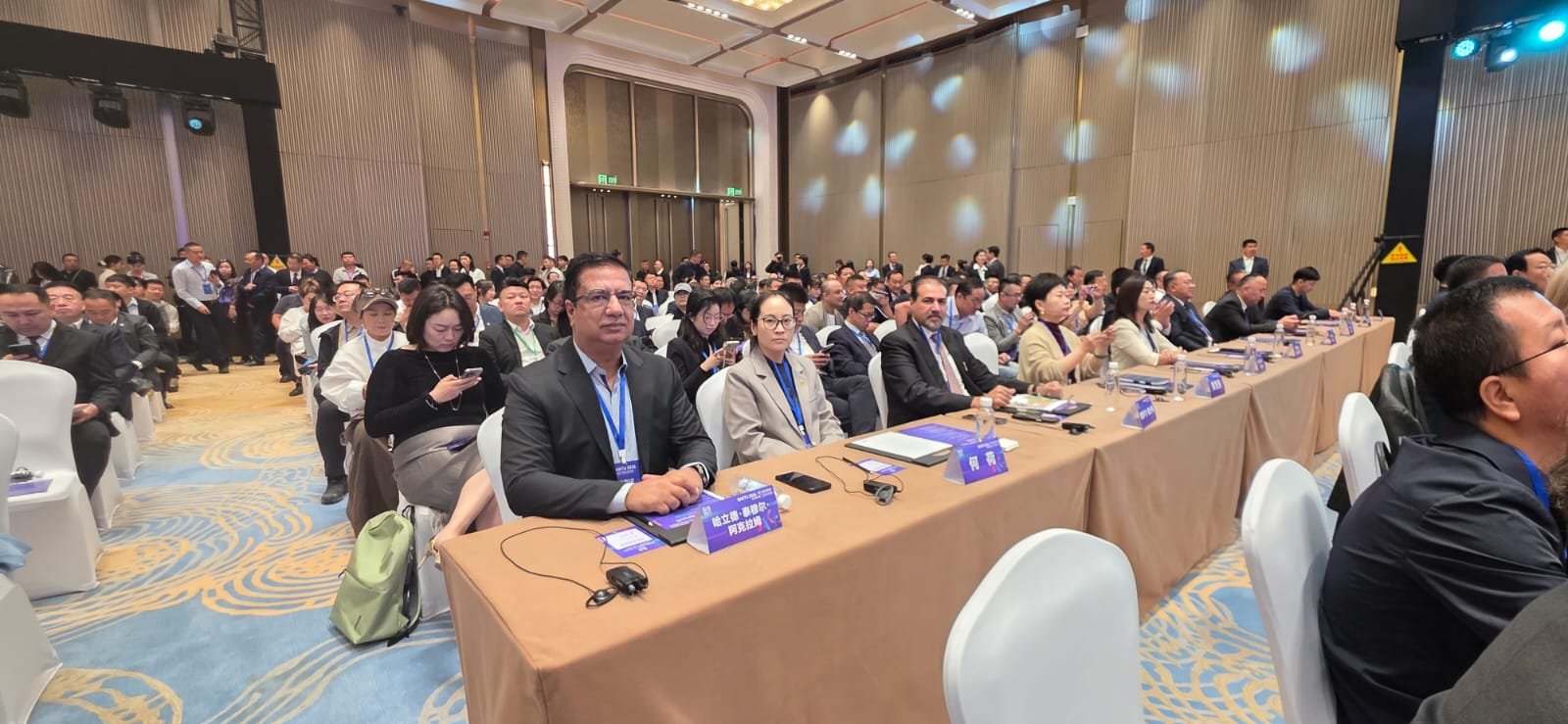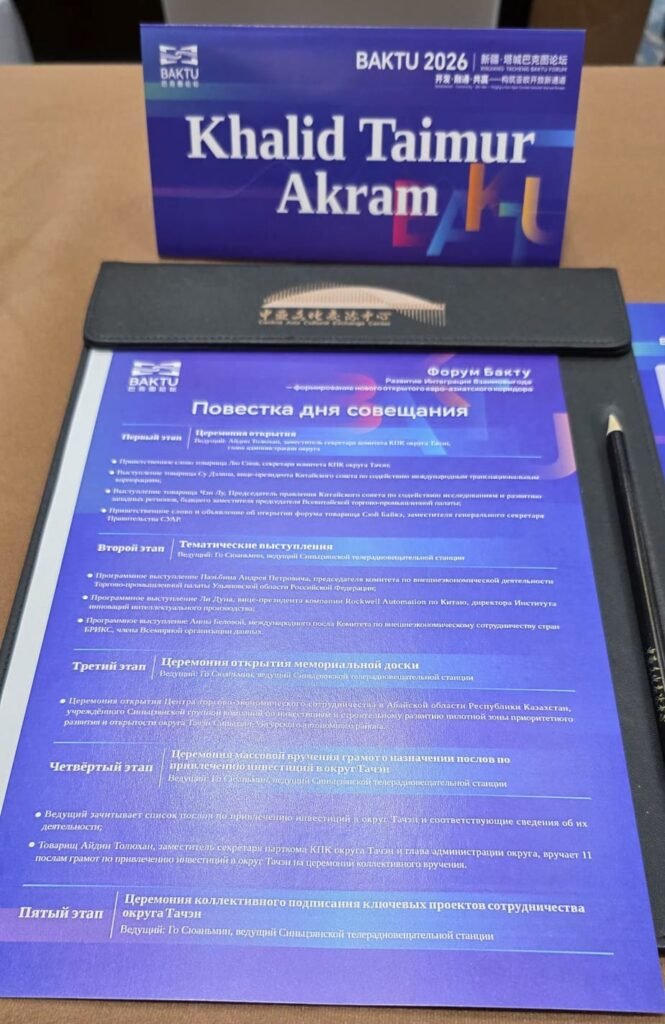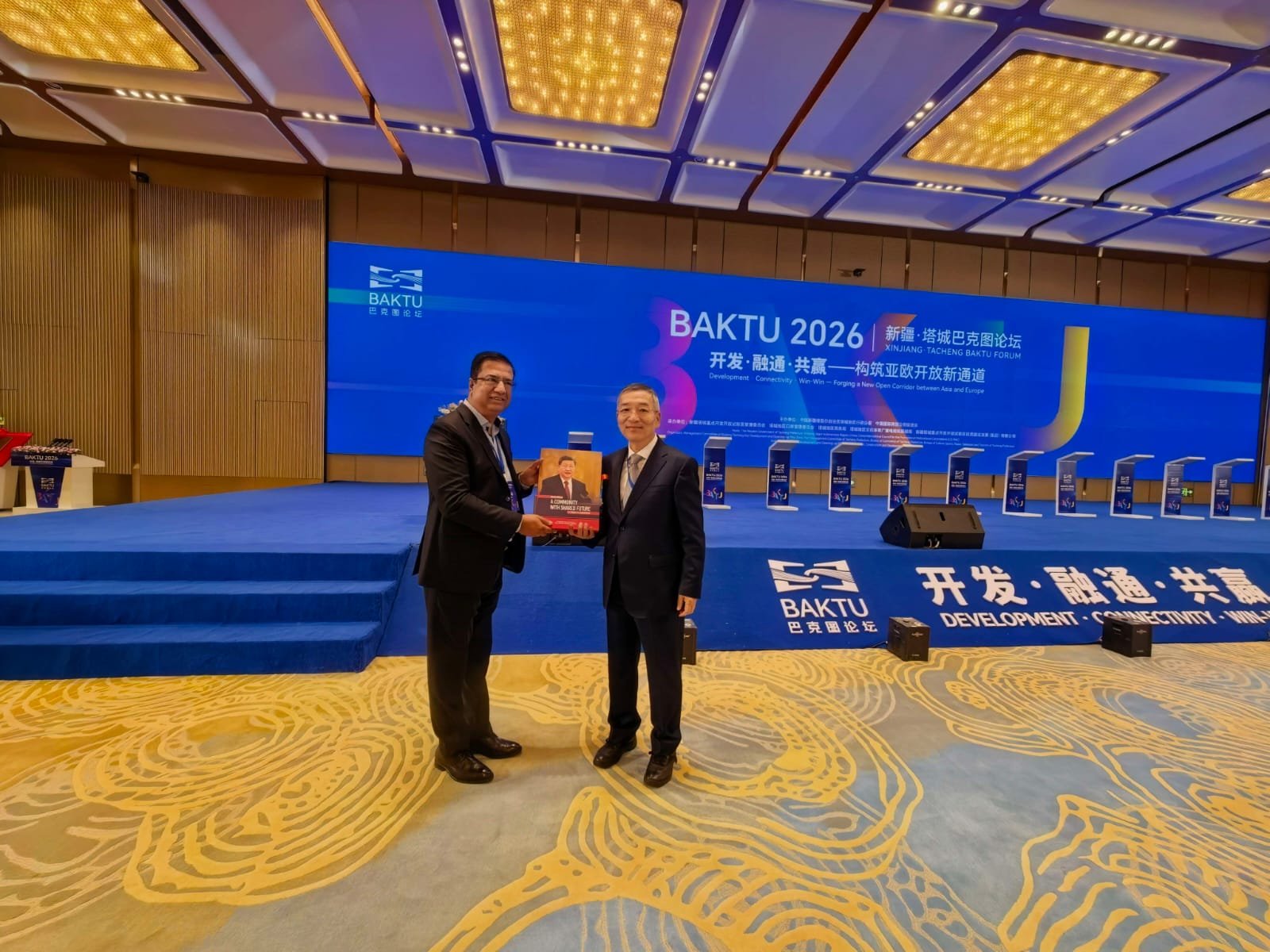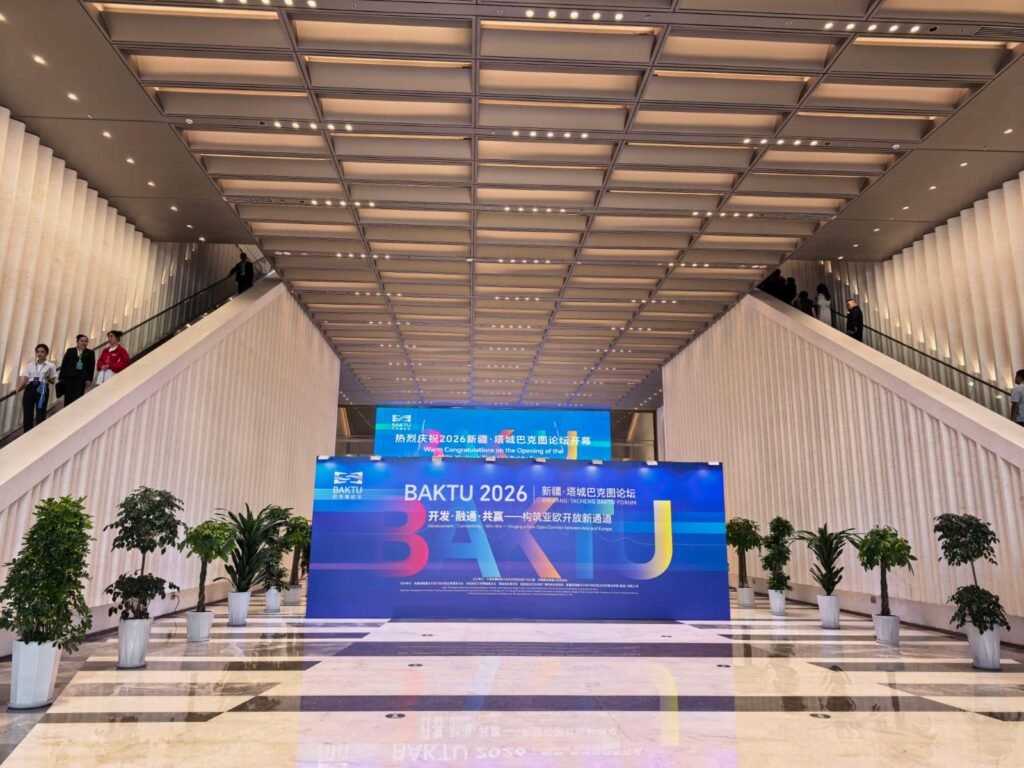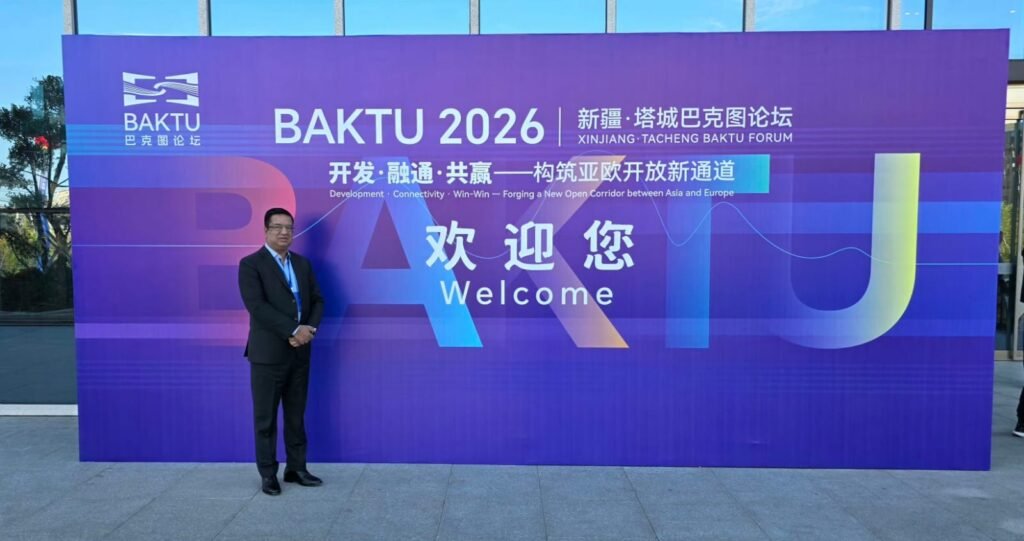
From September 16–18, 2026, Mr. Khalid Taimur Akram participated in the 2026 Xinjiang–Tacheng Baketu Forum, held from 16 to 18 September 2026 at the Central Asia Cultural Exchange Center in Tacheng City, Xinjiang, China.
The Forum was jointly organized by the Tacheng Prefecture Administrative Office and the China Association for the Promotion of International Multinational Corporations. Held under the theme “Development · Connectivity · Win-Win Cooperation — Building a New Open Corridor in the Heartland of Eurasia,” the Forum brought together government officials, business leaders, scholars, international organizations, and representatives of multinational enterprises to explore new opportunities for regional economic cooperation, cross-border connectivity, trade, investment, logistics, and cultural exchange.
The Forum aimed to advance high-quality Belt and Road cooperation, strengthen the role of Tacheng as an important gateway within the Silk Road Economic Belt, and promote greater economic and trade interaction between China, Central Asia, and international markets. Discussions also highlighted Xinjiang’s geographical advantages and its potential to facilitate cross-border industrial cooperation, logistics connectivity, and new avenues for international investment.
The opening ceremony featured remarks by senior Chinese officials and distinguished international representatives. The session was moderated by Aydin Tuoliuhan, Deputy Secretary of the Tacheng Prefectural Party Committee and Commissioner of the Prefectural Administrative Office, while Liu Xin, Secretary of the Tacheng Prefectural Party Committee, delivered the welcome remarks. The opening program also included keynote speeches, government and international organization representatives, multinational business leaders, investment promotion activities, and presentations on major cooperation projects.
Mr. Khalid Taimur Akram participated in the Forum as an international representative and engaged with business leaders, scholars, and experts from different countries. His participation reflected his continued engagement with Eurasian economic and regional cooperation, particularly in areas related to connectivity, trade, investment, infrastructure, logistics, and cross-border partnerships.
During the discussions, Mr. Akram highlighted the importance of strengthening economic connectivity across Eurasia and creating practical opportunities for cooperation between China, Central Asia, South Asia, and other regional markets. He emphasized the strategic importance of efficient transport and logistics networks, cross-border industrial cooperation, investment facilitation, digital transformation, and stronger business-to-business linkages in supporting regional economic development.
The Forum featured four major parallel symposiums. The first, “Connecting Asia and Europe — Investment Promotion Conference on Economic and Trade Cooperation at Baketu Port and New Opportunities for Cross-Border Industries,” examined the role of Baketu Port in strengthening trade links between Asia and Europe and explored opportunities for cross-border industries and investment.
The second session, “Building Dreams along the Silk Road, Revitalizing the Border through Railways — Investment Promotion Conference on the Third China-Kazakhstan Railway and Dedicated Railway Line Global Logistics Corridor,” focused on railway connectivity and the development of new logistics corridors. Participants discussed how improved railway infrastructure can strengthen supply chains, facilitate international trade, and enhance connectivity between China, Kazakhstan, Central Asia, and wider Eurasian markets.
The third symposium, “Joining Forces around the Silk Road Hub and Building Cross-Border Cultural Tourism Together,” focused on cultural and tourism cooperation. Discussions highlighted the importance of cross-border tourism, cultural exchange, heritage promotion, and people-to-people connectivity in strengthening relations among countries along the Silk Road.
The fourth session, “Win-Win Cooperation along the Silk Road, Empowering Cross-Border Development — China–Central Asia Business Leaders Economic and Trade Symposium,” brought together business leaders and representatives to discuss trade, investment, logistics, industrial cooperation, and economic development. Particular attention was given to strengthening business partnerships, expanding cross-border economic activity, and utilizing digital technologies to support modern trade and industrial development.
The Forum’s broader program also included investment promotion activities, project signing ceremonies, the appointment of Tacheng Prefecture Investment Promotion Ambassadors, and discussions concerning international investment promotion networks. These activities demonstrated the Forum’s focus on translating dialogue into practical cooperation and strengthening links between government institutions, enterprises, and international partners.
The three-day program also included an exhibition of distinctive industries and products, government-enterprise and business-to-business negotiations, and inspection activities covering Baketu Port, key enterprises, cross-border industrial projects, and cultural tourism attractions. These activities provided participating guests with a direct understanding of Tacheng’s industrial capabilities, development priorities, and investment environment.
Mr. Khalid Taimur Akram’s participation in the 2026 Xinjiang–Tacheng Baketu Forum provided an opportunity to exchange views on regional connectivity, economic cooperation, investment, logistics, and cross-border development. His engagement further contributed to international dialogue on strengthening cooperation across the Eurasian region and exploring new avenues for mutually beneficial partnerships.
The Forum concluded with an emphasis on development, connectivity, and win-win cooperation, highlighting the importance of continued international collaboration in building an open, interconnected, and dynamic Eurasian economic corridor.