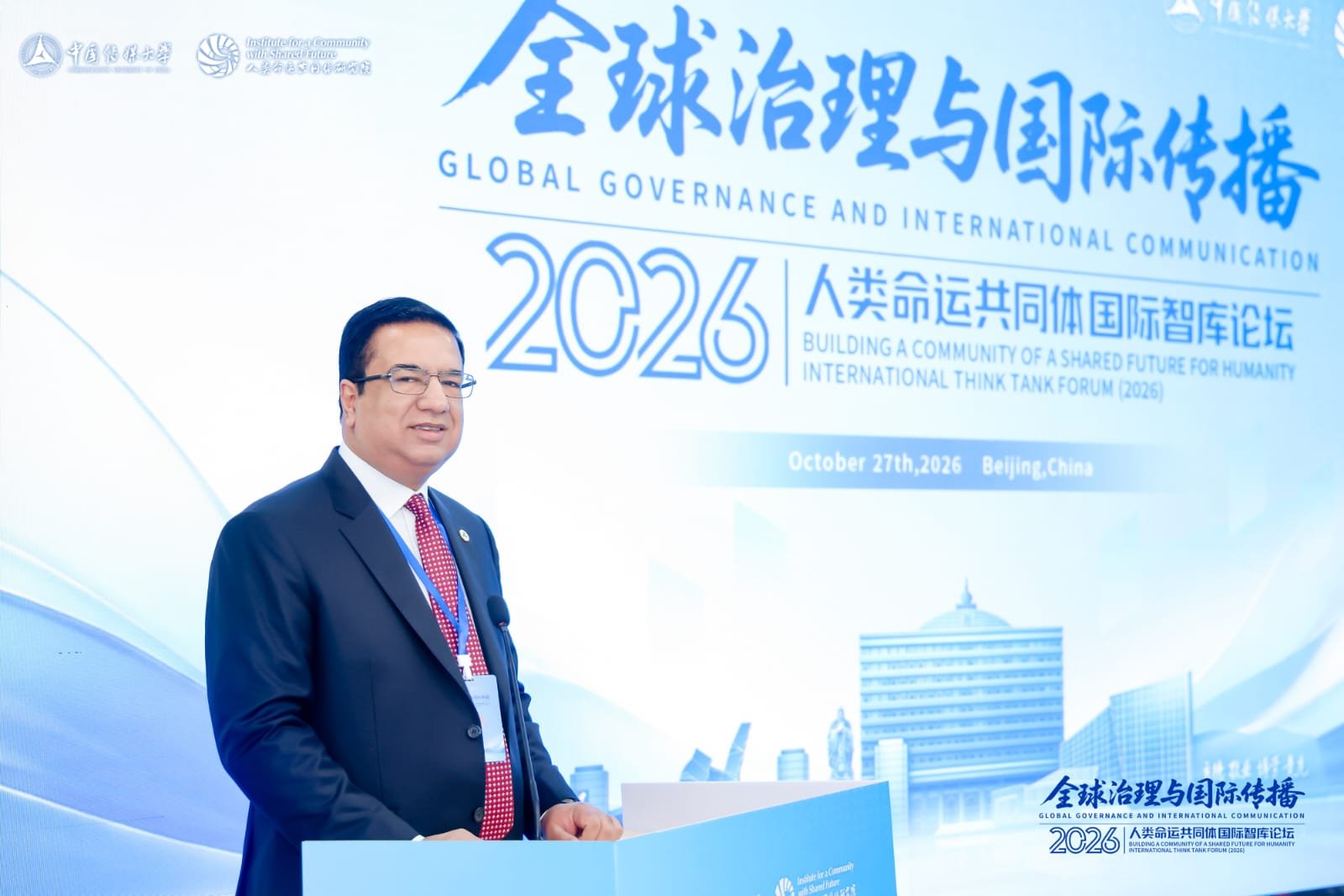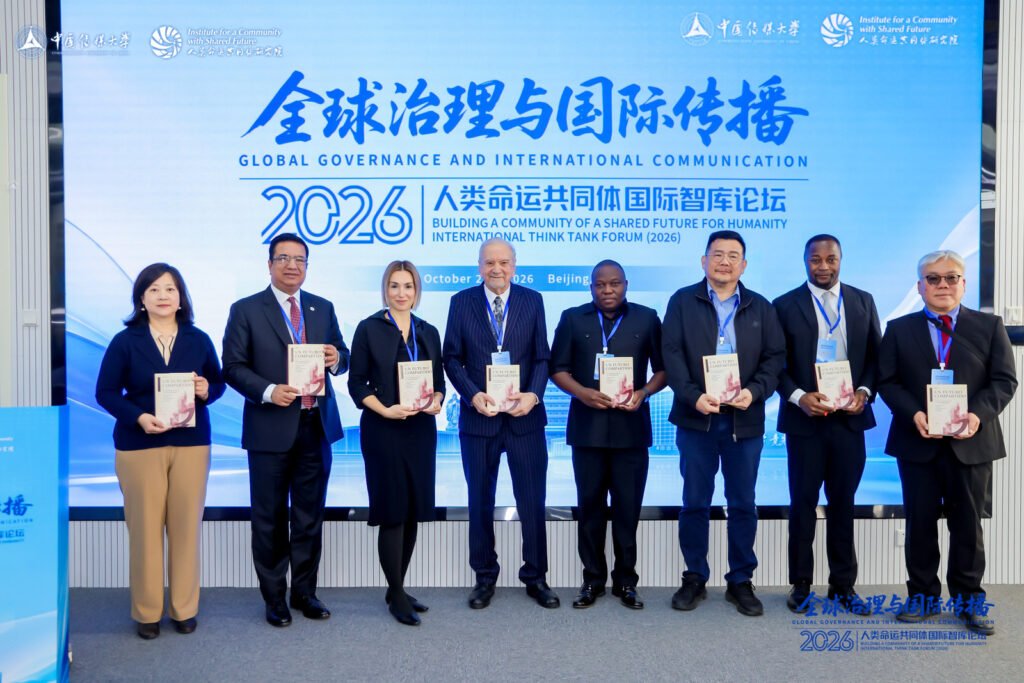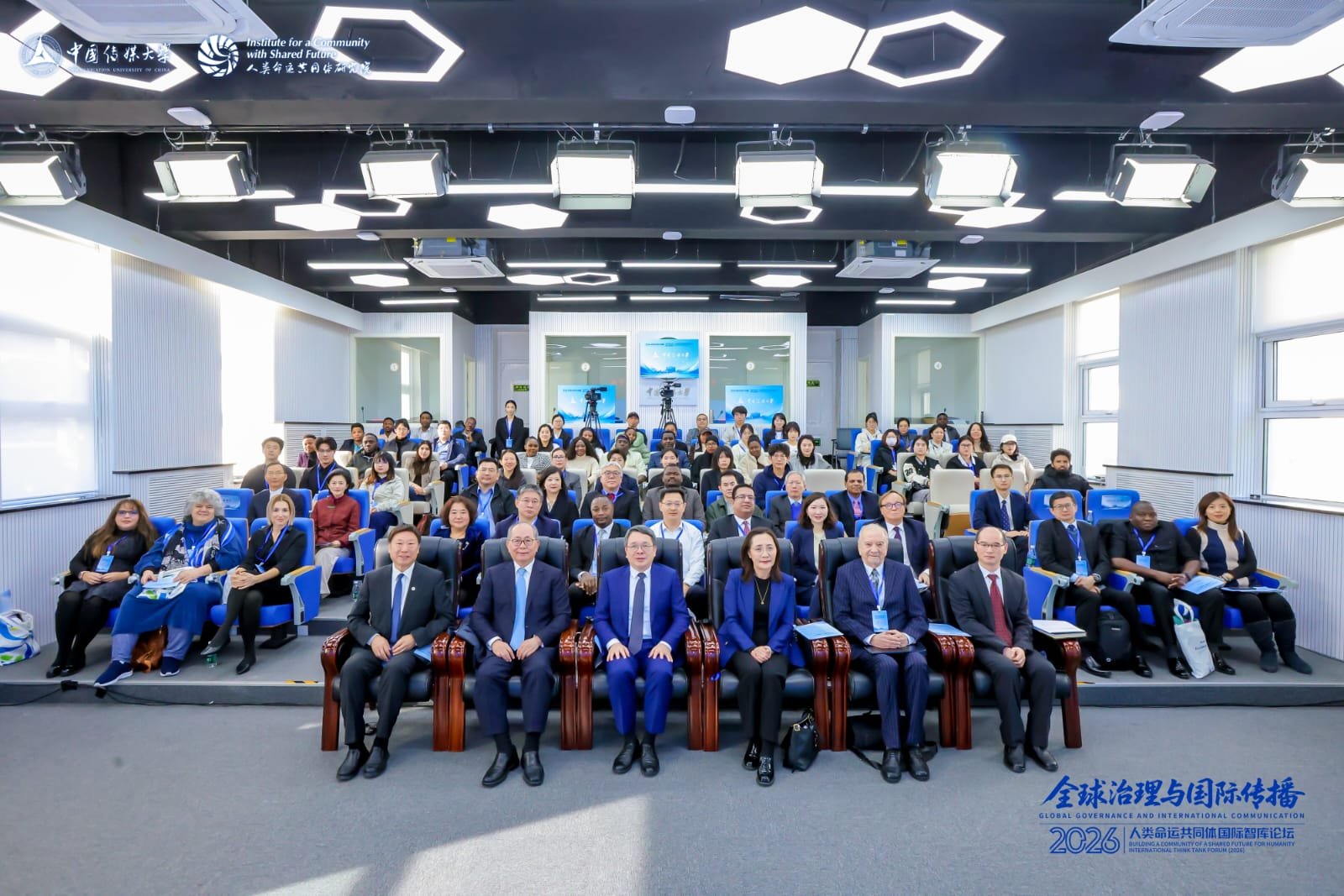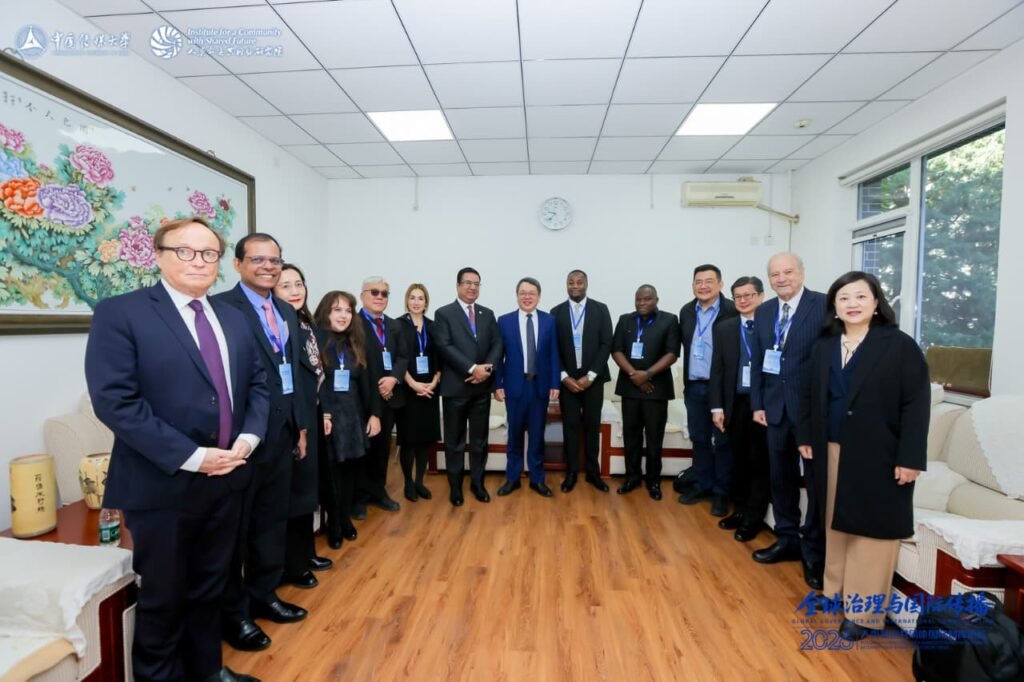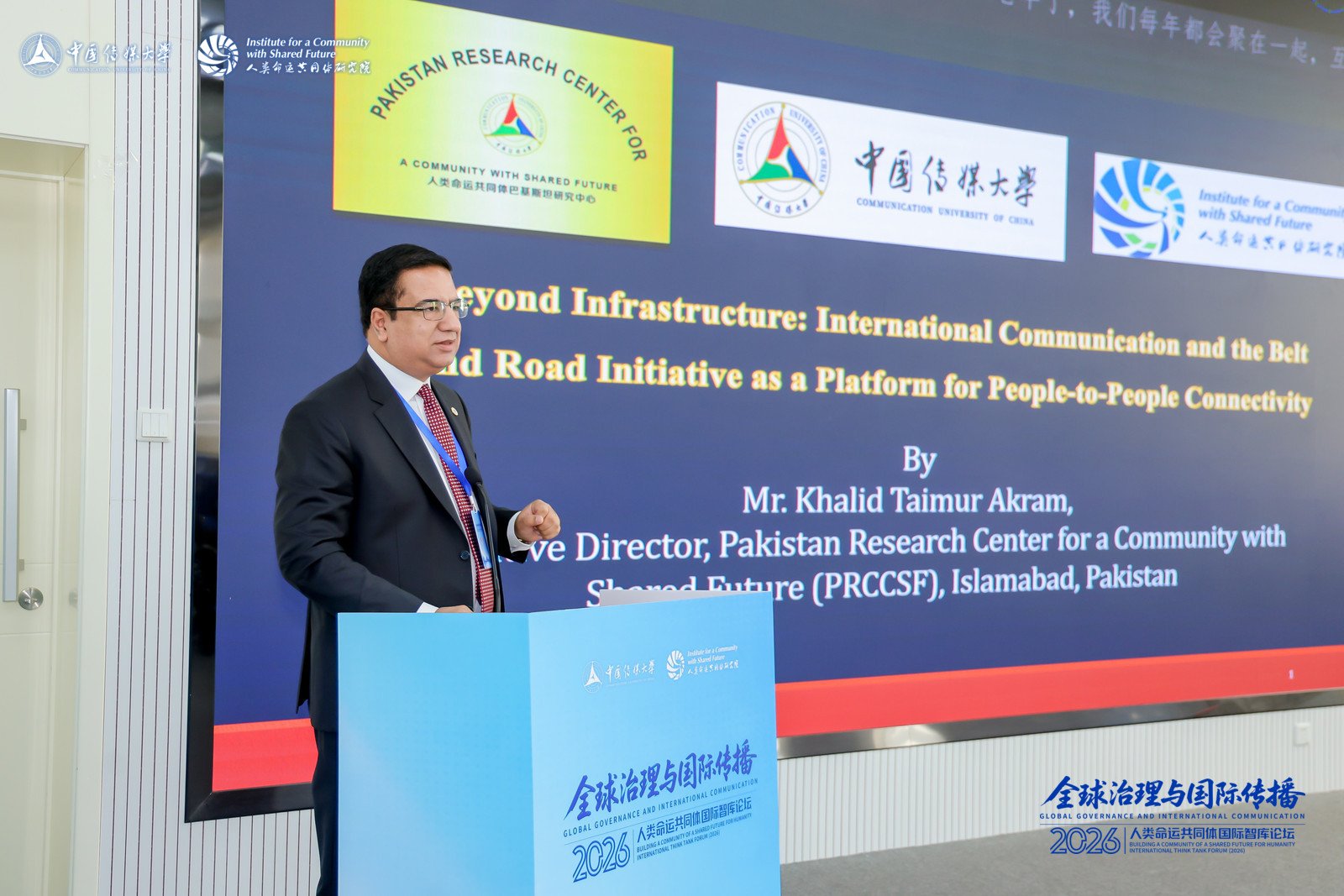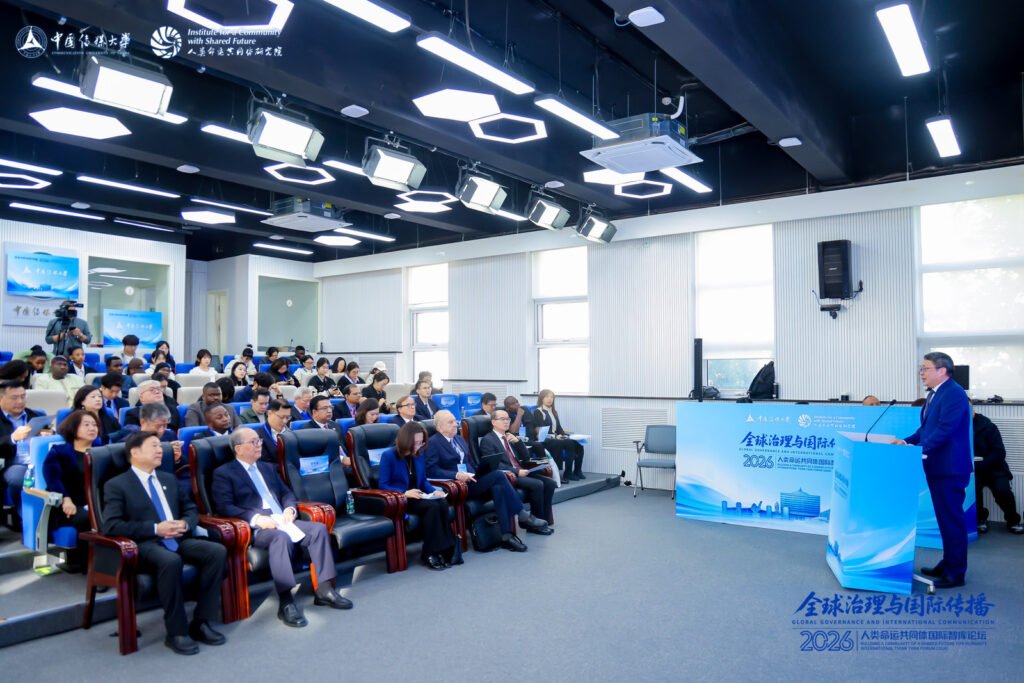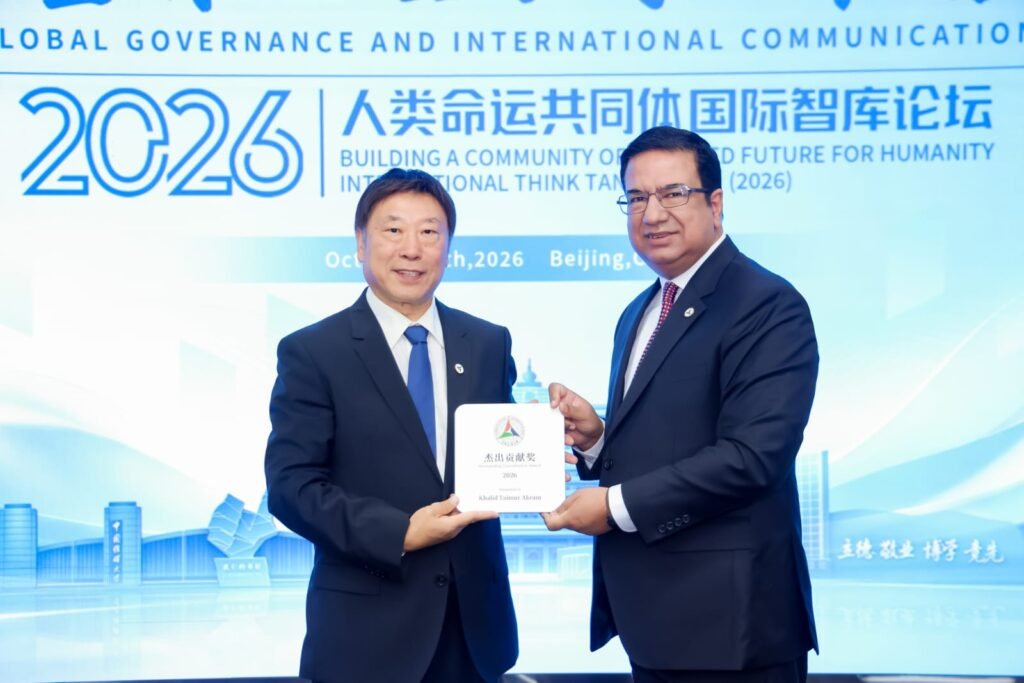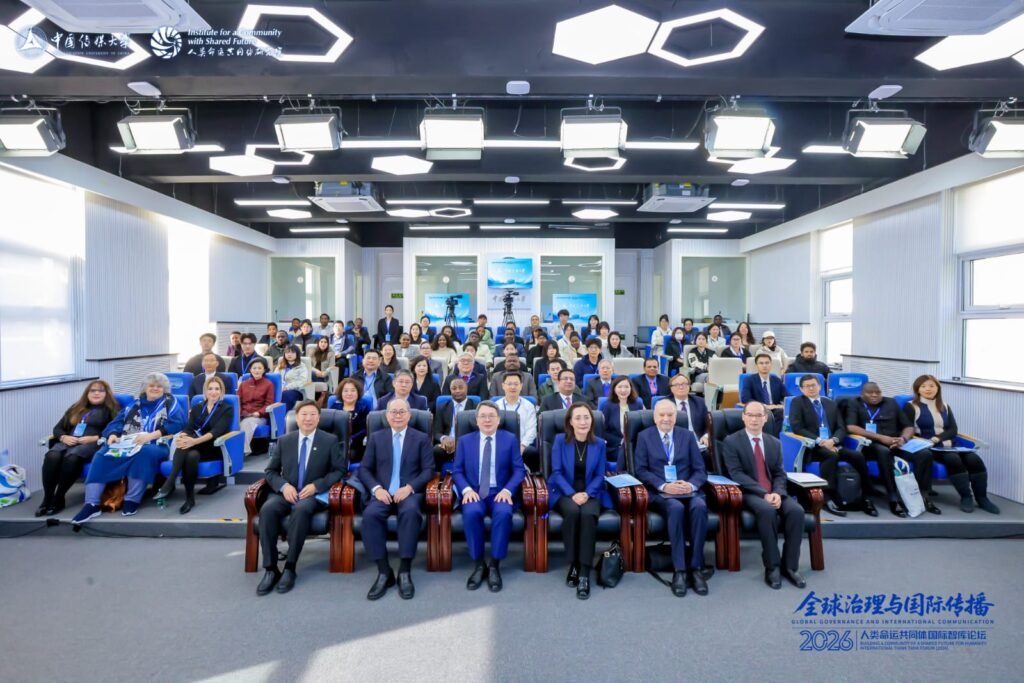
From 27–28 October 2026, Mr. Khalid Taimur Akram, Executive Director of the Pakistan Research Center for a Community with Shared Future (PRCCSF), Islamabad, participated as a keynote speaker at the 2026 International Think Tank Forum, titled “Building a Community of a Shared Future for Humanity: Global Governance and International Communication,” held at the Communication University of China (CUC), Beijing, China. The event also brought together the Heads of International Institutions affiliated with the Institute for a Community with Shared Future (ICSF), CUC, with institutional leaders and experts from 12 countries across Asia, Europe, Africa, and Latin America.
The annual meeting served as an international platform for institutional leaders, scholars, and think tank representatives from Pakistan, China, Argentina, Sri Lanka, Angola, Tanzania, Venezuela, France, the United Kingdom, Zimbabwe, Japan, and Malaysia to exchange perspectives on global connectivity, strategic communication, multilateral cooperation, global governance, and the expanding role of the Belt and Road Initiative (BRI) in promoting international development.
The participants were welcomed by the Mr. Zhang Shuting, President of Communication University of China and Professor Li Huailiang, Dean of the Institute for a Community with Shared Future, whose efforts continue to support international academic partnerships and institutional dialogue.
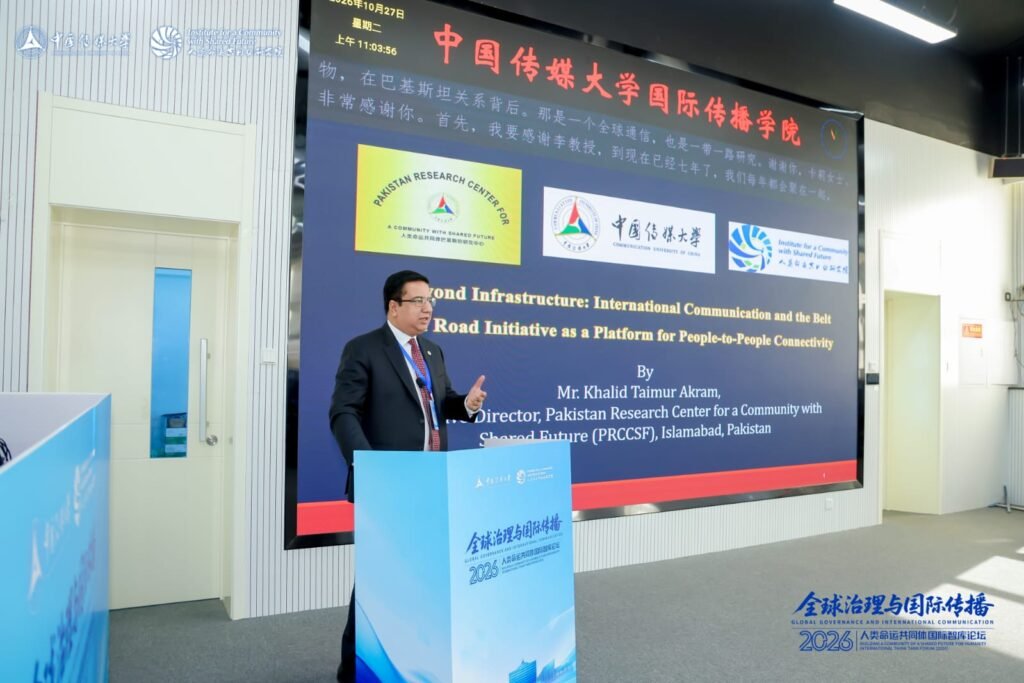
On 27 October 2026, Mr. Khalid Taimur Akram delivered his keynote presentation titled “Beyond Infrastructure: International Communication and the Belt and Road Initiative as a Platform for People-to-People Connectivity.” He highlighted that the Belt and Road Initiative, launched by China in 2013, extends beyond physical infrastructure to promote cultural understanding, educational exchanges, international communication, and lasting partnerships among nations. He emphasized the importance of connecting people through university partnerships, youth exchanges, joint research, tourism, and cultural programmes, particularly in strengthening Pakistan–China relations.
Mr. Akram further discussed the role of digital communication, education, and cultural diplomacy in overcoming language barriers, misinformation, and cultural differences. He highlighted the importance of mutual respect, responsible journalism, and inclusive international cooperation in building trust among societies. Concluding his presentation, he emphasized that the success of the BRI should be measured not only through economic growth and infrastructure development but also through stronger people-to-people relationships, intercultural understanding, and sustainable cooperation that contributes to international peace and prosperity.
The session was moderated by Prof. Zhang Yanqiu, Vice Dean of the Institute for a Community with Shared Future at the Communication University of China. The speakers and their designations were:
- Jean-Christophe Bas — Professor, Institute for International and Strategic Relations (IRIS); Director, Academic European Network Community with Shared Future.
- Fan Yongpeng — Dean, China Institute, Fudan University.
- Chin Yee Mun — Director, Tun Tan Cheng Lock Institute of Social Studies, Universiti Tunku Abdul Rahman, Malaysia.
- Winston Mano — Professor, School of Communication and Media Studies, University of Westminster, United Kingdom; Founder and Editor-in-Chief, African Media Studies; Director, UK Research Center for a Community with Shared Future.
- Mabel Lv — Co-founder and Secretary-General, Center for China and Globalization (CCG).
- Zhang Yuqiang — President, Communication University of China Press.
- Zhou Ting — Vice Dean, School of International Communication; Executive Dean, Academy of International and Regional Communication Studies; Vice Dean, School of Journalism, Communication University of China.
- Maria Francesca Staiano — Director, Center on China Studies, International Relations Institute, National University of La Plata; Director, Latin America Research Center for a Community with Shared Future and Belt and Road Initiative.
The afternoon programme on 27 October featured thematic sessions titled “Multilateral Cooperation and a New Landscape for International Communication” and “Artificial Intelligence and New Pathways for Global Governance.” These sessions explored the changing international communication landscape, multilateral engagement, emerging technologies, and contemporary global governance challenges. Discussions highlighted the importance of strategic communication, institutional partnerships, and collaborative approaches to addressing shared international concerns.
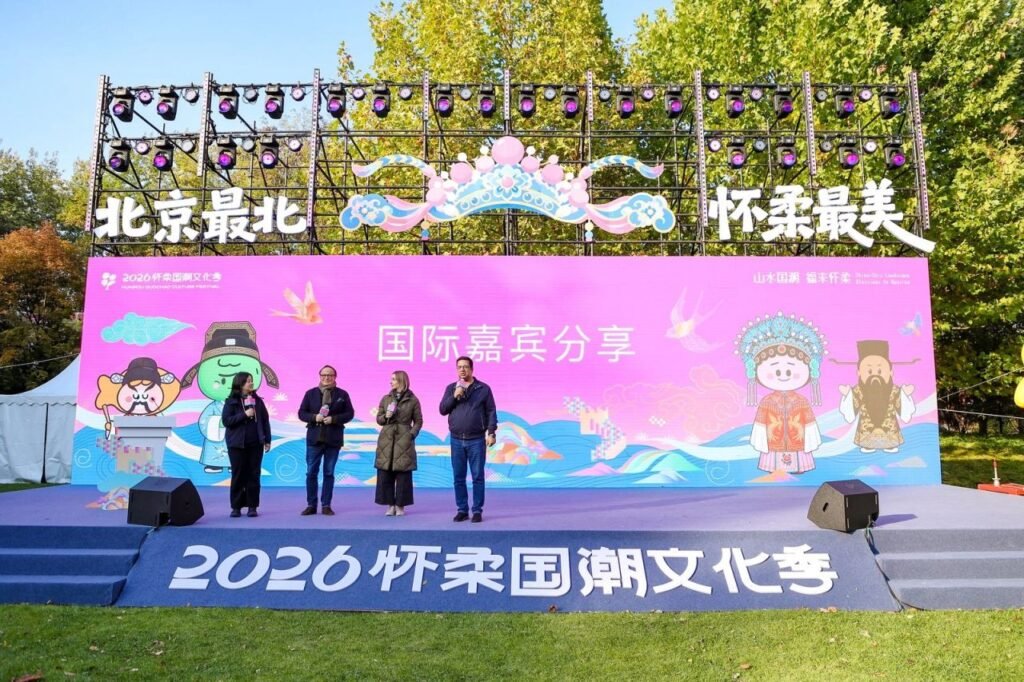
On 28 October 2026, Mr. Khalid Taimur Akram participated in academic and cultural study visits to the Mutianyu Great Wall, the Huairou China Chic Culture Season, a Beijing Opera performance, and Huairou Science City. These activities provided opportunities to explore China’s historical heritage, traditional performing arts, cultural development, and scientific advancement. The programme concluded with dinner at Huairou Yanqi Lake, allowing participants to continue their interactions and exchange perspectives in an informal setting.
The forum and annual meeting brought together institutional heads, distinguished academics, researchers, think tank representatives, and international experts to discuss the future of global governance, international communication, multilateral cooperation, and people-to-people connectivity. Mr. Khalid Taimur Akram’s participation reflected PRCCSF’s engagement in international academic dialogue and its continued efforts to strengthen Pakistan–China relations and promote cooperation among institutions worldwide.
The gathering underscored that, in an increasingly interconnected world facing complex geopolitical, economic, technological, and environmental challenges, effective communication and cooperation across civilizations are essential. Through academic exchange, institutional partnerships, and dialogue among diverse perspectives, the event reinforced the importance of transforming mutual understanding into practical cooperation and building a more inclusive, connected, and sustainable future for humanity.