
Written by Mr. Khalid Taimur Akram is the Executive Director, Pakistan Research Center for a Community with Shared Future (PRCCSF).,
The city wakes before sunrise. Streets once filled with the growl of engines now hum softly with the whisper of electric motors. A delivery rider glides silently through traffic. A teenager unplugs her car at home the way previous generations disconnected a phone charger. Gas stations that ruled the last century stand beside rows of fast chargers glowing blue in the dark.
“This is not science fiction. It is the beginning of the Electric Vehicle Revolution”.
Since the dawn of civilization, the world has witnessed a number of revolutions, from political (American Revolution, Bolshevik Revolution) to economic & industrial (Green Revolution, Industrial Revolution), from scientific & social (Enlightenment, Feminist Revolution) to religious & cultural (Protestant Reformation, Renaissance), yet one of the most inspiring revolutions taking place in the modern era is the Electric Vehicles (EV) Revolution.
For centuries, the world relied on gasoline. Cars were the symbol of freedom, progress and modern developments, however at the same time, these cars polluted skies, led to ozone depletion, became one of the major causes of climate change and eventually destroyed habitat for a large number of species. Addressing this challenge entered the priority list of major powers because gasoline and diesel-powered transportation was not only disturbing climate but, they also tied nations to increased fuel dependance. When the concept of smart cities, smart technologies, and smart parks came to vogue, people thought of a new invention in automotive industry that could challenge the hegemony of traditional cars. It was the time when batteries became smarter, technology became cleaner, and suddenly the roars of engines turned into silence of electric motors.
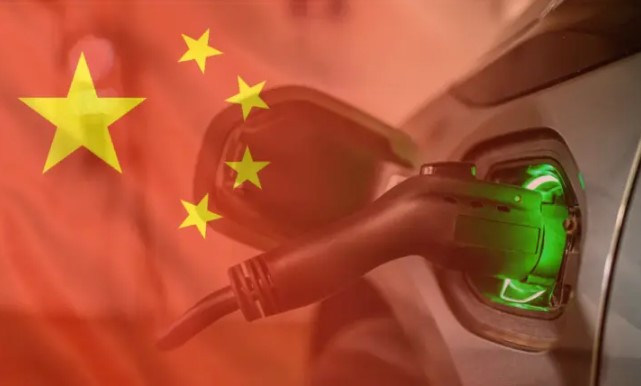
EV revolution discussions are incomplete without mentioning the exemplary role played by China. China is the driving force behind this global transformation. Experts say, “if the EV Revolution is reshaping the modern world, China stands at its forefront as a pioneer, driving innovation, production, and adoption at an unprecedented scale”. When others were thinking about the success of electric motors, China invested heavily in it. Like always, China timely realized the importance of electric vehicles that they will not only reduce dependence on oil but will also reduce pollution and most important they are climate friendly. Today, China has become the world’s largest producer and consumer of electric vehicles. People can be seen using electric buses, cars, bikes and scooters across all Chinese cities. The best part of this China led EV Revolution is that it is not only strengthening China’s economy but is also supporting global efforts to reduce pollution and fight climate change.
China’s Rapid Growth in Electric Vehicles
The speed and scale of China’s electric vehicle revolution have caught the world by surprise and there are no signs of slowing down. There was a time when the pioneers of electric vehicles used to make fun of China’s BYD but today the same BYD is known by the world, competes with brands like Tesla, and wears the crown for global EV dominance, manufacturing power, and affordability. It is one of the world’s most influential EV manufacturers, producing millions of electric vehicles and batteries annually. In this context, it can be said that the China’s electric motors are no more a domestic product. China’s EV industry has grown at an incredible speed and now competing on an international level. Automakers such as BYD, NIO, Xpeng, Zeekr, and Li Auto are known across the globe for their cutting-edge vehicles equipped with advanced driver-assistance systems, high-performance batteries, and intelligent in-car ecosystems.
EV adoption in China at this huge scale owes much to Chinese government. EVs are successful in China largely due to strong support from government and Chinese leadership. The government provided subsidies, invested in charging stations, introduced new industrial policies, and also encouraged companies to develop clean energy technology. All these reforms helped accelerate EV adoption and now millions of Chinese citizens prefer EVs over conventional fuel cars.
It should be noted that adoption of EVs in China is not limited to personal use only. In fact, EVs are also being used, on large scale, in China as public transport. The best example is Shenzhen where entire public bus fleet has been converted to electric buses. Shenzhen told the world that the electric transportation can be easily and effectively used in crowded urban areas.
In addition, China is also dominating the battery supply chain. Batteries are the heart of electric vehicles. A significant portion of global battery manufacturing and processing of critical minerals like lithium and cobalt is under China’s control. This dominance gives China a strategic advantage in the EV industry.
Environmental Benefits of China’s EV Revolution
There are multiple advantages of EVs but when we take a look at the deteriorating environment, we realize the most beneficial aspect of electric vehicles is their positive impact on environment. Yes, there are other several advantages but for me environmental protection is the best one. While traditional vehicles release harmful gases like carbon dioxide, which contribute to global warming and air pollution, EVs produce little or no direct emissions, thereby protecting the environment. Major cities like Beijing and Shanghai have faced serious problems linked to air pollution for a long time. The transition to electric vehicles has reduced smoke and other harmful emissions in these areas. This has not only made the environment clean but also saved millions of people from various health issues caused by air pollution.
Similarly, since most of the people use public transportation so China introduced electric buses also. It replaced thousands of diesel buses with electric ones. These buses are energy efficient, quieter, and cleaner. In fact, environmental experts’ reports suggest that the shift to electric buses has significantly reduced fuel consumption and urban pollution also.
Another interesting fact about China is its investment in renewable energy. We all know that China is heavily investing in solar, wind, and hydro power. This is important because electric vehicles become even more sustainable and efficient when they are charged using clean electricity. This means that to make future transportation system clean, green, and sustainable, China is combining renewable energy and the EV technology.
Challenges and a Hopeful Future
Every new invention faces some challenges and China’s EV industry is no exception. China’s EV industry has made some remarkable breakthroughs but it is facing some serious challenges. First of all, there is a need to install charging stations in rural areas and the already installed ones need improvement. Secondly, batteries should be recycled efficiently in a proper responsible manner. Thirdly, lithium-ion batteries are being produced and used. Since lithium extraction can release metal in the environment that can be very harmful for ecosystem and some living species, so it should be mined responsibly to protect the environment. The plus point is that these challenges are not impossible to solve. China, being a responsible economic giant, is already working to improve battery recycling technology and developing faster charging systems. At the same time, through R&D, scientists and researchers are trying to come up with cleaner and more efficient solutions.
Since a large portion of world population is still using gasoline cars and are not used to electric vehicles but the future of transportation clearly appears electric with China leading this transformation. Its achievements prove that governments, companies, and citizens can work together to create a cleaner and healthier world. China’s model is a hope that sustainable transportation is not a dream anymore and can become reality for everyone.
Conclusion
In essence, China’s EV revolution is not just a defining story of our time; it is the definitive story of the future of mobility. It is a remarkable success story that tells how China transformed people’s way of travelling by integrating innovation, government support, and public participation. EVs are reducing pollution, they are fighting climate change, and improving public health also.
China’s progress in EV industry is a model for other nations to study, learn from, and follow. Challenges are there but the overall impact of China’s EV revolution is very positive. It is not just a technological advancement but also shows China’s strong commitment to building a greener and more sustainable future for the world.