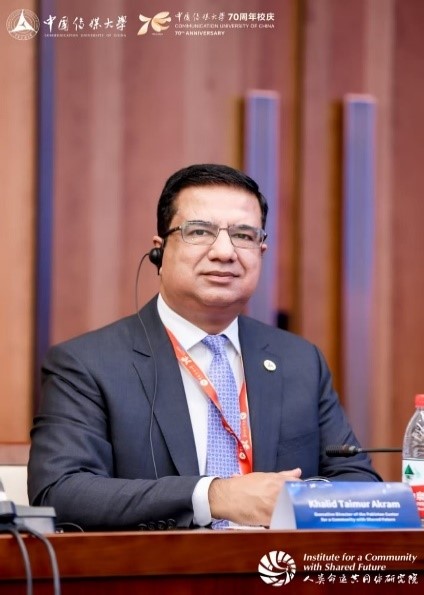
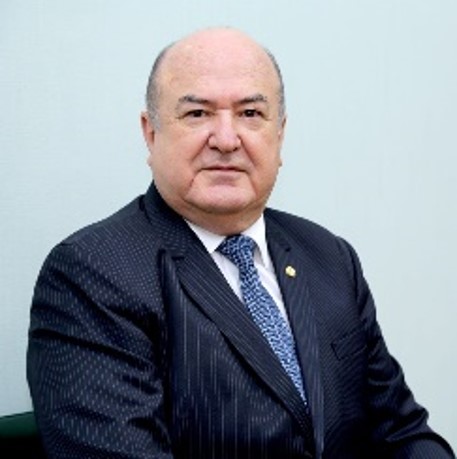
Jointly Written by Mr. Khalid Taimur Akram is the Executive Director, Pakistan Research Center for a Community with Shared Future (PRCCSF) and Mr. Kalandar Abdurakhmanov, Director of the Tashkent Branch of Plekhanov Russian University of Economics; Academician of the Academy of Sciences of the Republic of Uzbekistan
The visit of the President of the Republic of Uzbekistan, Shavkat Mirziyoyev, to St. Petersburg to take part in the St. Petersburg International Economic Forum was an important milestone in the development of Uzbek-Russian strategic partnership and in the formation of a new economic agenda for Eurasia. In a period of deep structural change in the global economy, the forum is not merely a venue for business dialogue. It is also a platform where practical solutions are shaped in trade, investment, industrial cooperation, digital transformation, education, professional training and human capital development.
The forum’s guiding idea – pragmatic dialogue as a path to a stable future – closely reflects the foreign economic policy of New Uzbekistan. Pragmatism in international cooperation today does not mean formal declarations. It means concrete projects based on trust, mutual benefit and measurable results. This approach increasingly defines Uzbekistan’s relations with Russia and with other strategic partners.
The address delivered by President Shavkat Mirziyoyev at the forum demonstrated that Uzbekistan views international economic cooperation in a broad strategic context. The world is entering a period of profound transformation. Transport routes are changing, new production chains are emerging, and the role of digital platforms, artificial intelligence, logistics, energy security and technological sovereignty is growing. Competition is moving from the mere possession of resources to the capacity to generate technologies, engineering solutions, qualified personnel and higher labour productivity.
For Uzbekistan, participation in the St. Petersburg International Economic Forum has special importance. The country is showing stable economic growth, expanding external trade, increasing exports and strengthening investment cooperation. These trends indicate that the national economy is becoming more open, competitive and oriented towards long-term development. Russia remains one of Uzbekistan’s key trade and economic partners. At the same time, the new stage of cooperation requires a transition from traditional trade to more complex forms of partnership: industrial cooperation, localization of production, technological collaboration, joint engineering and the training of skilled professionals.
In this context, the initiative of the President of Uzbekistan to form a Eurasian belt of technological industrialization is particularly significant. Its essence is to create interconnected production and technological clusters united by a modern digital platform. Such a model can move cooperation to a qualitatively new level: from the exchange of goods to joint design, technology transfer, applied innovation, added value creation and stronger competitiveness of national economies.
This is especially relevant for Uzbekistan, which has entered a stage of qualitative industrial renewal. Today it is not enough to create jobs in quantitative terms. It is necessary to ensure that these jobs are productive, formal, technologically advanced and capable of generating decent income. Productive employment should provide people with stable earnings, social protection, professional growth and a real contribution to value creation. Therefore, investment and industrial projects should be assessed not only by the volume of capital invested, but also by their impact on employment, skills, labour productivity and human capital.
Human capital was one of the central themes of the forum. This is natural: Uzbekistan has considerable demographic potential, and its young population is one of the most important resources for future growth. Yet demographic potential becomes an advantage only when it is transformed into education, professional skills, entrepreneurial capacity, innovative thinking and productive work. In other words, the main task is not only to provide employment for the younger generation, but also to create the conditions in which young people can become creators of new technologies, modern services and competitive products.
That is why the training of engineering, technical, economic and managerial personnel is acquiring strategic importance. Modern industrial cooperation cannot be built without specialists able to work with advanced technologies, digital systems, automation, energy equipment and complex production processes. Cooperation in education and science should therefore not be seen as an auxiliary sphere. It must become one of the central pillars of economic partnership between Uzbekistan and Russia.
Educational cooperation between Uzbekistan and Russia is already producing visible results. Russian universities play an important role in training specialists for Uzbekistan’s economy in engineering, economics, medicine, education, energy, technology and management. This cooperation does not only create professional competencies. It also forms a common scientific and educational space based on mutual trust, shared academic traditions and practical usefulness for both countries.
The Tashkent Branch of Plekhanov Russian University of Economics occupies a special place in this system. It became one of the first and most important educational bridges between independent Uzbekistan and Russian higher education, as well as the first representation of a Russian university in our country. Established in 1995, the branch proudly celebrated its 30th anniversary in 2025 with new scientific and educational achievements, strengthening its status as a respected centre for training economists, financiers, managers and specialists in the fields of labour markets, social and labour relations, and human capital.
Over three decades, the Tashkent Branch of Plekhanov Russian University of Economics has educated thousands of graduates who now work successfully in the banking system, public administration, entrepreneurship, higher education, research institutions, international organizations and major national enterprises. This example shows that Uzbek-Russian cooperation in education is not an abstract diplomatic formula. It is a real mechanism for developing human capital, managerial culture and the personnel potential of New Uzbekistan.
A promising initiative is the creation of a joint online platform for human capital development. Such a platform could connect education, professional training and the labour market. It could include academic programmes, language courses, IT modules, engineering tracks, retraining opportunities, support for young entrepreneurs and direct links with employers. For the regions of Uzbekistan, this is particularly important, since young people from remote districts would be able to acquire modern knowledge and skills without the immediate need to move to large cities.
Digital transformation is another major priority. Digital platforms are becoming a new infrastructure of the economy. The infrastructure of the twenty-first century includes not only roads, power grids and transport hubs, but also e-commerce, marketplaces, payment services, digital logistics, online education, artificial intelligence and digital employment profiles. These tools create new jobs, expand export opportunities and help small businesses enter external markets.
Uzbekistan is already demonstrating strong digital momentum. The growth of IT services exports, the expansion of the digital services market and the increasing role of the IT sector show that the digital economy is becoming an independent source of exports, employment, investment and human capital development. In this context, the proposal to build a joint digital ecosystem between Uzbekistan and Russia has clear practical significance. Such an ecosystem could support digital trade, the application of artificial intelligence, the promotion of national brands, the development of urban services and the emergence of new employment mechanisms.
The St. Petersburg forum also showed that modern economic cooperation is becoming increasingly interdisciplinary. The economy can no longer develop separately from science; education cannot be isolated from production; and investment cannot be effective without the preparation of personnel. Universities should therefore become active participants in industrial development, research should acquire applied value, and professional training should be linked to the real needs of the economy.
New opportunities are opening for higher education institutions in Uzbekistan and Russia: joint educational programmes, academic mobility, double degrees, research laboratories, engineering schools, internships for students at enterprises, teacher training and participation in international scientific projects. The most promising areas include artificial intelligence, labour economics, energy, financial technologies, industrial engineering, logistics, agrotechnologies, demography and human capital management.
Interregional cooperation is another important dimension. Direct links between the regions of Uzbekistan and the regions of Russia can produce practical results in industry, agriculture, tourism, education, medicine, construction, textiles and services. Such ties are especially important for creating jobs locally, raising household incomes, reducing regional disparities and supporting local entrepreneurial initiative.
The cultural and humanitarian dimension of the visit also deserves special attention. Uzbekistan and Russia are connected not only by economics, but also by history, culture, science, memory and human destinies. This historical closeness creates a moral foundation for contemporary relations. In this context, the proposal to develop a creative and tourist corridor from Samarkand to St. Petersburg has both cultural and economic meaning. Tourism is now a form of public diplomacy, cultural promotion, small business development and job creation.
Thus, the visit of President Shavkat Mirziyoyev to the St. Petersburg International Economic Forum showed that Uzbek-Russian cooperation is entering a more mature phase. Trade indicators remain important, but the quality of economic interaction is coming to the forefront: technological alliances, industrial cooperation, digital integration, engineering education, workforce development and practical benefits for citizens.
The main conclusion is that the modern economy requires the combination of three foundations: trust, technology and the human being. Trust creates the basis for partnership; technology opens new opportunities for growth; and the human being transforms these opportunities into real results. Therefore, the development of human capital, the training of qualified personnel, and the strengthening of science and education should become central to the implementation of the initiatives and agreements discussed at the forum.
The St. Petersburg International Economic Forum once again confirmed that the future is created where states are ready for open dialogue, where economic interests are linked with humanitarian values, where investment is accompanied by workforce development, and where technological progress serves people. This is the strategic meaning of President Shavkat Mirziyoyev’s visit to St. Petersburg: the strengthening of Uzbek-Russian partnership and the broadening of cooperation horizons for a stable, sustainable and dignified future.