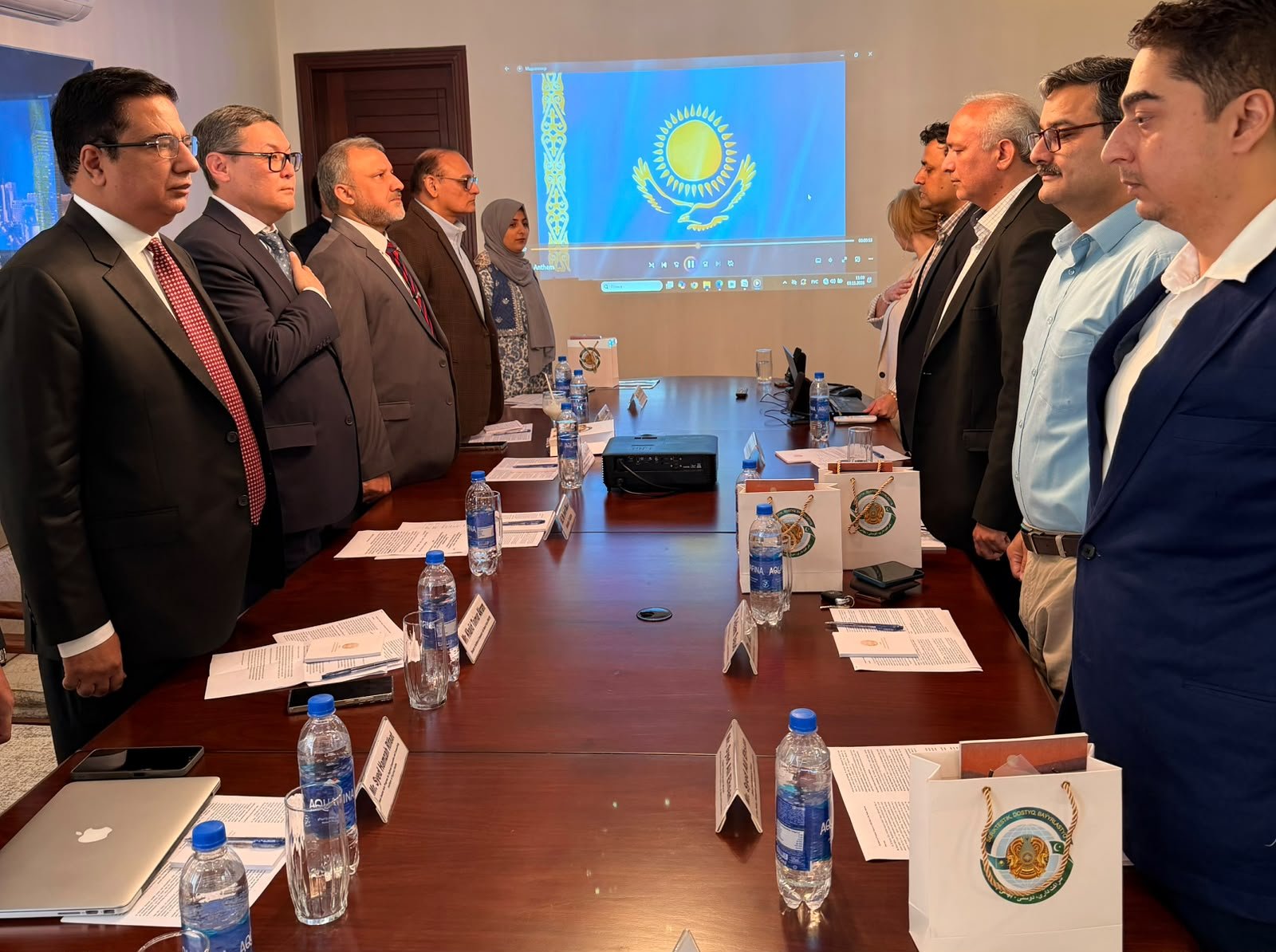
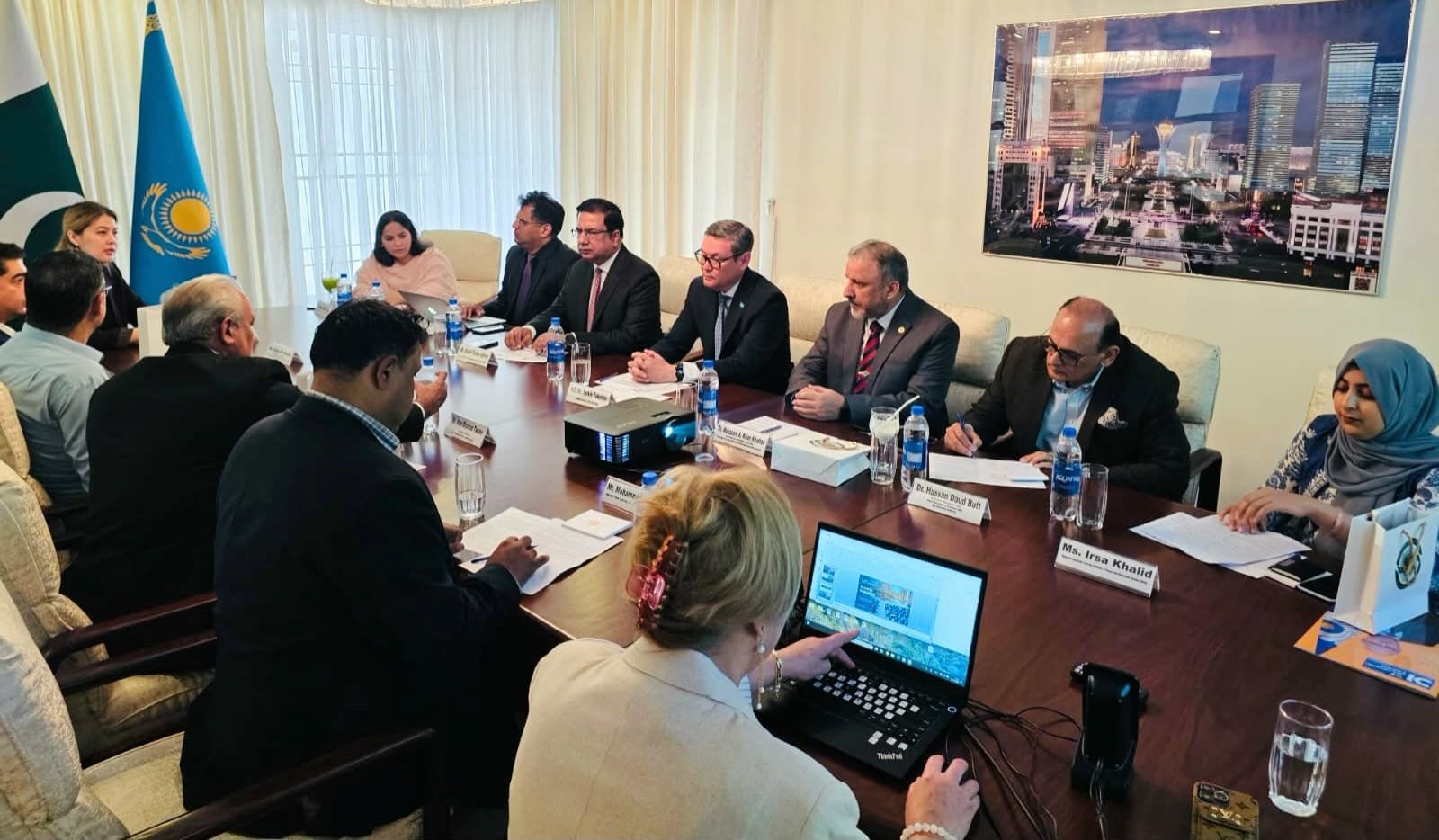
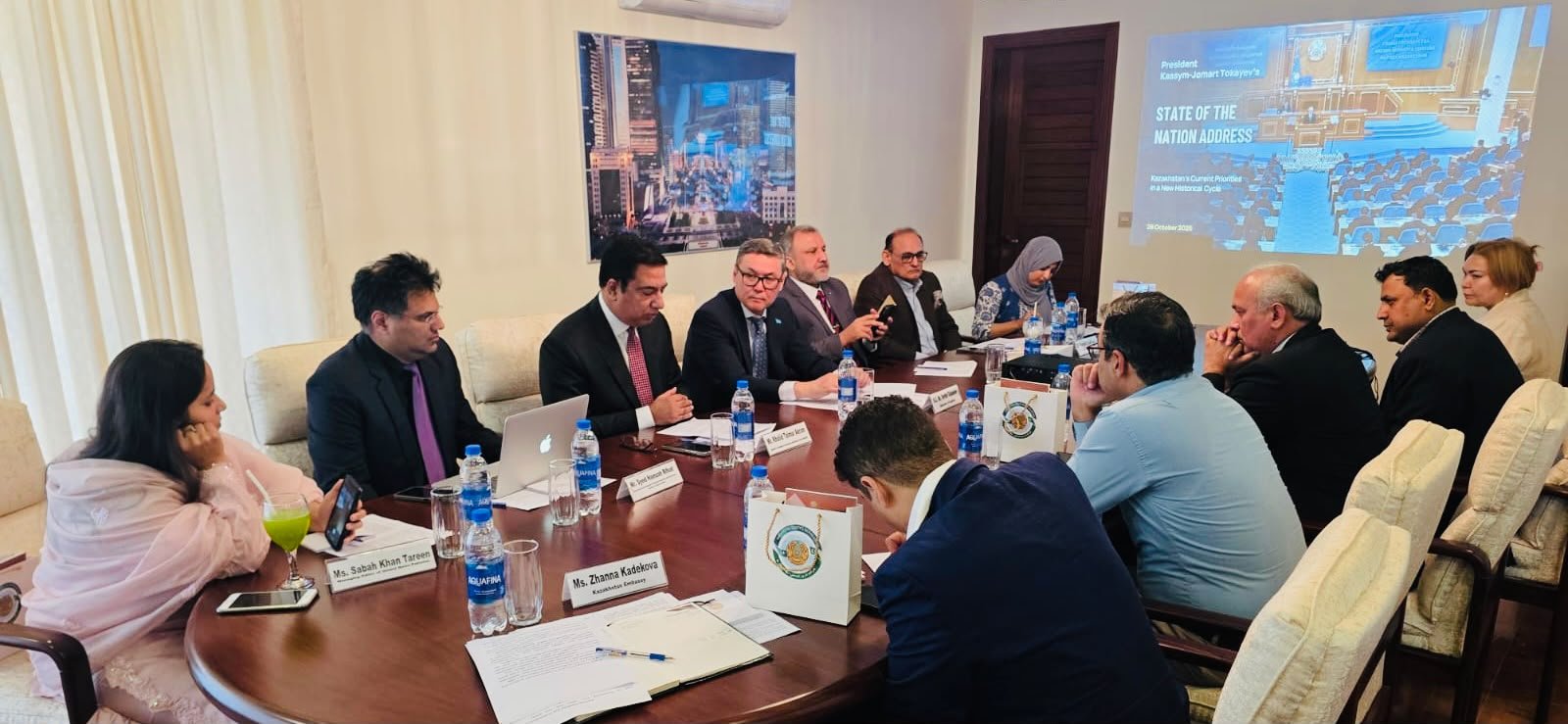
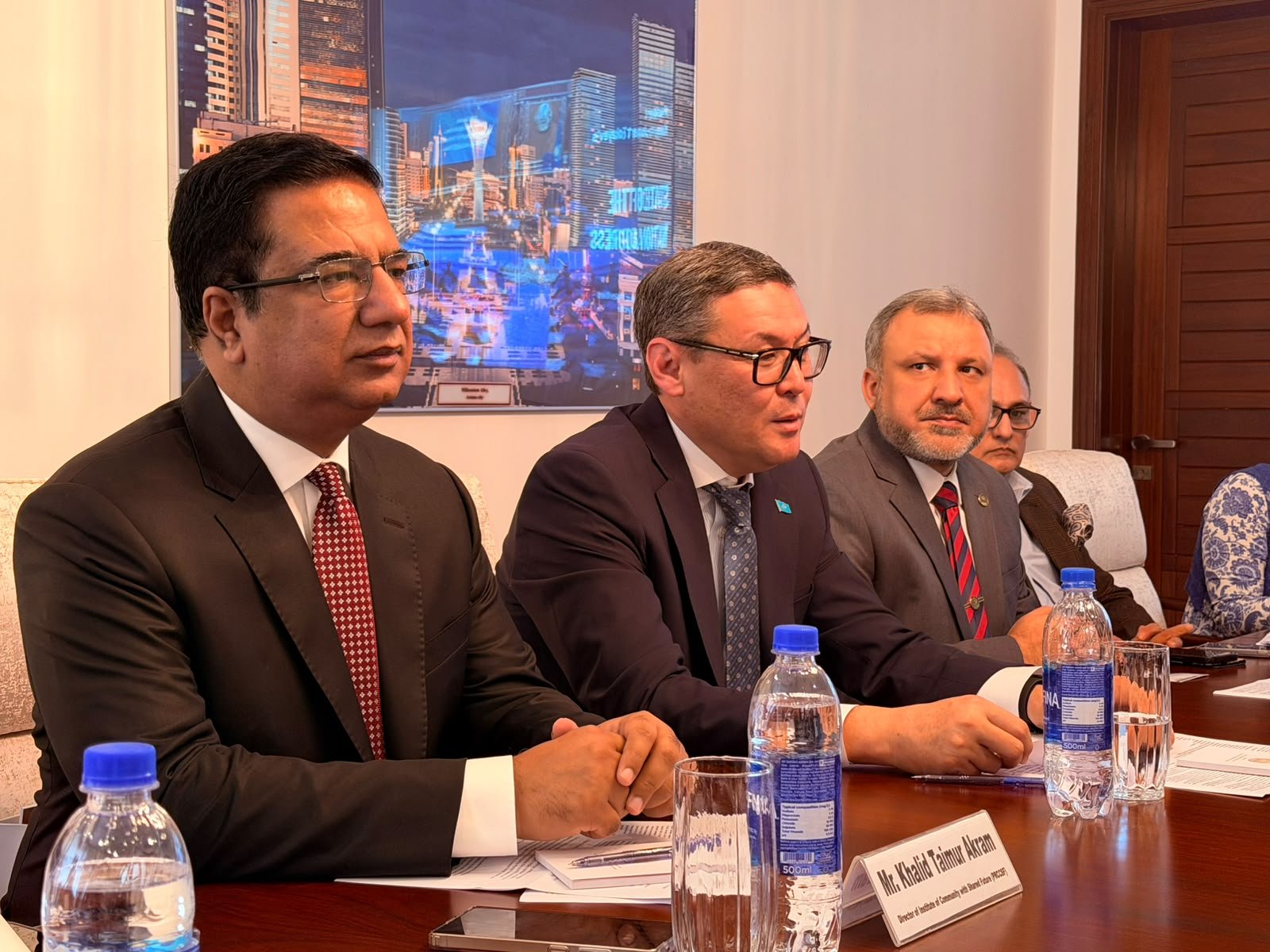
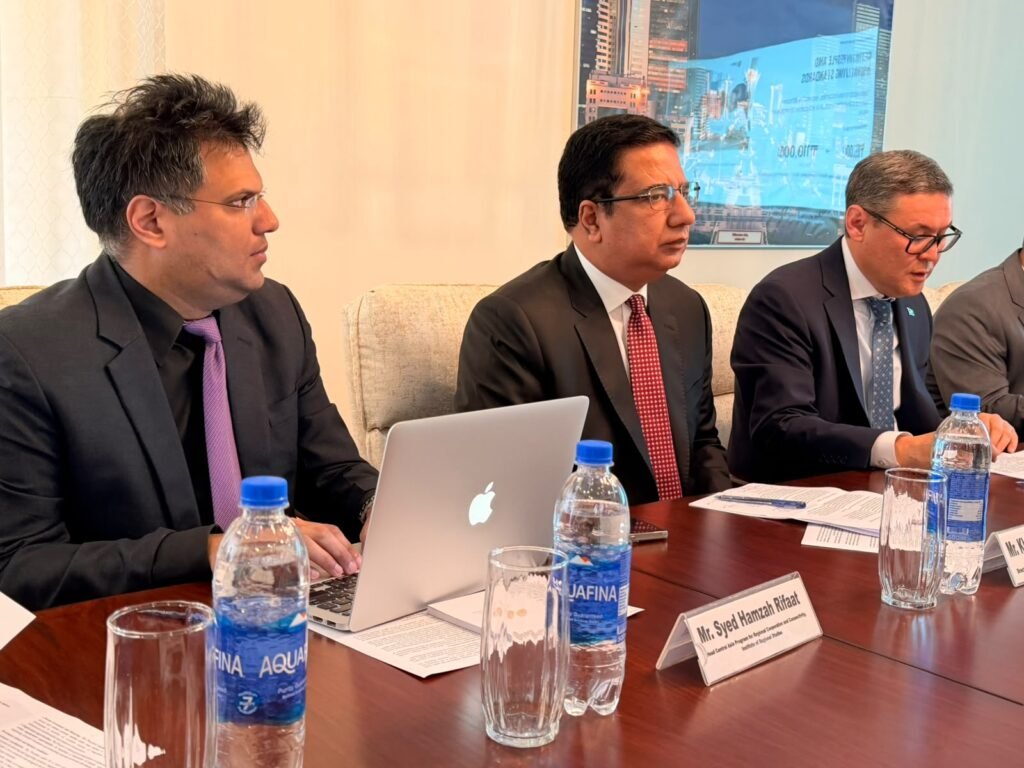
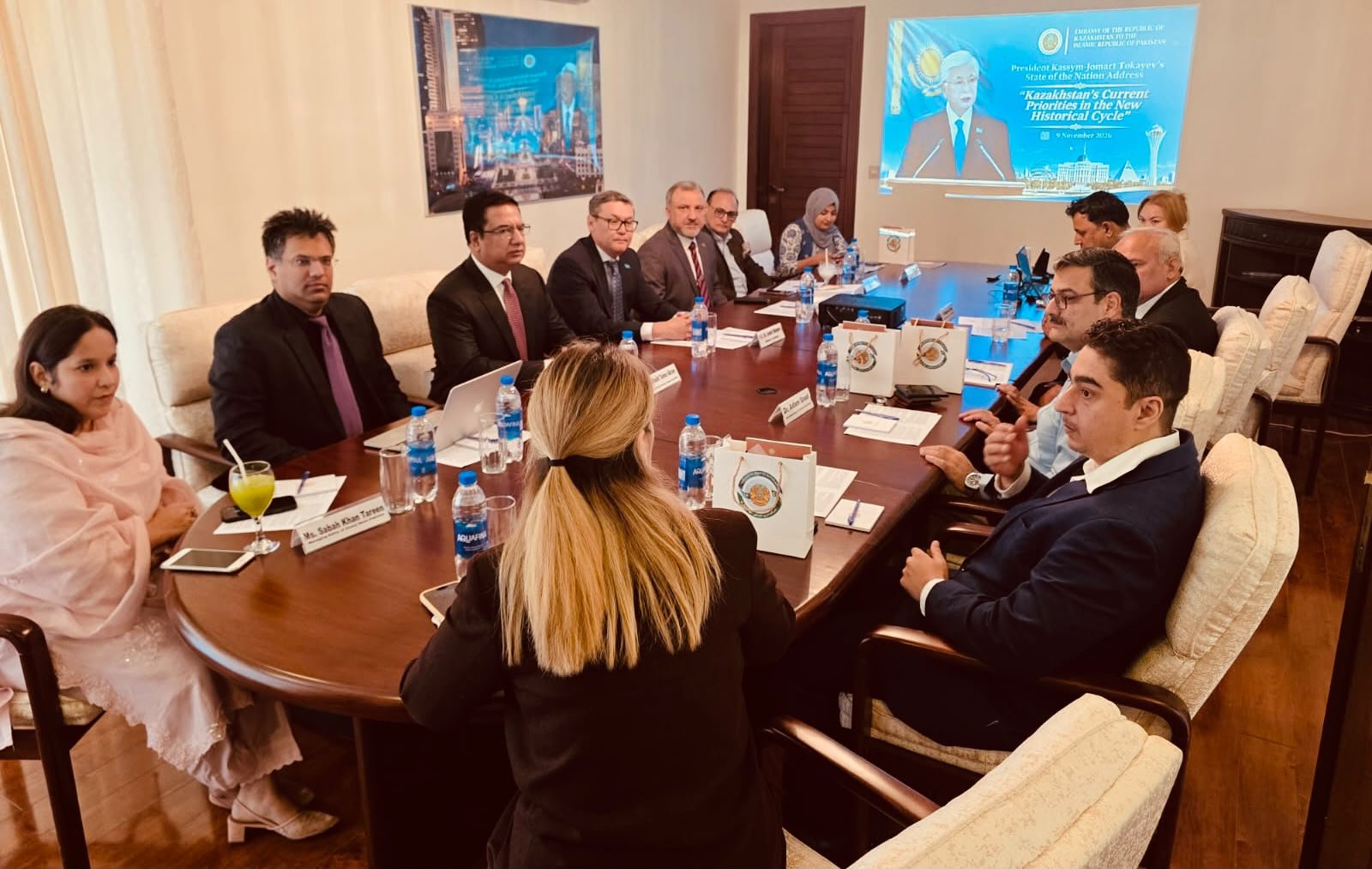
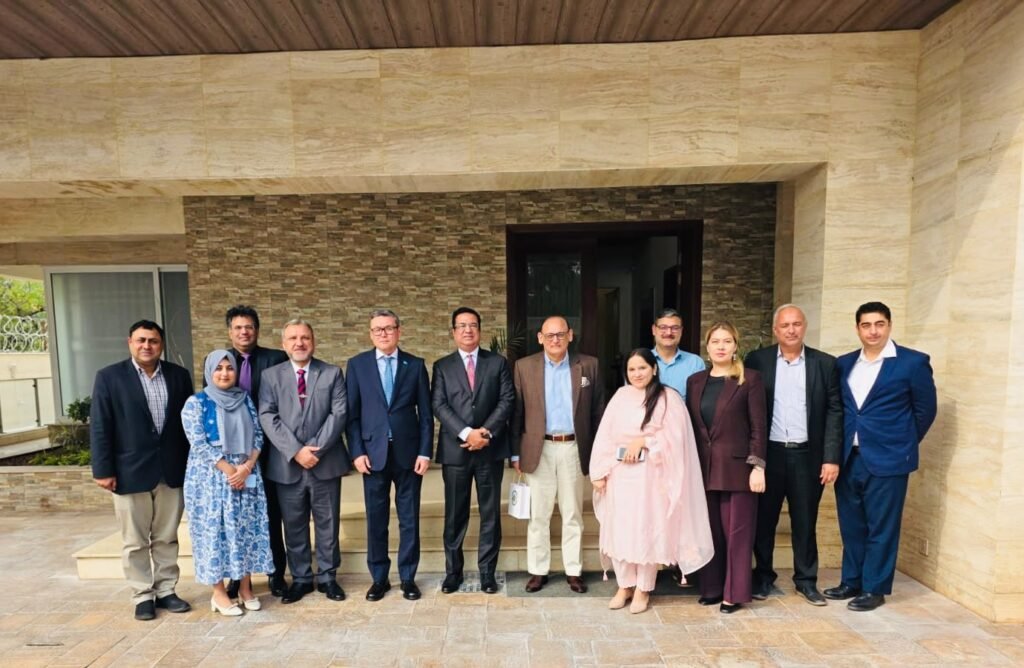
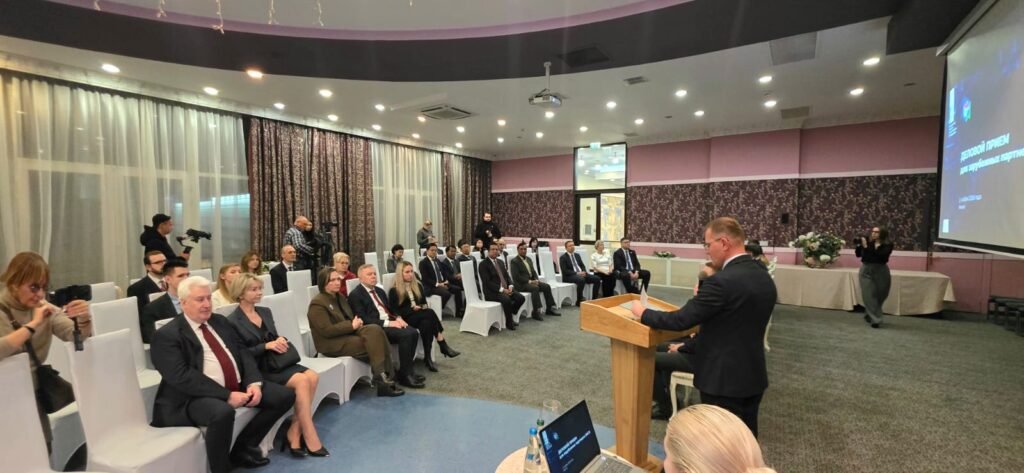
On 9 November 2026, Mr. Khalid Taimur Akram participated in an expert meeting hosted by the Embassy of the Republic of Kazakhstan at Islamabad. The engagement focused on the key priorities of the State of the Nation Address delivered by His Excellency Kassym-Jomart Tokayev, President of the Republic of Kazakhstan, on 28 October 2026, titled “Kazakhstan’s Current Priorities in a New Historical Cycle.”
The meeting brought together representatives of Pakistan’s leading think tanks, academic institutions and media organizations to exchange views on Kazakhstan’s political and socio-economic development, regional connectivity and emerging opportunities for bilateral cooperation. His Excellency Mr. Yerkin Tukumov, Ambassador of Kazakhstan to Pakistan, delivered a comprehensive briefing on the country’s achievements over 35 years of independence, highlighting its emergence as Central Asia’s largest economy, a major investment and transport and logistics hub in Eurasia, and an influential middle power pursuing a balanced and pragmatic foreign policy.
During the interactive discussion, Mr. Khalid Taimur Akram appreciated Kazakhstan’s strategic vision and the reform-oriented policies outlined in the President’s Address. He proposed establishing a Pakistan–Kazakhstan Research Corridor as a dedicated framework for expanding academic and intellectual cooperation between the two countries. The initiative aims to strengthen institutional partnerships between universities and research centers, facilitate joint research projects, promote knowledge exchange and create meaningful opportunities for youth engagement. He emphasized that sustained academic collaboration and people-to-people connectivity are essential to complementing the growing economic and diplomatic relationship between Pakistan and Kazakhstan.
Other Pakistani experts also presented valuable perspectives on bilateral and regional cooperation. Dr. Irfan Shahzad Takalvi, President of the Eurasian Century Institute, highlighted the potential economic benefits of Kazakhstan’s announced three-year moratorium on inspections of micro and small businesses, emphasizing its role in encouraging entrepreneurship and investment. He also discussed the importance of strengthening regional trade routes connecting Khorgos, Khunjerab and Karachi to facilitate greater commercial exchange between Central and South Asia.
Dr. Adam Saud, Professor of International Relations and Principal / Director of the Bahria Humanities and Social Sciences School at Bahria University, Islamabad appreciated Kazakhstan’s progress in transport and logistics infrastructure and highlighted the opportunities for regional integration through platforms such as the Shanghai Cooperation Organisation (SCO). He also referred to Kazakhstan’s projected GDP per capita of over USD 19,000 in 2026 as an indicator of its economic development and policy achievements.
Mr. Muhammad Zaman, Editor at Pakistan Television (PTV) News, Central Asia Correspondent for Daily Parliament Times, contributor to The Nation and Editor of The Diplomatic Views, highlighted promising areas of bilateral cooperation in artificial intelligence, energy, media and digital development. Referring to Pakistan’s IT services exports of USD 4.6 billion during the 2025–2026 fiscal year, he emphasized the considerable potential for cooperation in technology, innovation and the digital economy, alongside stronger people-to-people relations.
The engagement also coincided with Allama Iqbal Day, a national holiday in Pakistan. On this occasion, Ambassador Yerkin Tukumov extended his warm greetings to the people of Pakistan and acknowledged the enduring significance of Allama Muhammad Iqbal’s philosophy, particularly his emphasis on education, enlightenment and national progress.
The meeting provided a valuable platform for strengthening mutual understanding and identifying practical avenues for Pakistan–Kazakhstan cooperation. Initiatives such as the proposed Research Corridor can play an important role in connecting academic institutions, policymakers, researchers and young professionals, translating shared strategic aspirations into sustainable institutional partnerships.