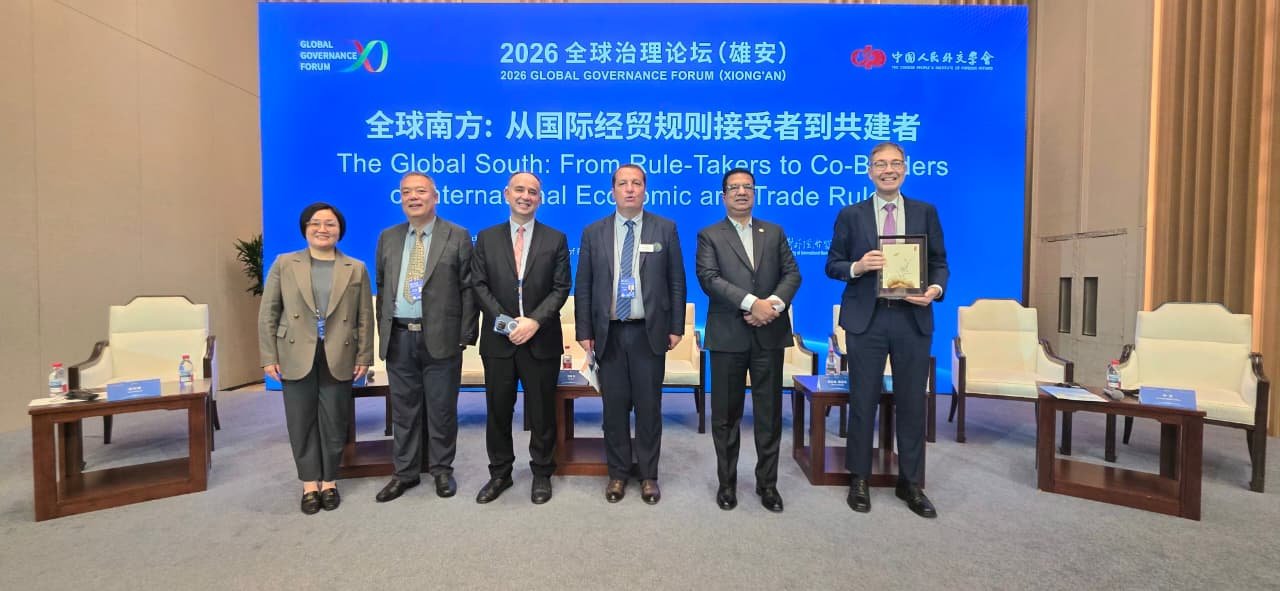
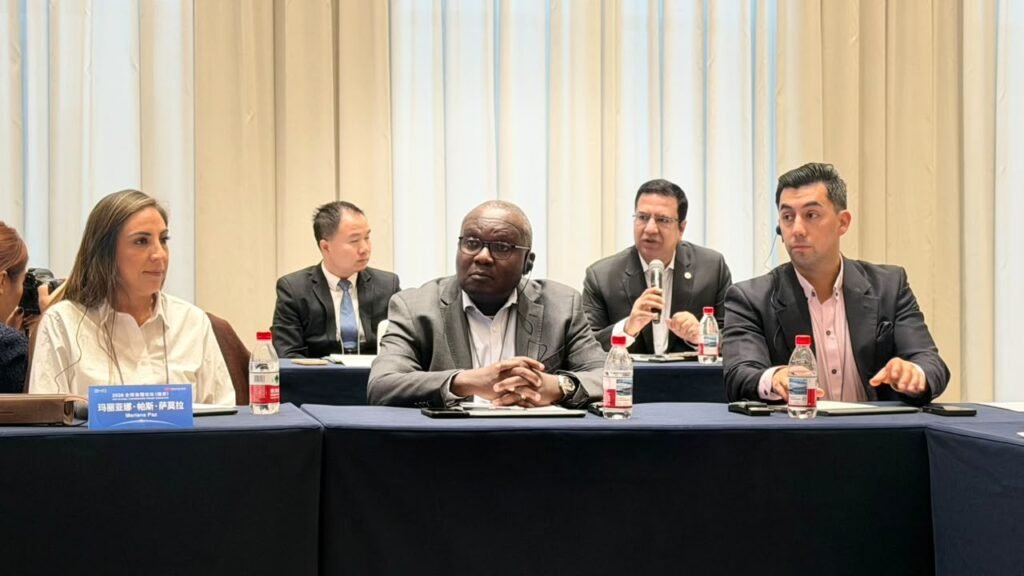
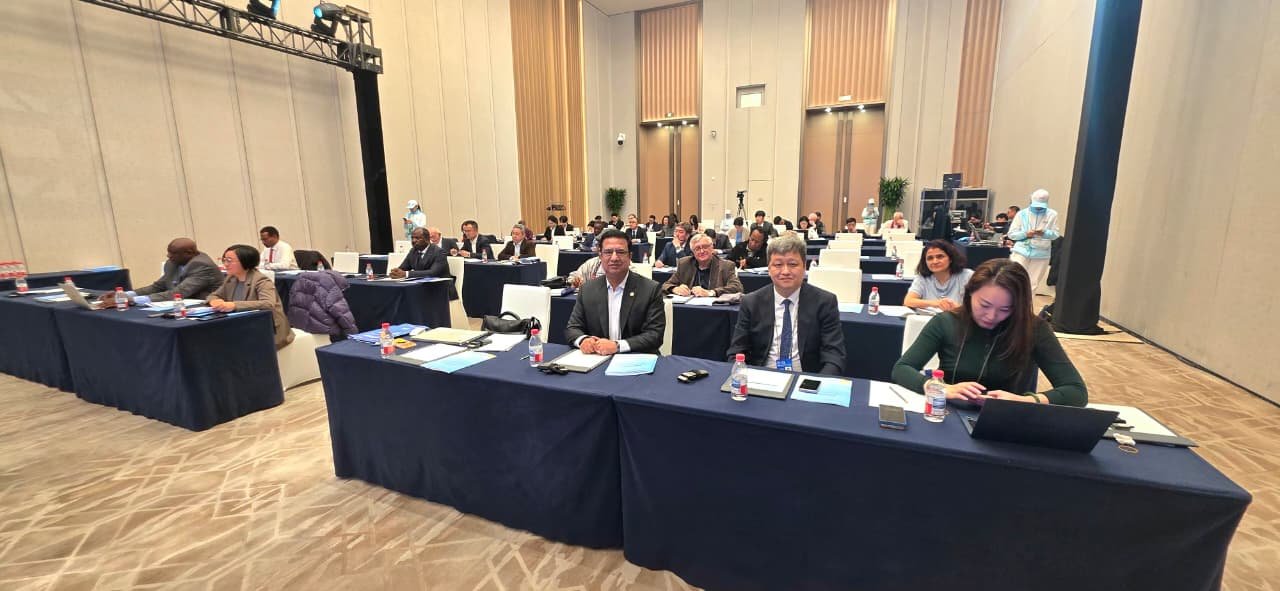
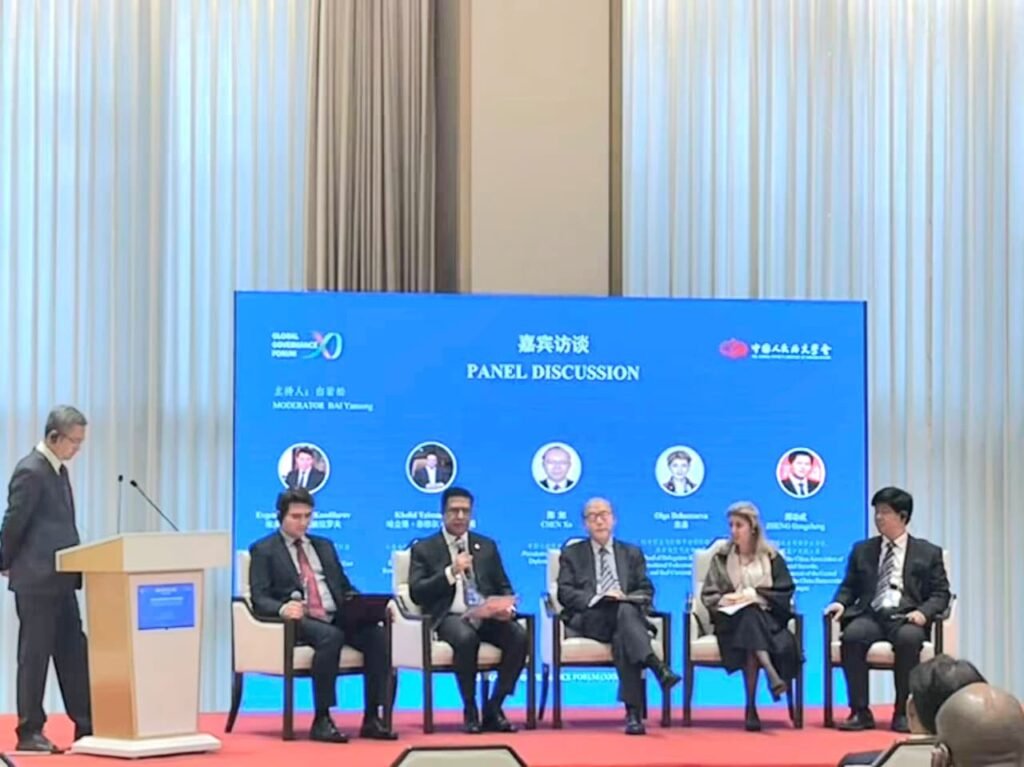
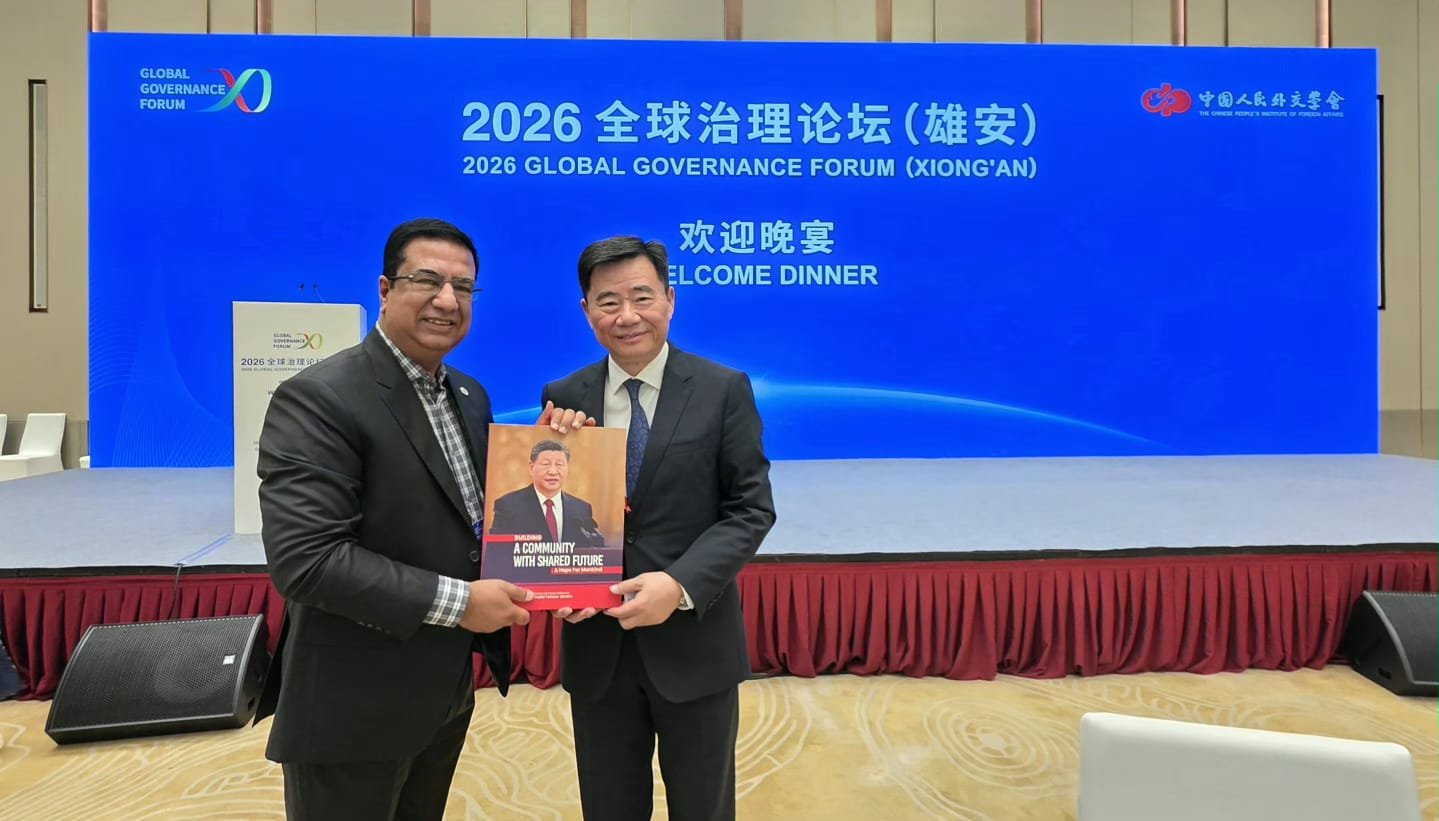
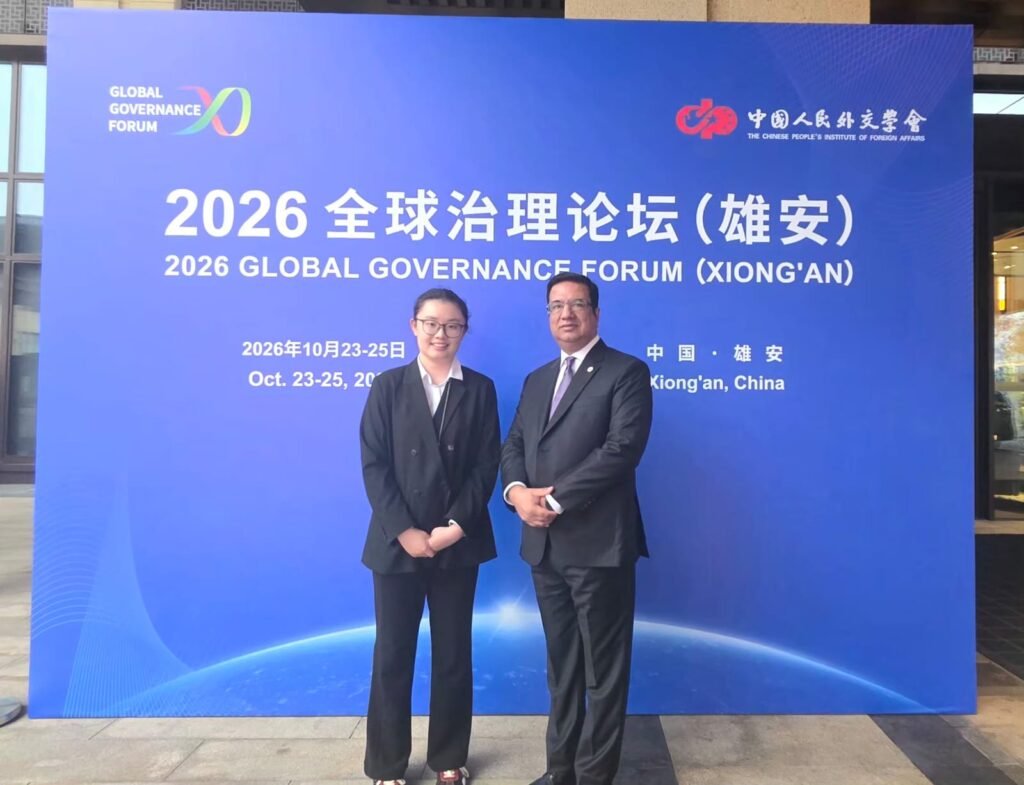
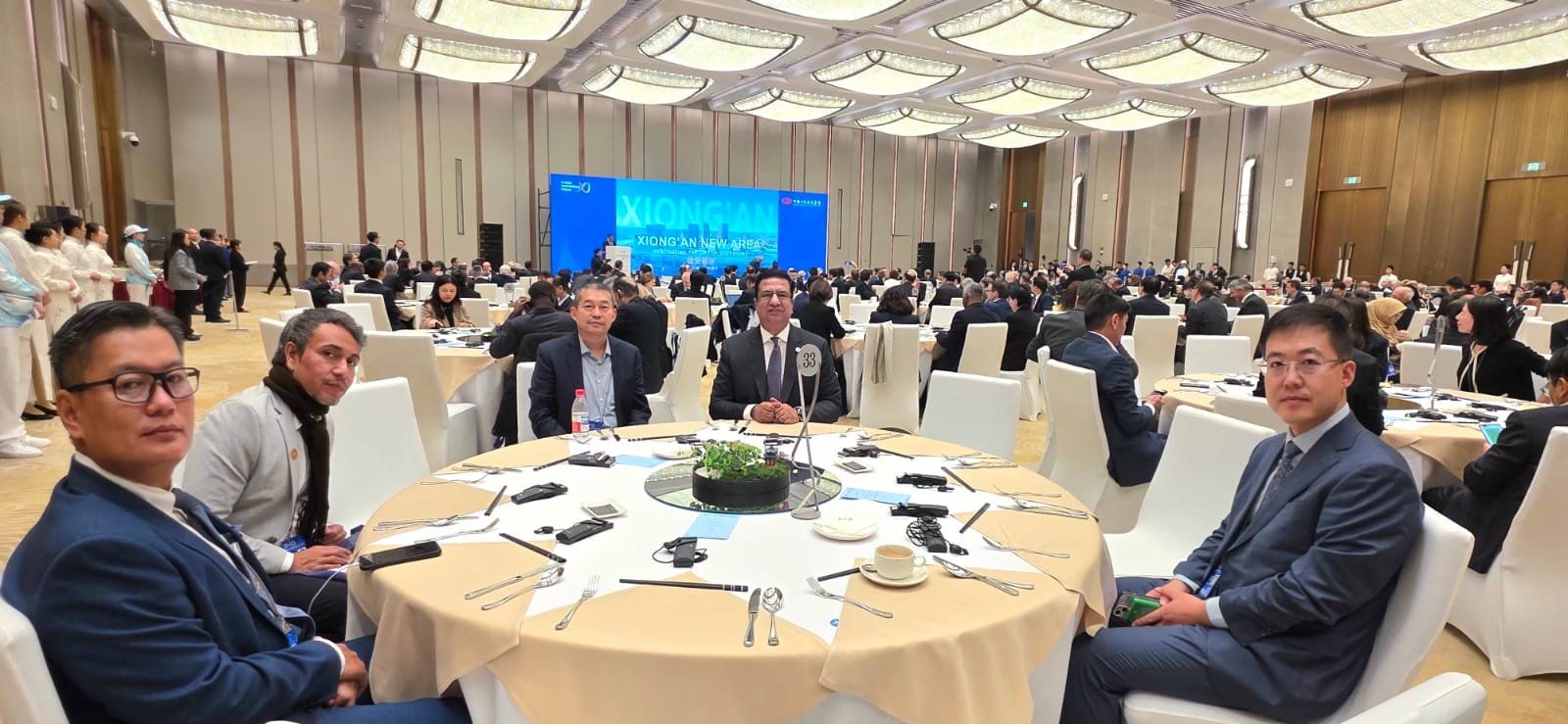
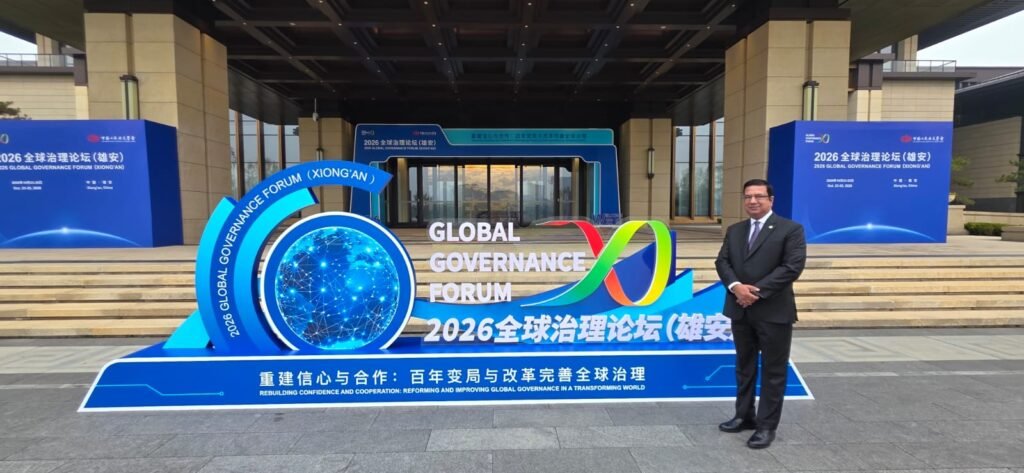
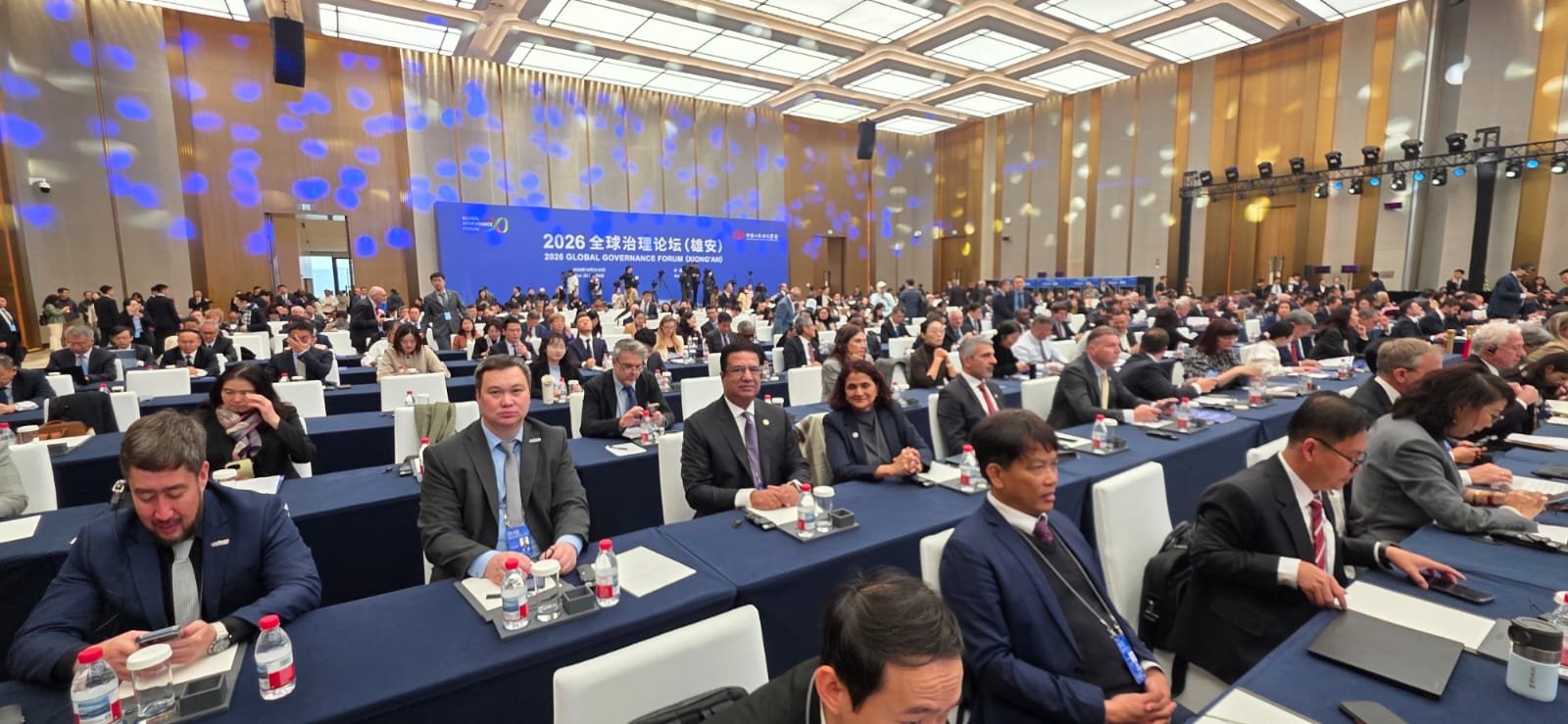
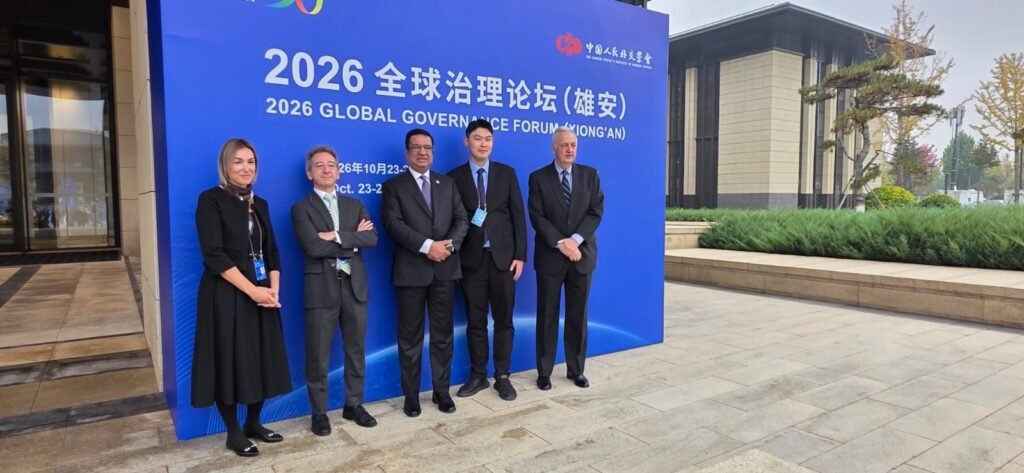
From October 23 to 25, 2026, Mr. Khalid Taimur Akram, Executive Director, Pakistan Research Center for a Community with Shared Future (PRCCSF) participated in the Global Governance Forum (Xiong’an) 2026 organized by the Chinese People’s Institute of Foreign Affairs (CPIFA) at Xiong’an New Area, Hebei Province, China. The Forum was held under the theme “Rebuilding Confidence and Cooperation: Reforming and Improving Global Governance in a Transforming World.”
His Excellency Wang Yi, Member of the Political Bureau of the CPC Central Committee and Minister of Foreign Affairs of China, attended the opening ceremony and delivered a keynote address highlighting the importance of strengthening multilateralism, promoting international cooperation, and improving the global governance system. Representatives of international organizations, including the United Nations, foreign political figures, and members of the diplomatic corps also participated in the Forum.
The three-day Forum provided a platform for exchanging perspectives on global governance, multilateral cooperation, sustainable development, and emerging international challenges. Mr. Khalid Taimur Akram’s participation offered an opportunity to engage with international perspectives on these important issues. The Forum emphasized the need to strengthen international partnerships, promote mutual understanding, and explore collaborative approaches to economic, technological, and institutional development.
On October 23, the opening day of the Forum focused on strengthening international cooperation and reforming global governance. The opening ceremony highlighted the importance of multilateral dialogue, international partnerships, and collective efforts to address emerging global challenges. The programme also included site visits to the Xiong’an New Area, providing insights into its development initiatives and the relationship between innovation, sustainable development, and effective governance.
On October 24, Mr. Khalid Taimur Akram participated in discussions on multilateralism, international economic cooperation, and global governance reform. The plenary sessions focused on safeguarding the United Nations-centered international system, advancing UN reform, and improving the effectiveness of international institutions. Discussions emphasized extensive consultation, joint contribution, and shared benefits as important principles for strengthening international cooperation and addressing common challenges.
The Forum’s thematic discussions also covered economic and financial governance, sustainable development, and the growing role of the Global South in international affairs. Key topics included the United Nations 2030 Agenda for Sustainable Development, global climate governance, green and low-carbon development, World Trade Organization reform, and international monetary cooperation. These discussions highlighted the importance of inclusive economic growth, balanced development, and greater participation in shaping international economic and trade policies.
Another major area of discussion was the governance of emerging technologies, including artificial intelligence, cyberspace, and outer space. The Forum examined inclusive and equitable AI development, the safe and responsible use of artificial intelligence, and opportunities to strengthen international technological cooperation. China–ASEAN roundtables on AI governance addressed regulatory coordination, capacity-building, and the role of technological innovation in supporting industrial development. The Forum also explored intercivilizational dialogue, humanitarian cooperation, global human rights governance, and people-to-people exchanges as important elements of international understanding.
The programme on October 24 further included discussions on collaborative governance involving multiple stakeholders and the contribution of civil society to global governance. Briefings on scientific and technological innovation and ecological governance in Xiong’an offered additional perspectives on innovation, environmental management, and sustainable development.
On October 25, the concluding day of the Forum, discussions continued on international cooperation, sustainable development, and emerging global challenges. The parallel sessions addressed peacekeeping operations, the growing role of the Global South, climate governance, scientific and technological transformation, regional monetary cooperation, international trade rules, cyberspace governance, artificial intelligence, and global human rights governance. These discussions emphasized the importance of strengthening multilateral institutions, promoting inclusive development, and expanding cooperation across regions.
The final day also featured discussions on China–ASEAN cooperation in AI governance, including regulatory coordination and capacity-building, alongside sessions on cultural dialogue and mutual understanding among civilizations. Further site visits to the Xiong’an New Area provided insights into its development initiatives and governance practices. The Forum’s concluding activities reinforced the importance of international partnerships, collective responsibility, and practical cooperation in addressing shared economic, environmental, and technological challenges.
The Forum brought together government officials, business leaders, scholars, representatives of international organizations, and other participants from various sectors to exchange perspectives on global governance, international cooperation, sustainable development, and emerging global challenges. Mr. Khalid Taimur Akram’s participation reflected his engagement with international affairs and the importance of constructive dialogue in strengthening relations among countries.
The 2026 Global Governance Forum concluded with an emphasis on rebuilding confidence, strengthening international cooperation, and improving global governance in a transforming world. Through discussions on institutional reform, sustainable development, economic coordination, technological advancement, and intercivilizational dialogue, the Forum highlighted the importance of mutual understanding, collective action, and sustained international partnerships in promoting a more inclusive, cooperative, and sustainable global environment.