
Written by Mr. Khalid Taimur Akram is the Executive Director, Pakistan Research Center for a Community with Shared Future (PRCCSF).,
The Fourth Industrial Revolution and the Twin Transition
Till date there have been four industrial revolutions that have taken place or are currently underway. Behind every industrial revolution, there was a defining driving force. The first Industrial Revolution was driven by steam, second by electricity, third by digital technologies, and the fourth (present day) by cyber physical systems, artificial intelligence (AI), and robotics. This raises an important question: How does Industry 4.0 or the Fourth Industrial Revolution contribute to sustainable production and the global green transition? To answer this question, it is important to understand how our definition of industrial success has changed over time. In past, the success of the industry was determined by how much a factory can produce and how quickly it can deliver its products. The machines were polluting air, water, soil and even causing noise pollution but we were concerned with output only. Very few people thought about pollution, carbon emissions, health problems associated with polluted environment, and the changing climate. Over time, people began to understand the importance of protecting the environment. When new technologies emerged, industries started rethinking the way they produced goods. Today, we can see a green industrial revolution taking place across the world and countries adopting cleaner technologies and more sustainable manufacturing practices. The answer to the question I raised earlier is the concept of “Twin Transition”. Twin Transition is when digital transformation and sustainability goals go hand-in-hand. In case of Industry 4.0, the concept of Twin Transition means that the industries are transformed using digital technologies like AI, smart grids and IoT monitoring to improve efficiency while reducing energy consumption, carbon emissions, and waste. Simply put, industries go digital and they go green. This concept is very common among European countries and Türkiye is no exception.
Türkiye’s Manufacturing Strength and Global Competitiveness
In Türkiye, manufacturing is the most critical pillar of country’s economic growth. This sector accounts for 84 percent of total production. It is contributing significantly to GDP, exports, and employment. The strategic location of Türkiye as the bridge between Asia and Europe makes it an important production and logistics hub, allowing businesses to reach customers across different regions. At the same time, country’s industrial base is very strong and diverse. Türkiye is among Europe’s leading producers of automobiles and is well known for its textile and apparel industry. Some other major sectors include chemicals, electrical equipment, steel, household appliances, rubbers and plastics. These industries have not only boosted Türkiye’s economy but also helped the country become an important part of global supply chains.
However, the global business environment is rapidly changing. It is because the factors that determined business success in the past have changed now. Earlier, companies mainly competed on price, quality, and speed. Today, they still compete on those things, but sustainability has become another major factor. Climate change has become a major global concern. Investors are changing. They are not looking only at profits anymore. They also consider ESG(Environmental, Social, and Governance) factors before investing. Even consumers have awareness and they prefer brands that support ecofriendly practices. Similarly, governments are changing their policies to make them more environment friendly. Technology has made green production possible and going green is now seen as a competitive advantage and not an additional expense. Major markets, particularly the European Union, are also introducing policies such as the European Green Deal and the Carbon Border Adjustment Mechanism (CBAM), which encourage cleaner industrial production. Therefore, green transformation is no more just an environmental responsibility, it has become an economic necessity now.
For export-driven economies like Türkiye, adapting to these changes is not only important but also a big opportunity.
The Future of Turkish Industry: Growth Through Sustainability
Türkiye’s location, open economic policies, skilled labor and modern industrial base make it well positioned to benefit from this change. Digitalization, the automotive industry, and many other sectors using renewable energy and energy efficiency are the drivers of this change.
Renewable energy is one of the central pillars of Türkiye’s green transformation strategy. Since past decade, the country has made substantial investments in solar, wind, hydroelectric, and geothermal power. They are also promoting large-scale solar farms and rooftop solarsystems. Similarly, in the areas where wind resources are the strongest, Türkiye has installed wind farms there. Hydropower is the country largest renewable electricity source. New dams have been established in Türkiye and hydroelectric plants have also been installed. Together, wind and solar now generate more than one-fifth of Türkiye’s total electricity supply. It shows that country is growing its renewable energy capacity. Most of this renewable energy is being used by household, agriculture, businesses and industries. It means that industries do have greater access to cleaner electricity in Türkiye. It now helps the industrial sector and manufacturers lower the carbon emission, greenhouse gas emission and other hazardous environmental impact. Türkiye’s industries are undergoing green transition now.
In energy sector, energy efficiency is another important are playing a pivotal role in the transformation of Turkish industries. In order to protect environment and contribute to national climate goals, many Turkish factories can be seen investing in modern machinery, digital technologies, and smarter production systems that use less energy while maintaining high productivity. Such changes not only help protect environment but also reduce operational costs and have increased the competitiveness of Turkish industries.
Digitalization is speeding up this change. Manufacturers can monitor energy usage, reduce waste and optimize production with automation, AI, Industrial Internet of Things and other such technologies. This makes smart factories more common and helps Turkish factories to increase sustainability and efficiency.
The circular economy is also gaining momentum. Instead of relying solely on new raw materials, Turkish companies are recycling and reusing things and trying to cut waste. It helps country save its resources, reduce costs, and protect the environment, which makes the whole supply chain better.
The automotive sector provides an excellent example of this transformation. With the rising demands for electric vehicles, Türkiye is also investing in EVs, battery technologies, and charging stations. It will not only enhance Turkish export industry but also lead to industrial growth.
International sustainability standards like the European Union’s Carbon Border Adjustment Mechanism encourage Turkish exporters to embrace cleaner technologies and enhance their environmental performance. Many companies do not see these regulations as barriers, but as opportunities to upgrade their operations and their positions in global value chains.
With the green transformation happening in Türkiye, the demand for technicians, engineers, data specialists and other such experts is rising. In this way, this new change is also creating job opportunities. It is worth mentioning that transformation is not limited to industries and factories only. The small and medium-sized enterprises (SMEs), which form the backbone of the Turkish economy, are also adopting sustainable practices with the help of financing, technical support, and digital solutions.
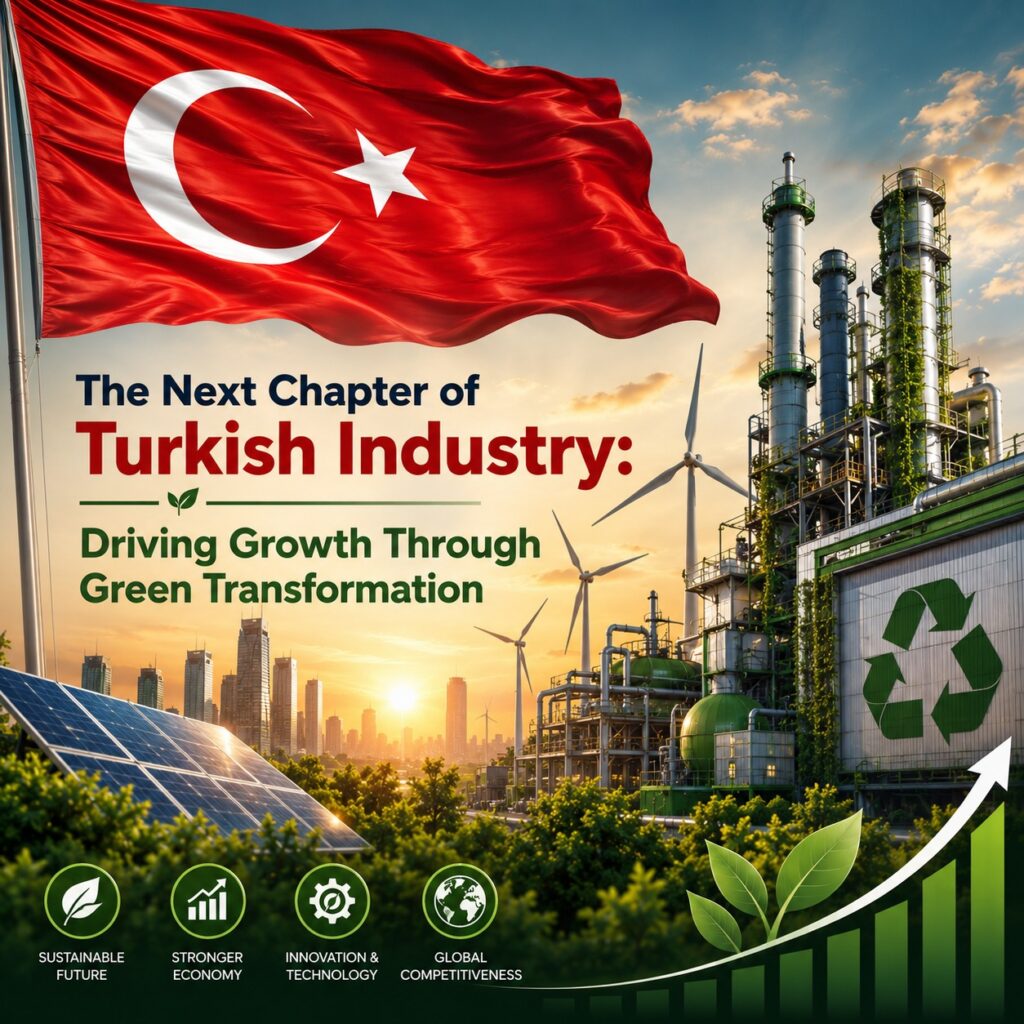
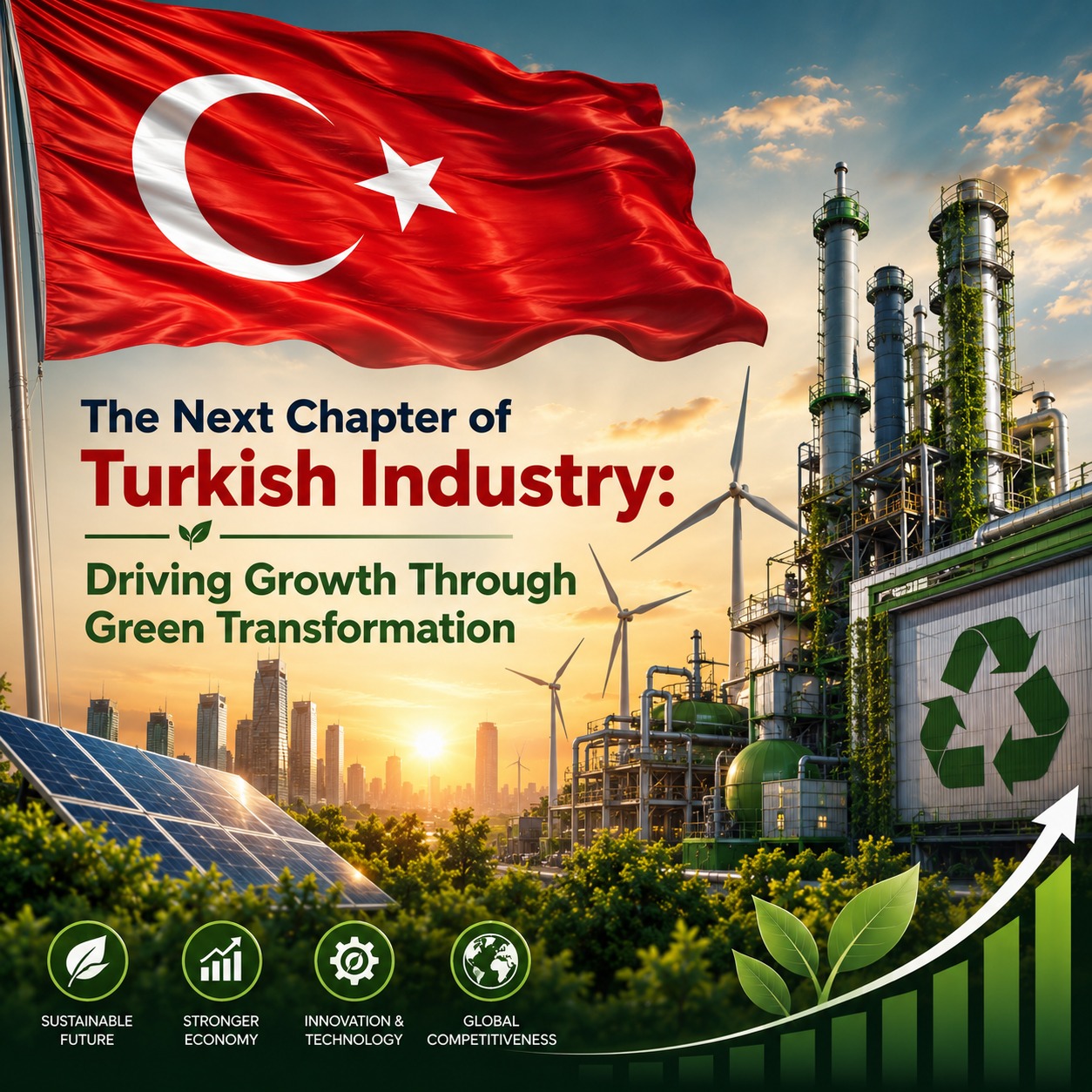
In essence, achieving environmental goals is only one aspect of Türkiye’s green transformation. It represents a vision of a modern, resilient, and innovation-driven economy. By combining advanced manufacturing, renewable energy, digital technologies, and sustainable practices, Türkiye is strengthening its global competitiveness. It is also demonstrating that economic growth and environmental responsibility can go hand in hand.