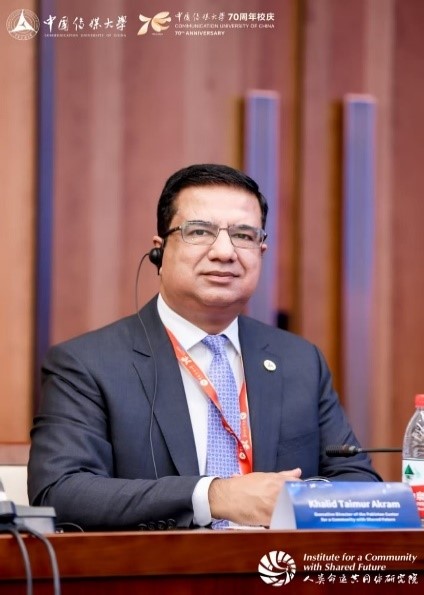

Jointly Written by Mr. Khalid Taimur Akram is the Executive Director, Pakistan Research Center for a Community with Shared Future (PRCCSF) and Mr. Kalandar Abdurakhmanov, Academician of the Academy of Sciences of the Republic of Uzbekistan.
Trade, logistics, industrial cooperation, and human capital are shaping a new agenda for regional connectivity
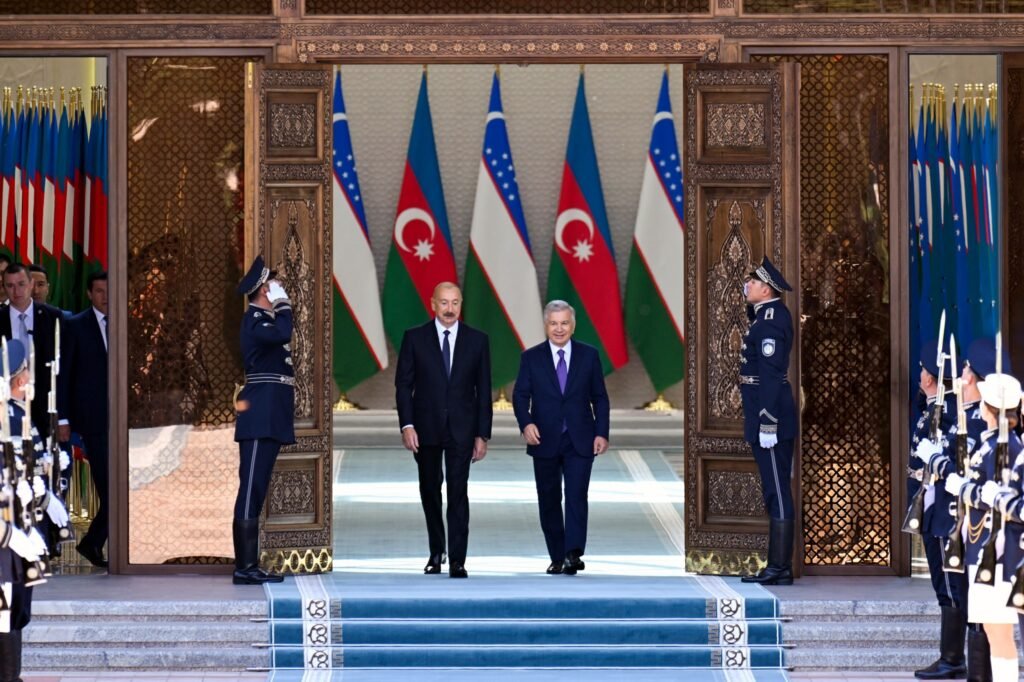
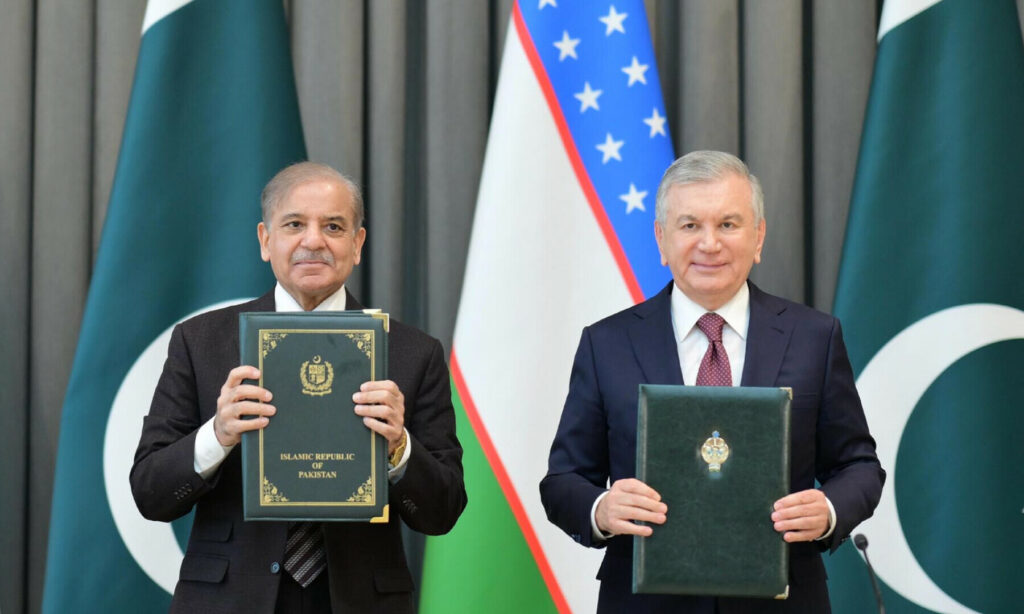
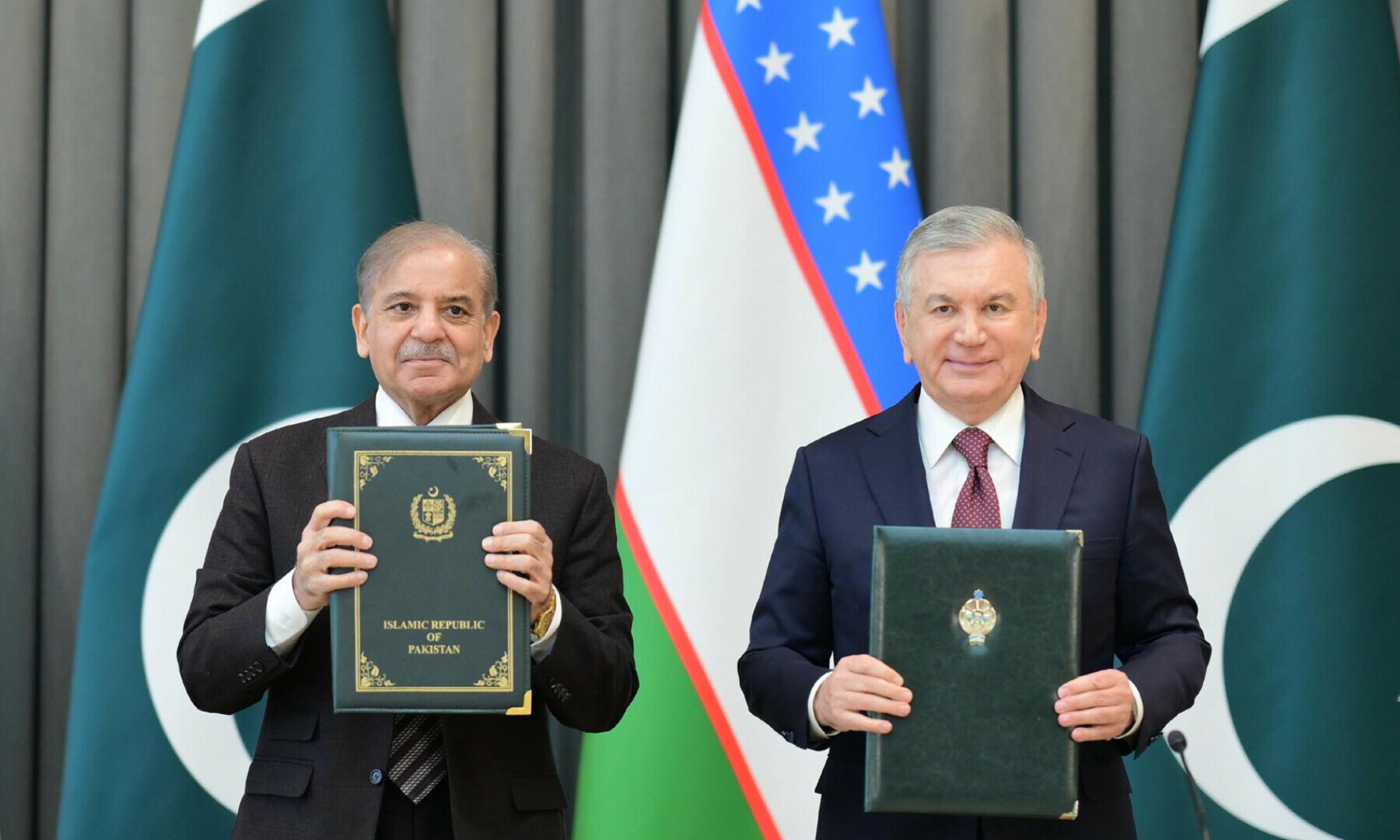
The true value of intergovernmental agreements is measured not by the volume of ceremonial wording, but by how quickly they deliver practical results for businesses and citizens. When delivery times and administrative costs fall, markets expand, new jobs are created, skills exchange grows, and mutual trust deepens, diplomacy becomes economic outcome. It is precisely this pragmatic logic that has underpinned, in recent years, the dialogue between the President of the Republic of Uzbekistan, Shavkat Mirziyoyev, and the Prime Minister of the Islamic Republic of Pakistan, Shehbaz Sharif-setting the framework for accelerating trade, economic, and humanitarian cooperation.
Trade: momentum exists, the target is set-now the next step is to structure the expansion
The first and most measurable indicator is bilateral trade. By the end of 2025, trade turnover between Pakistan and Uzbekistan reached USD 445.8 million, while both sides set an ambitious benchmark of increasing bilateral trade to USD 2 billion.
These figures matter not as ends in themselves, but as a signal: business sees opportunity, and the two governments have formalized the political will to scale cooperation to a new level. The next logical step is to translate the headline target into a manageable, results-oriented roadmap-expanding the product range, removing bottlenecks in logistics, and harmonizing trade procedures.
The trade structure already reflects the complementary nature of the two economies: Uzbekistan supplies agricultural products, cotton yarn, chemical goods, and transport services, while Pakistan exports pharmaceutical products, textiles, foodstuffs, and light-industry goods.
This is where the key opportunity for acceleration lies: growth can be achieved both by expanding existing trade flows and by launching cooperative projects that generate higher value added.
Logistics: the key to competitive pricing and predictable delivery times
For Eurasian trade, delivery time and transport costs remain decisive. For Uzbekistan, access to seaports is a strategic priority for diversifying foreign trade routes; for Pakistan, it is an opportunity to strengthen the role of its port infrastructure as a regional hub. In this context, the ports of Karachi and Gwadar are increasingly viewed as critical anchors of the southern corridor, enabling more resilient supply chains.
A flagship infrastructure project that is reshaping the “new geometry” of connectivity between Central and South Asia is the Trans-Afghan railway along the route Termez – Mazar-i-Sharif – Kabul – Peshawar. In July 2025, a framework agreement was signed-an important step toward the project’s practical implementation in a trilateral format involving Uzbekistan, Afghanistan, and Pakistan.
Project assessments cited in official and expert sources point to a substantial economic impact: reducing cargo transit time between Pakistan and Uzbekistan from roughly 35 days to 3–5 days, and cutting the cost of shipping a standard container by nearly threefold.
For business, these are not abstract benefits but concrete changes in cost calculations: warehousing and financing expenses decline, capital turnover accelerates, products become more price-competitive, and companies gain the ability to work with more “time-sensitive” product categories-including perishable goods and those that require precise delivery planning.
Air connectivity also carries special significance. In 2024–2025, the growth of mutual tourist flows was supported by visa liberalization and the restoration of direct air services; flight frequency increased to four per week, linking Tashkent, Islamabad, and Lahore.
This boosts not only tourism but also business mobility: the cycle of meetings and negotiations shortens, contracts are concluded faster, and it becomes easier to expand service-sector and educational exchanges.
Finally, there is the “invisible” layer of logistics-procedures. In today’s environment, trade acceleration increasingly comes through harmonization and digitalization: alignment of sanitary and phytosanitary requirements, electronic declarations, data exchange, and single-window solutions. In practical terms, these measures reduce border-crossing time and transaction costs-and therefore directly affect the final price paid by the consumer.
Industrial cooperation and investment: creating value added together
Sustainable bilateral relationships often begin with trade, but it is cooperation-joint production and joint entry into third-country markets-that truly accelerates development. Priority areas for deeper industrial cooperation on the current agenda include pharmaceuticals, textiles, and the leather industry. The establishment of joint ventures and the localization of production are seen as mechanisms to increase value added and expand export potential.
Cooperation delivers a triple dividend. First, it increases the share of higher value-added output-meaning more jobs and a broader tax base. Second, it boosts demand for technology, quality standards, design, and marketing-that is, for the competencies that underpin long-term competitiveness. Third, joint projects create supplier and service ecosystems around “anchor” production facilities, opening additional space for small and medium-sized enterprises.
The investment dimension requires transparent rules: clear criteria for incentives, strong protection of property rights (including intellectual property), long-term contractual frameworks, and modern dispute-resolution mechanisms. The lower the institutional risks, the faster capital moves into production, technology, and jobs.
A particular “accelerator” for cooperation is the mutual alignment of certification procedures-especially in pharmaceuticals. When regulatory requirements are harmonized and laboratory control procedures are streamlined, time-to-market is reduced and access to medicines becomes more affordable for the population. Another practical block is the financial infrastructure of trade: expanding correspondent banking relationships, speeding up payments, and developing instruments for pre-export financing and export insurance. These solutions increase the predictability of settlements and reduce barriers for companies-especially mid-sized businesses.
Human capital and people-to-people ties: the foundation of long-term partnership
Economic projects endure only where skilled personnel are available and where stable channels of interaction exist between societies. For that reason, educational programs, scientific cooperation, tourism, and cultural initiatives should be viewed as the backbone of an “economy of trust”-without which major agreements lose momentum at the implementation stage.
A telling example of institutionalizing these ties is the opening in Karachi of the UzbekPak International Trading Centre and the UzbekPak Cultural Centre, established with the support of the Embassy of Uzbekistan and partners in Pakistan.
Such platforms solve practical tasks: they help companies find partners, obtain reliable information, promote products, and support transactions, while cultural initiatives strengthen mutual trust-the most valuable “invisible asset” behind any trade and investment relationship.
Tourism, in turn, generates a rapid multiplier effect: demand rises for transport services, hospitality, food and catering, handicrafts, and guided tours. In parallel, infrastructure and service quality improve, employment expands, and regional development gains traction. The growth in air connectivity and the liberalization of visa procedures have already supported increased tourism exchange. In particular, the number of Pakistani tourists visiting Uzbekistan, according to 2024 data, stood at 5.4 thousand, while in 2025 it increased more than threefold and exceeded 18 thousand. For both countries, this means a broader market for services and stronger interpersonal links.
Special attention should also be given to training specialists with “cross-border” competencies that directly accelerate the execution of economic decisions: translation and interpretation, international trade law, customs administration, logistics, and digital commerce. Joint courses, internships, and professional certification in these areas deliver measurable results: documentation errors decrease, clearance processes accelerate, transaction costs fall, and the quality of business communication improves.
From agreements to implementation: how to lock in results through measurable indicators
Pakistan and Uzbekistan’s agenda already contains all key elements of a growth formula: expanding trade dynamics, a stated goal of increasing bilateral turnover, an infrastructure corridor that changes delivery times and costs, high value-added sectors for industrial cooperation, and a humanitarian foundation of trust.
The next step is managerial “stitching” of these elements through practical execution: clear accountability, deadlines, interagency coordination, and simple outcome metrics.
The most effective approach is to measure progress not through broad declarations, but through indicators that matter to businesses and citizens: how long border crossing takes; how much container shipping costs have declined; how flight frequency has increased; how many joint ventures and localization projects have been launched; and how educational and professional exchanges have grown. In this format, diplomatic decisions become economic results-and economic results, in turn, reinforce trust and the political sustainability of cooperation.
A new phase of Pakistan–Uzbekistan engagement is strengthening the “economy embedded in diplomacy.” The faster and cheaper goods move, the clearer and more transparent trade rules become, and the deeper industrial cooperation and human capital development go, the more quickly agreements translate into what society can see and feel: competitive prices, new jobs, rising incomes, broader educational opportunities, and stronger ties between people.