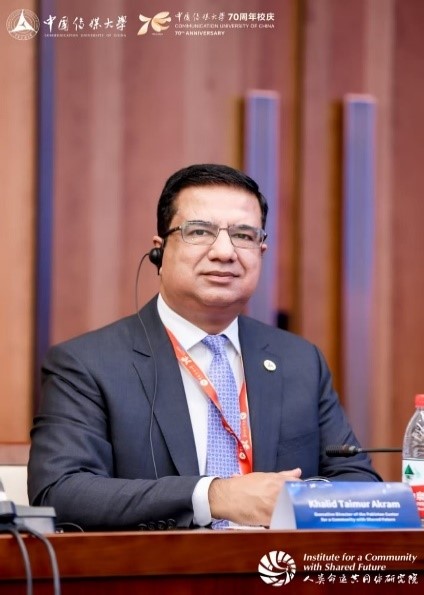
Written by Mr. Khalid Taimur Akram is the Executive Director, Pakistan Research Center for a Community with Shared Future (PRCCSF).
Abstract
The maritime domain is significantly important for global trade, energy transportation, and economic sustainability. However, it faces a rising tide of non-traditional maritime security (NTMS) challenges, surpassing conventional naval confrontations between states. These evolving threats, which range from piracy, maritime terrorism, smuggling, and illegal fishing to environmental degradation, cyber intrusions, and sociopolitical disruptions, pose significant risks to marine infrastructure, economic stability, and national security. This study examines the increasing complexity of NTMS threats and their impact on financial systems, with a particular focus on Pakistan’s maritime domain.
The research underscores the urgent need for a comprehensive and functional classification system to categorize maritime security threats, which can serve as a foundation for more effective maritime security frameworks. By analyzing the capabilities and methods of various non-state and transnational actors, the study identifies key vulnerabilities in marine governance and response mechanisms. A critical assessment of current detection and mitigation systems reveals strategic and operational gaps in confronting these threats.
Using Pakistan as a case study, the research examines the linkages between non-traditional challenges in maritime domains and the country’s economic vulnerabilities, particularly concerns related to the China-Pakistan Economic Corridor (CPEC), port security, and maritime trade routes. The study proposes a multidimensional threat classification model designed to enhance threat perception, resource allocation, and inform policymaking.
Hence, the research advocates for integrating the classification framework into regional and international maritime cooperation initiatives, which would aspire to support the development of resilient, adaptive, and collaborative maritime security strategies that safeguard economic interests and contribute to a secure and sustainable maritime environment.
Keywords: Non-traditional security threats, Maritime security, Policymaking in maritime domains, China-Pakistan Economic Corridor (CPEC)
- Introduction
The maritime domain is the lifeline of the global economy. It serves as a primary medium for international trade, energy transportation, and interconnectivity among states. Over 90% of world trade, by volume, and nearly 70% by value, is transported through seas and oceans, making maritime routes indispensable for economic interdependence, energy security, and international commerce (UNCTAD, 2022). Oceans serve not only as routes for goods and energy but are also central to communication, connectivity, and resource extraction. For states like Pakistan, whose geography provides access to critical sea lanes, situated along the Arabian Sea with access to the Indian Ocean, the maritime domain represents both an opportunity for economic growth and a potential source of vulnerability.
Traditionally, maritime security has been understood in terms of naval confrontations, blockades, territorial disputes, and interstate conflicts. However, the post-Cold War era has witnessed the emergence of non-traditional maritime security (NTMS) threats, including piracy, smuggling, illegal fishing, cyber intrusions, and environmental degradation. These threats are transnational and may involve a wide range of actors, including pirates, terrorists, smugglers, and transnational criminal networks (Bueger, 2015; Klein 2011). These unconventional threats pose a significant threat not only to maritime safety but also to economic stability, regional cooperation, and national security.
In the context of South Asia, particularly for Pakistan, NTMS threats intersect directly with national economic sustainability. Pakistan’s strategic location, bordering the Arabian Sea and serving as the gateway to the energy-rich Gulf and the landlocked Central Asian Republics, makes it a crucial maritime actor. With the development of the China-Pakistan Economic Corridor (CPEC) as a flagship project under China’s Belt and Road Initiative (BRI), Pakistan’s maritime domain has acquired even greater geopolitical and economic importance. However, these opportunities are paralleled by a range of security challenges, including terrorism, smuggling, piracy, illegal, unreported and unregulated (IUU) fishing, and environmental risks.
This research paper explores these dynamics in detail. It begins by underlining the importance of ships and maritime trade in sustaining the global economy, followed by a discussion of non-traditional maritime security challenges. It then highlights existing gaps in maritime governance and security mechanisms before turning to an in-depth exploration of the Belt and Road Initiative (BRI) and its maritime dimensions. Using Pakistan and CPEC as a case study, the paper identifies vulnerabilities, evaluates responses, and proposes a multidimensional threat classification model that can enhance policymaking and maritime governance. Ultimately, the study aims to contribute to scholarly and policy-oriented discussions on building a sustainable and secure maritime future for Pakistan and the wider region.
- Importance of Maritime Transportation in Global Trade
Safe and efficient means of transportation are one of the most vital elements for any business to flourish. In today’s world of urbanization, rapid growth in technology and industries, as well as the transportation of goods from one place to another, is of paramount importance. Now, when it comes to transportation, there are many alternatives a business or company can choose from, such as airways, roadways, railways, etc., but the best medium to opt for will always be waterways. Maritime shipping offers several benefits that can help businesses grow in a safe & economical manner. Maritime transport forms the backbone of globalization. According to the United Nations Conference on Trade and Development (UNCTAD), over four-fifths of global trade in goods is transported by sea. It provides crucial links between nations, enabling goods to be transported across continents and oceans. The vast network of shipping routes connects producers with consumers worldwide, promoting trade expansion and economic growth. The efficient exchange of goods on a global scale would be impossible without maritime transportation. Containerized shipping facilitates the cost-effective movement of manufactured goods, while bulk carriers transport essential raw materials, including iron ore, grain, and coal. Tankers are responsible for delivering oil and liquefied natural gas, securing energy flows across continents.
The efficiency of maritime trade lies in its ability to handle large volumes at low costs. For instance, a single ultra-large container vessel can transport over 20,000 containers, drastically reducing per-unit transportation expenses compared to land or air routes (Stopford, 2020). Maritime chokepoints such as the Strait of Malacca, Strait of Hormuz, and Bab el-Mandeb, although vulnerable, remain vital arteries of international commerce (Kraska, 2011).
For developing countries like Pakistan, maritime trade is not merely important but existential. Pakistan’s economy is highly dependent on imports of energy, machinery, and industrial raw materials, as well as exports of textiles, rice, and other goods. Over 95 percent of Pakistan’s international trade by volume passes through its seaports, primarily Karachi, Port Qasim, and the emerging Gwadar port (World Bank, 2022; Ali, 2020). Any disruption to these maritime arteries would paralyze the national economy, jeopardize energy supplies, and trigger inflationary shocks.
Furthermore, the link between maritime trade and economic sustainability is not limited to shipping goods. Maritime infrastructure (ports, shipping lanes, coastal economic zones, and logistics networks) creates jobs, attracts foreign direct investment, and stimulates ancillary industries such as ship repair, warehousing, insurance, and finance. In the case of Gwadar under CPEC, the anticipated development of port-linked special economic zones illustrates how maritime infrastructure can transform national economic landscapes.
In summary, boats and ships are not just instruments of transport; they are the very backbone of globalization, economic development, and national prosperity. This importance, however, makes them a very easy and prime target for a wide range of non-traditional security threats that seek to exploit vulnerabilities in the global economic order.
2.1 Importance of the Indian Ocean Rim (IOR)
The Indian Ocean Rim (IOR) is among the most strategically significant maritime regions in the world. Being home to nearly 2.7 billion people and accounting for a substantial share of global trade, the IOR serves as the bridge connecting the energy-rich Middle East, the manufacturing centers of East Asia, and the consumer markets of Europe and Africa (Cordner, 2010). More than 50 percent of the world’s container traffic and two-thirds of global oil shipments pass through the Indian Ocean (Weitz, 2019). This concentration of trade routes makes the IOR a vital artery for globalization.
Apart from trade, the IOR is also rich in natural resources, including hydrocarbons, fisheries, and seabed minerals, which underpin the “blue economy” aspirations of many coastal states (Gopalakrishnan, 2016). However, the same resource wealth has attracted illicit activities such as IUU fishing, smuggling, and maritime crime, intensifying the security dilemmas of littoral states.
When it comes to Pakistan, the IOR is both a lifeline and a challenge. Its ports, particularly Karachi and Gwadar, serve as gateways to the IOR’s major shipping lanes. Pakistan’s proximity to the Strait of Hormuz makes it a potential energy and trade hub, while participation in China’s Maritime Silk Road links it to wider IOR economic integration. Yet, the challenges of the IOR like piracy of Somalia, instability in Yemen, trafficking along the Makran coast, and environmental degradation directly spill over into Pakistan’s maritime domain.
Regional organizations such as the Indian Ocean Rim Association (IORA) aim to promote cooperation in areas such as maritime safety, fisheries management, and disaster response. However, rivalries among big powers — including India, China, and the United States — often limit the effectiveness of multilateral initiatives (Chaziza, 2021). As a result, the IOR remains a contested and fragile maritime space, where NTMS threats persist alongside opportunities for economic cooperation.
- Maritime Security Challenges: From Conventional to Non-Traditional
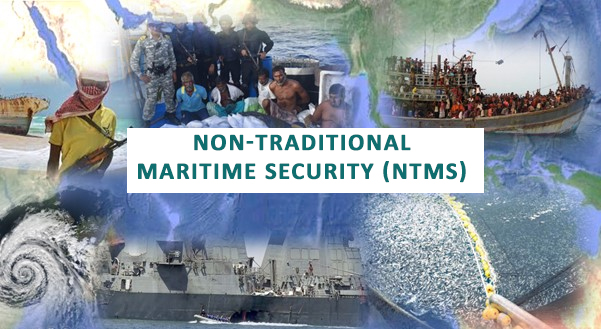
The nature of maritime security has changed significantly during the past few decades. In the past, state-centric conflicts including territorial disputes, sea-based warfare, and naval blockades were the main emphasis of maritime security (Till, 2018). While these issues remain relevant, especially in disputed waters like the South China Sea, they are largely predictable and governed by international regimes like the United Nations Convention on the Law of the Sea (UNCLOS). NTMS threats, on the other hand, are multifaceted, transnational, and unpredictable in character. They often involve non-state actors such as pirates, criminal syndicates, and terrorist groups, who take advantage of governance gaps in weak or developing nations. They are extremely difficult to identify, classify, and mitigate because of their increased complexity due to technological vulnerabilities, environmental dangers, and socioeconomic changes. (Bueger & Edmunds, 2017).
3.1 Non-Traditional Maritime Security (NTMS) Threats
NTMS threats are of the following types:
a. Piracy and Armed Robbery:
One of the most prominent Non-Traditional Maritime Security (NTMS) threats is piracy. Somali piracy, in which armed groups hijacked commercial ships for ransom in the western Indian Ocean and Gulf of Aden, gained significant momentum in the early 2000s. According to the International Maritime Bureau, pirates attacked 237 ships and took nearly 700 seafarers hostage in 2011 alone (Oceans Beyond Piracy, 2017). Although Somali piracy has reduced due to international naval coalitions, hotspots in Southeast Asia and the Gulf of Guinea still exist. Piracy directly threatens oil tankers and cargo traffic passing near the Exclusive Economic Zone (EEZ) of nations like Pakistan, which are situated close to the Arabian Sea (Cordner, 2010)
b. Maritime Terrorism:
Maritime terrorism involves intentional attacks on maritime property for political or ideological objectives. The USS Cole attack in Yemen in 2000 and the 2008 Mumbai terror attacks, in which intrusions were made by sea, identified ports, naval ships, and coastal cities as vulnerable targets (Chalk, 2008). Owing to Pakistan’s proximity to volatile regions like the Middle East, the threat of extremist groups targeting ports, ships, or offshore facilities is not an imaginary one but a reality (Gul, 2020).
c. Smuggling and Trafficking:
The maritime domain is a key channel for smuggling narcotics, weapons, and humans. The UN Office on Drugs and Crime (UNODC) notes that up to 90 percent of illicit Afghan drugs are trafficked through maritime routes in the Indian Ocean (UNODC, 2021). Because of its extensive coastline and limited surveillance capabilities, Pakistan serves as a significant transit centre for these illicit flows, jeopardizing security and governance. The Makran coast has been flagged as a hub for narcotics smuggling, with proceeds often linked to organized crime and terrorism financing (Humayun, 2019).
d. Illegal, Unreported, and Unregulated (IUU) Fishing
IUU fishing poses a threat food security, biodiversity, and the livelihoods of coastal societies. The Indian Ocean, with its valuable tuna and shrimp resources, is a favourite target for foreign fleets applying unsustainable methods. For Pakistan, whose fisheries industry provides jobs for millions and a major contribution to exports, IUU fishing means an economic setback and a sovereignty test (FAO, 2021).
e. Environmental Degradation and Climate Change
Long-term and serious NTMS concerns have been brought about by climate change. Coastal infrastructure is under risk due to rising sea levels, while shipping and port operations are disrupted by more frequent cyclones. Oil spills and plastic waste cause marine pollution, which erodes fisheries and tourism (Petersen, 2011). Pakistan, identified as one of the most climate-vulnerable countries in the world (Germanwatch, 2021), faces severe risks to its coastal populations and maritime economy.
f. Cyber security Threats
Modern shipping and ports depend heavily on digital technologies, ranging from GPS and automated cranes to electronic bills of lading. This makes them susceptible to cyber incursions. Incidents like the 2017 NotPetya ransom ware attack, which paralyzed Maersk’s operations worldwide, illustrate the magnitude of disruption possible (Jensen, 2018). For developing economies such as Pakistan, with nascent but weak digital infrastructure, cyber threats pose an essential aspect of maritime security.
g. Socio-Political Disruptions
Apart from physical and digital threats, maritime domains are also influenced by political instability, insurgency, and governance gaps. Weak regulation of ports, corruption in customs, and inadequate maritime domain awareness (MDA) allow criminal networks to flourish. For Pakistan, internal political instability often hinders unified maritime policymaking, leaving important projects like CPEC exposed to inefficiencies and risks.
- Gaps in Current Maritime Security Systems
The international community has made progress in addressing Non-Traditional Maritime Security (NTMS) threats but the major strategic, operational, and institutional gaps are still there. These gaps intensify vulnerabilities, particularly for developing maritime states such as Pakistan.
a. Fragmented Governance:
Maritime governance is characterized by overlapping jurisdictions and fragmented responsibilities. At the international level, there are institutions like the International Maritime Organization (IMO) that oversee shipping safety and pollution prevention, and the United Nations Convention on the Law of the Sea (UNCLOS), which gives the maritime zones a legal framework. Regionally, there are cooperative mechanisms in place, such as the Djibouti Code of Conduct for counter-piracy. The majority of these frameworks, though, lack enforcement mechanisms. Nationally, Pakistan’s maritime governance is divided among the Pakistan Navy, Pakistan Maritime Security Agency (PMSA), Ministry of Ports and Shipping, and provincial authorities, often leading to duplication, bureaucratic delays, and weak coordination (Ali, 2020).
b. Limited Maritime Domain Awareness (MDA):
Effective security requires timely information on maritime activity. Advanced economies employ advanced satellite imagery, Automatic Identification System (AIS) data, and integrated coastal surveillance. Pakistan lacks comprehensive MDA systems, which makes it difficult to monitor its 1,046 km coastline and large Exclusive Economic Zone (EEZ). This leaves the door open to smuggling, piracy, and IUU fishing (Humayun, 2019).
c. Resource and Capability Deficits:
Naval and coast guard resources in Pakistan are limited as compared to the scale of threats. The Pakistan Navy primarily focuses on conventional defense against India, leaving less equipment for NTMS operations. The Pakistan Maritime Security Agency (PMSA) is underfunded, has few patrol vessels, and outdated equipment, hampering surveillance and enforcement (Cordner, 2010).
d. Inadequate Legal and Policy Frameworks:
Pakistan’s legislative framework for maritime security is underdeveloped. For example, legislation regarding IUU fishing, environmental protection, and cybercrime in the maritime domain is weakly enforced or lacks comprehensive coverage. Additionally, there is no integrated national maritime strategy that fully links economic planning with security issues.
e. Regional Cooperation Deficit:
The Indian Ocean Region (IOR) is marked by mistrust among major powers, such as India, China, and the United States. This reduces the scope for collective maritime governance. Pakistan, for its part, has limited institutionalized maritime cooperation with neighbours like Iran and India, despite shared vulnerabilities such as smuggling and terrorism.
In summary, these gaps highlight why NTMS threats remain resilient despite decades of international and national efforts. Addressing them requires not just more naval resources, but integrated frameworks that combine governance, technology, law enforcement, and international cooperation.
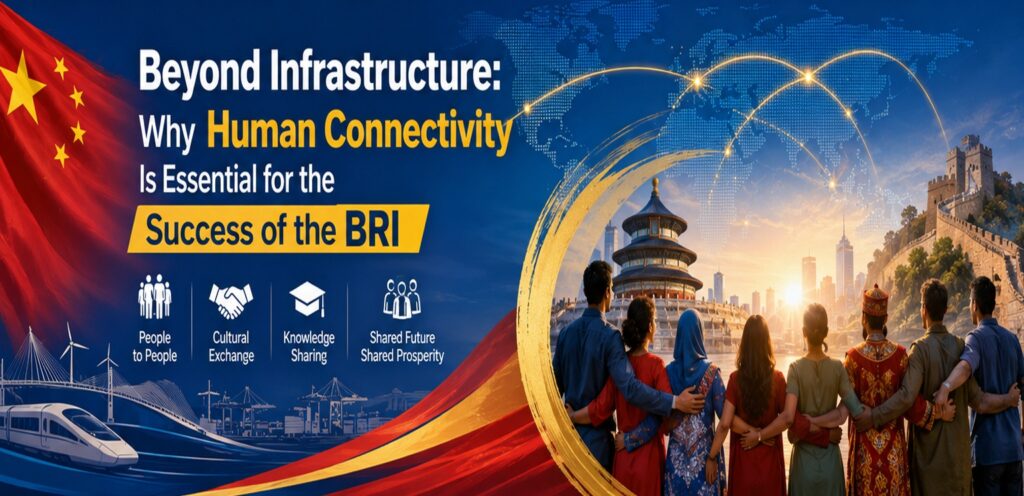
- The Belt and Road Initiative (BRI) and the Maritime Silk Road
The Belt and Road Initiative (BRI), initiated by China in 2013, stands as one of the most ambitious infrastructure and connectivity projects in recent history. With trillions of dollars invested and spanning more than 150 countries, the Belt and Road Initiative (BRI) seeks to reshape international trade routes through two key elements: the 21st Century Maritime Silk Road (sea based connectivity) and the Silk Road Economic Belt (land corridors). Because of its strong maritime orientation, BRI inevitably overlaps with maritime security and economic sustainability concerns (Chaziza, 2021 ; Scott, 2015).
5.1 Strategic Vision of the Maritime Silk Road
The Maritime Silk Road connects ports in China with Southeast Asia, South Asia, Africa, the Middle East, and Europe. It envisions an interconnected chain of modern ports, industrial parks, logistics hubs, and special economic zones along strategic chokepoints. From Gwadar in Pakistan to Hambantota in Sri Lanka, Djibouti in Africa, and Piraeus in Greece, Chinese investments aims to create a “string of pearls” of maritime infrastructure (Wuthnow, 2017). It is not only securing China’s sea lanes but remapping the global shipping routes.
For China, which imports nearly 70 percent of its crude oil and relies heavily on seaborne trade, securing maritime routes is vital. The Maritime Silk Road aims to address the so-called “Malacca Dilemma,” the vulnerability of Chinese energy supplies passing through the Strait of Malacca that is narrow and capable of being blockaded (Weitz, 2019). By investing in alternative routes and port facilities, Beijing seeks redundancy and resilience.
5.2 Economic Opportunities under BRI
The Belt and Road Initiative (BRI) has created unprecedented economic opportunities for partner states, most notably developing economies suffering from gaps in critical infrastructure. For marine states like Pakistan, the BRI offers both a model for economic transformation and a solution to long-standing structural limitations (Gul, 2020). The opportunities can be evaluated along a number of interconnected dimensions.
• Infrastructure Development: One of the most visible outcomes of BRI is the extent of infrastructure modernization it brings to partner countries. Many states along the BRI corridor suffer from crumbling transport networks, inadequate ports, and inefficient logistics networks, which limits the trade competitiveness. By mobilizing large-scale financing and technical expertise, BRI has facilitated the construction and expansion of deep-sea ports, highways, railways, and special economic zones (Hussain, 2017).
For example:
- In Sri Lanka, the upgrading of Hambantota and Colombo ports has increased its transshipment capacity in South Asia.
- In Kenya, the Standard Gauge Railway connecting Mombasa and Nairobi has lowered transportation costs substantially, facilitating quicker movement of cargo inland (Paal, 2019).
- In Pakistan, the construction of Gwadar Port under CPEC aims to ease congestion at Karachi and Port Qasim, besides offering a strategic deep-sea alternative (Kamal, 2019).
These kinds of projects enhance a country’s ability to integrate into global supply chains, reduce bottlenecks, and lower costs for exporters and importers. Infrastructure upgrades also attract foreign direct investment (FDI), because businesses will be more inclined to set up operations where logistics and connectivity are reliable (UNCTAD, 2022).
• Trade Facilitation and Regional Connectivity: The BRI aims to facilitate and increase trade flows by lowering physical and regulatory barriers. Enhanced maritime corridors and port capacity directly translate into greater shipping efficiency. For instance, new container terminals, automated cargo handling systems, and hinterland links lower turnaround times for ships and boost throughput.
For Pakistan, Gwadar’s development offers direct access to the international shipping route, especially close to the Strait of Hormuz. This converts Pakistan from being an energy importer heavily reliant on transshipment centres in the Gulf (like Dubai) into a direct trade hub (Small, 2015). Further, the development of road and rail corridors through CPEC links Gwadar with western China and Central Asia, allowing Pakistan to become a land bridge between the energy-rich areas and consumer markets in East Asia.
The economic rationale is straightforward: greater connectivity reduces costs of transaction, increases reliability, and stimulates regional integration. In turn, this opens new opportunities for exports, reduces reliance on costly intermediaries, and strengthens economic resilience against external shocks.
• Employment Generation and Skills Transfer: Large construction and port development projects create high levels of employment opportunities both in the construction period as well as in long-term facility operation. For instance:
- Construction of Gwadar Port and related infrastructure has provided employment opportunities for thousands of Pakistani engineers, technicians, and labourers (Wolf, 2020).
- Special Economic Zones (SEZs) under CPEC will try to bring in manufacturing industries, which can provide hundreds of thousands of jobs in industries like textiles, auto, and electronics.
Aside from direct employment, co-ownership with Chinese companies allows for technology and skill transfer. Pakistani technicians and engineers who work together with Chinese professionals acquire experience in port management, maritime logistics, and state-of-the-art construction practices. In the long run, this helps build capacity among Pakistan’s labour force and makes it less dependent on foreign expertise.
Critics tend to dispute that most BRI projects disproportionately use Chinese workers. This is only half true in the beginning, but data from other nations show that local employment growth accompanies mature projects. Pakistan should arrange agreements to ensure transfer mechanisms for skills and local employment opportunities to derive the most benefits.
• Investment Attraction and Access to Financing: The greatest economic potential in BRI may be access to Chinese funding. Conventional global creditors like the World Bank, IMF, or Asian Development Bank tend to impose very strict conditions on lending, which makes it hard for many developing nations to obtain loans. On the other hand, Chinese funding under BRI is relatively more relaxed, quicker, and in bulk.
For Pakistan, CPEC is the largest one-time flow of foreign investment in its history. Projects worth more than $60 billion span energy, transportation, and industrial development (Javaid, 2016). Without BRI, Pakistan is unlikely to obtain financing of this scale given its budgetary limitations and successive IMF programs.
Chinese investment also has a catalytic impact, which leads other nations and private investors to join in. For instance, the Gulf States have shown interest in investing in free zones in Gwadar, while multinational companies are also increasingly looking at Pakistan’s manufacturing and logistics sectors.
5.3 Security Implications of BRI
While BRI promises economic benefits, it also raises security concerns:
• Maritime Infrastructure as Targets: While the development of new ports and shipping corridors improves connectivity, it also makes them valuable targets for terrorists, pirates, and hostile actors. Facilities such as Gwadar Port or Sri Lanka’s Hambantota Port could attract sabotage attempts, causing damage to trade flows and undermining investors’ confidence. The high visibility of these projects increases their exposure to asymmetric attacks (Cordner, 2010).
• Debt and Sovereignty Issues: BRI financing tends to be massive loans, which can leave the recipient nations with debt traps. Sri Lanka’s 2017 move to lease Hambantota Port to China for 99 years after defaulting on its debt is the best example (Hurley, Morris, and Portelance, 2018). Such deals raise fears of erosion of sovereignty and dependence on China to a point where a state’s strategic freedom is restricted.
• Geopolitical Rivalries: The increasing footprint of China in pivotal maritime areas has prompted counterbalancing efforts from India, the United States, Japan, and other powers. This has produced accelerated naval deployments and infrastructure rivalry in the Indian Ocean and South China Sea (Holmes and Yoshihara, 2008). With increasing great power competition, there is increased danger of militarization around key chokepoints, which undermines the cooperative vision of BRI.
• Increased Exposure to NTMS Threats: New trade routes across the sea cover areas that are prone to piracy, terrorism, arms smuggling, and human trafficking. For example, the Gulf of Aden and the Arabian Sea are still the hot spots of non-traditional threats (Kraska and Wilson, 2009). By increasing trade volume and infrastructure across such areas, BRI could unintentionally enhance the vulnerability of partner states to non-traditional maritime security threats.
5.4 BRI and Non-Traditional Maritime Security
The BRI’s success depends not only on physical infrastructure but also on secure maritime environments. Non-traditional threats such as piracy in the Arabian Sea, IUU fishing in the Indian Ocean, cyber-attacks on port systems, and terrorism targeting logistics hubs directly threaten BRI projects. For example, the Gwadar port in Pakistan has faced insurgent attacks repeatedly by the groups opposed to Chinese investments (Ramachandran, 2018).
China has acknowledged these weaknesses and is increasingly integrating maritime security cooperation into BRI frameworks (MFA China, 2015). Joint naval exercises, port security agreements, and capacity-building initiatives have become part of China’s approach. However, Pakistan and many other host nations, lack the institutional and operational capacity to guarantee full-spectrum security (Wolf, 2020).
5.4 Critiques of BRI and Maritime Risks
Critics argue that the BRI is not purely an economic project but also a geopolitical strategy to expand Chinese influence. The militarization of BRI-linked ports, whether through dual-use facilities or security agreements, is a point of contention. Additionally, environmental groups warn that massive maritime infrastructure projects disrupt ecosystems, aggravate coastal vulnerabilities, and risk unsustainable debt burdens (Chatzky and McBride, 2019).
Nonetheless, for Pakistan, the opportunities provided by the BRI, particularly through CPEC, are too significant to ignore. Gwadar’s transformation into a hub of the Maritime Silk Road exemplifies how BRI projects intersect directly with Pakistan’s maritime economy and security challenges.
- Pakistan and the China-Pakistan Economic Corridor (CPEC): Maritime Security in Focus
6.1 Pakistan’s Maritime Domain in Context
Pakistan’s maritime geography offers both opportunities and vulnerabilities. With a coastline stretching over 1,046 km along the Arabian Sea and a vast Exclusive Economic Zone (EEZ) of 240,000 sq. km, Pakistan’s maritime domain is critical for trade, energy imports, and food security. The country’s major port cities, Karachi, Port Qasim, and Gwadar, handle nearly 95 percent of its international trade (Khan, 2018).
The Arabian Sea’s strategic location further increases Pakistan’s maritime importance. It lies at the crossroads of key global shipping routes, linking the Middle East, Africa, and South Asia to East Asia and Europe. Vital chokepoints such as the Strait of Hormuz, through which nearly 20 percent of global oil passes, are less than 400 nautical miles from Pakistan’s coast (Javaid and Jahangir, 2020).
Yet, Pakistan has historically been a land-centric state, with maritime affairs receiving secondary attention. This neglect has left the maritime sector underdeveloped, vulnerable to NTMS challenges, and dependent on foreign assistance for capacity building (Batool and Khan, 2021).
6.2 The Emergence of China-Pakistan Economic Corridor (CPEC)
Launched in 2015 as the flagship of the BRI, the China-Pakistan Economic Corridor (CPEC) is a $62 billion network of roads, railways, pipelines, energy projects, and industrial zones connecting China’s Xinjiang province to Pakistan’s Gwadar Port (Wolf, 2020). CPEC is not merely an economic project but also a strategic transformation of Pakistan’s geopolitical role (Small, 2015).
• Gwadar Port: The crown jewel of CPEC, envisioned as a deep-sea transhipment hub and a gateway for Chinese trade. Its proximity to the Strait of Hormuz offers China a direct outlet to the Arabian Sea, bypassing the Malacca Strait (Kamal, 2019).
• Energy Security: Pipelines under CPEC aim to transport oil and gas from Gwadar to Xinjiang, reducing China’s reliance on vulnerable sea lanes (Weitz, 2019).
• Economic Development: For Pakistan, CPEC promises industrialization, job creation, and integration into global supply chains (Javaid, 2016).
• Geostrategic Leverage: CPEC elevates Pakistan’s strategic importance for China, making its maritime security a joint interest (Chaziza, 2021).
6.3 NTMS Challenges in Pakistan’s Maritime Domain
Despite its promise, CPEC amplifies existing non-traditional security threats in Pakistan’s maritime sphere.
• Terrorism and Insurgency: The Balochistan Liberation Army (BLA) and other insurgent groups have repeatedly targeted Chinese engineers, workers, and facilities in Gwadar (Ramachandran, 2018). Suicide bombings, armed assaults, and ambushes underline the vulnerability of CPEC’s maritime component. Terrorist organizations view Gwadar as a symbol of foreign exploitation and have openly vowed to disrupt the project (Khan and Saeed, 2021).
• Piracy and Armed Robbery: Though piracy in the Arabian Sea has declined since international patrols intensified in the Gulf of Aden, sporadic incidents persist (Kraska and Wilson, 2009). Fishing trawlers and cargo vessels traveling to or from Gwadar face risks from small-scale armed groups. The possibility of piracy resurging remains high if security patrols weaken.
• Smuggling and Illicit Trade: Pakistan’s coastline has long been used for smuggling narcotics, arms, and human trafficking. With CPEC expanding maritime traffic, these networks risk embedding themselves into formal trade flows. This undermines economic stability and facilitates organized crime.
• Illegal, Unreported, and Unregulated (IUU) Fishing: Foreign fleets, particularly from Iran and beyond, exploit Pakistan’s EEZ, causing billions in losses annually (Gul, 2020). This not only threatens food security but also fuels resentment among coastal communities, paving the way for militancy.
• Cyber and Port Security: Modern ports like Gwadar increasingly rely on digitized logistics systems, which are vulnerable to cyber-attacks. Disruption of port operations through hacking could paralyze trade and damage investor confidence. Pakistan currently lacks robust maritime cyber security frameworks (Batool and Khan, 2021).
• Environmental Risks: Large-scale port development, dredging, and increased ship traffic raise the risks of oil spills, marine pollution, and habitat destruction. For a country already vulnerable to climate change, environmental degradation could spark humanitarian and socio-economic crises along the coast.
6.4 Institutional Responses to Maritime Threats
Pakistan has recognized these challenges and initiated several measures:
• Pakistan Navy: Strengthening maritime security through fleet modernization, joint exercises with China, and the Arabian Sea patrols (Rizvi, 2019).
• Pakistan Maritime Security Agency (PMSA): Enhancing coastal surveillance, though resource constraints remain severe (Khan, 2018).
• Special Security Division (SSD): Created specifically to protect CPEC infrastructure, including Chinese personnel (Wolf, 2020).
• International Cooperation: Joint Pakistan-China naval patrols and port security initiatives at Gwadar (Small, 2015).
Yet, significant gaps persist in coordination, resource allocation, and legal frameworks.
6.5 Gwadar: Symbol of Opportunity and Vulnerability
Gwadar is the epitome of dual nature of CPEC. It is an immense opportunity but equally immense vulnerability. Economically, Gwadar could transform Pakistan into a logistics hub, connecting Central Asia and Western China with the Arabian Sea (Javaid and Jahangir, 2020). Strategically, it strengthens China-Pakistan ties while raising Indian and US concerns about Chinese naval presence in the Indian Ocean (Holmes and Yoshihara, 208). Security-wise, Gwadar remains a flashpoint, targeted by insurgents and terrorists and scrutinized by rival states (Ramachandran, 2018).
6.6 Regional and International Implications
CPEC’s maritime dimension has regional ripple effects:
• India: Strongly opposes CPEC, viewing Gwadar as part of a Chinese “string of pearls” strategy to encircle it (Scott, 2015). India’s investments in Iran’s Chabahar Port serve as a counterweight.
• United States: Warns Pakistan about debt dependence and questions the transparency of CPEC agreements.
• Iran: Offers both opportunities (through energy pipelines) and risks (due to US sanctions).
• Arab Gulf States: Interested in Gwadar for trade but worried about China’s long-term influence (Paal, 2019).
Thus, Pakistan’s maritime security under CPEC is not only a domestic concern but also a regional and global issue.
6.7 Towards a Resilient Maritime Security Strategy for CPEC
To safeguard CPEC’s potential, Pakistan must adopt a multi-dimensional strategy:
1) Strengthening Maritime Domain Awareness: Investment in satellite monitoring, coastal radars, and AIS integration (Rizvi, 2019).
2) Enhancing Naval-Civilian Coordination: Bridging gaps between the Navy, PMSA, and civilian agencies.
3) Community Engagement in Balochistan: Ensuring that local populations benefit from Gwadar’s development to reduce insurgent recruitment (Gul, 2020).
4) Cybersecurity Measures: Establishing dedicated maritime cyber defense units (Batool and Khan, 2021).
5) International Partnerships: Leveraging Chinese, Gulf, and regional cooperation for port and trade security.
6) Sustainability Focus: Integrating environmental safeguards into port operations.
Only by combining hard security, socio-economic inclusion, and environmental sustainability can Pakistan ensure that CPEC realizes its promise rather than becoming a source of insecurity.
- Multidimensional Threat Classification Model
Non-traditional maritime security (NTMS) challenges are diverse, interconnected, and often transnational in scope. Traditional frameworks that focus solely on state-centric naval power are insufficient for addressing modern risks such as terrorism, cyber-attacks, environmental degradation, and organized crime (Bueger, 2015). A multidimensional threat classification model provides a structured way to prioritize threats, allocate resources, and develop effective policies (Till, 2018).
7.1 Dimensions of Threats
- Actor Dimension
o State actors: They are engaged indirectly through proxy or gray-zone tactics (e.g., foreign support for insurgents) (Kaplan, 2010).
o Non-state actors: These include terrorist organizations, insurgents, criminal syndicates, pirate groups (Kraska and Wilson, 2009).
o Transnational actors: These include multinational corporations (MNCs), international NGOs, cyber hackers (Batool and Khan, 2021).
- Nature of Threat
o Kinetic: It includes physical attacks such as piracy and smuggling.
o Non-kinetic: Cyber intrusions, financial manipulation, disinformation campaigns are included.
o Environmental: This category includes illegal fishing, marine pollution, and climate-induced risks.
- Targeted Domain
o Ports and infrastructure: Gwadar, Karachi, Port Qasim.
o Sea lanes of communication (SLOCs): Indian Ocean trade routes.
o Coastal communities: socio-economic destabilization fuelling militancy.
o Digital networks: port logistics systems, naval command and control.
- Intensity and Probability
o High probability/low impact: small-scale smuggling.
o Low probability/high impact: cyberattacks on port operations.
o Medium probability/medium impact: IUU fishing, which steadily erodes economic sustainability.
7.2 Policy Applications of the Model
By layering these dimensions, policymakers can:
• Prioritize resources: e.g., allocate naval patrols to high-risk SLOCs, while investing in cyber defense for ports (Rizvi, 2019).
• Enhance coordination: ensure navy, coast guard, customs, and intelligence share threat classification systems (Bueger, 2015).
• Support predictive analysis: integrate big data and AI for forecasting risks like piracy resurgence.
• Regional integration: standardize classification systems with neighbors to foster cooperative responses under BRI frameworks (Wolf, 2020).
This model is not static but adaptive, evolving with new technologies and emerging threats. For Pakistan under CPEC, applying this model can transform ad hoc responses into systemic, intelligence-driven strategies.
- Conclusion and Policy Recommendations
The maritime domain has emerged as a frontline in global security, no longer defined merely by naval confrontations but increasingly shaped by non-traditional threats that blur the line between crime, terrorism, and geopolitical competition (Holmes and Yoshihara, 2008). This research demonstrates that non-traditional maritime security (NTMS) threats pose direct risks to economic sustainability by undermining trade, energy transport, and port development (Bueger, 2015).
Pakistan’s case illustrates these challenges with particular urgency. As the centrepiece of the BRI’s maritime vision, the China-Pakistan Economic Corridor (CPEC) holds transformative potential. Gwadar Port, pipelines, and trade routes could reposition Pakistan as a key maritime hub. Yet, these opportunities come with vulnerabilities which hamper the progress.
8.1 Key Findings
• Maritime transport remains the backbone of globalization, making NTMS threats to shipping and ports global economic concerns.
• BRI expands both opportunities and vulnerabilities by concentrating flows of capital, infrastructure, and trade in strategic maritime hubs.
• CPEC magnifies Pakistan’s dependence on secure seas, but existing gaps in governance, resources, and coordination leave it exposed.
• A multidimensional threat classification framework allows policymakers to navigate the complexity of modern risks.
8.2 Recommendations
- Strengthen Institutional Capacity
• Enhance the Pakistan Maritime Security Agency (PMSA) with funding, training, and technology.
• Develop cyber units dedicated to port and shipping security. - Community-Centred Security in Balochistan
• Integrate Gwadar’s local population into development benefits.
• Invest in fishing, education, and employment to undercut insurgent recruitment. - Integrated Threat Classification Adoption
• Institutionalize the proposed model into Pakistan’s National Maritime Policy.
• Share data with regional partners, especially under Indian Ocean Rim Association (IORA) and BRI frameworks. - China-Pakistan Joint Security Mechanisms
• Expand joint patrols, intelligence sharing, and counterterrorism cooperation.
• Secure energy corridors with combined naval task forces. - Environmental Safeguards
• Establish strict environmental protocols for Gwadar.
• Partner with global organizations on climate adaptation in coastal zones.
8.3 Final Thoughts
Maritime security in the 21st century is not only about defending borders but sustaining economies. Non-traditional threats, from insurgents attacking ports to hackers disrupting logistics, directly undermine economic growth. For Pakistan, success of CPEC will depend less on physical infrastructure and more on its ability to secure, govern, and sustain its maritime domain.
If Pakistan and China can successfully integrate resilient maritime security frameworks, supported by regional cooperation, then CPEC may not only transform Pakistan’s economy but also serve as a model for securing maritime corridors across the BRI. Conversely, neglecting NTMS threats risks turning opportunity into vulnerability, with consequences far beyond Pakistan’s shores.
References
• Ahmad, Naveed. Maritime Crime and Coastal Security in Pakistan. Islamabad: Pakistan Institute for Conflict and Security Studies, 2019.
• Ali, Mazhar. “Maritime Security and the Blue Economy in Pakistan: Prospects and Challenges.” Pakistan Horizon 73, no. 2 (2020): 33–52.
• Batool, Sumaira, and Ejaz Khan. “Maritime Cybersecurity Challenges in Pakistan.” Journal of Security Studies 14, no. 2 (2021): 45–62.
• Brewster, David. India and China at Sea: Competition for Naval Dominance in the Indian Ocean. Oxford: Oxford University Press, 2018.
• Bueger, Christian. “What Is Maritime Security?” Marine Policy 53 (2015): 159–164.
• Chatzky, Andrew, and James McBride. “China’s Massive Belt and Road Initiative.” Council on Foreign Relations, 2019. https://www.cfr.org/backgrounder/chinas-massive-belt-and-road-initiative.
• Chaziza, Mordechai. China’s Belt and Road Initiative and the Mediterranean: Challenges and Opportunities. London: Routledge, 2021.
• —. China’s Belt and Road Initiative and the Global South. Singapore: Palgrave Macmillan, 2021.
• Cordner, Lee. “Rethinking Maritime Security in the Indian Ocean Region.” Journal of the Indian Ocean Region 6, no. 1 (2010): 67–85.
• —. “Maritime Security in the Indian Ocean Region: Compelling Challenges and Limited Opportunities.” Journal of the Indian Ocean Region 6, no. 1 (2010): 1–13.
• Downs, Erica, Jeffrey Becker, and Patrick deGategno. China’s Military Support Facility in Djibouti: The Economic and Security Dimensions of China’s First Overseas Base. CNA, 2017.
• EIA (U.S. Energy Information Administration). “World Oil Transit Chokepoints.” Washington, D.C., 2022.
• FAO. The State of World Fisheries and Aquaculture 2020. Rome: Food and Agriculture Organization of the United Nations, 2020.
• Ghiasy, Richard, and Jiayi Zhou. The Silk Road Economic Belt: Considering Security Implications and EU–China Cooperation Prospects. Stockholm: SIPRI, 2017.
• Gopalakrishnan, S. “Indian Ocean Trade and Security: Emerging Trends.” Maritime Affairs: Journal of the National Maritime Foundation of India 12, no. 2 (2016): 12–25.
• Gul, Imtiaz. Pakistan’s Security and the China-Pakistan Economic Corridor (CPEC): Assessing Potential Threats and Responses. Islamabad: Center for Research and Security Studies, 2020.
• Gul, Imran. “CPEC and the Geopolitics of the Indian Ocean.” South Asian Studies 35, no. 1 (2020): 87–104.
• Holmes, James R., and Toshi Yoshihara. Chinese Naval Strategy in the 21st Century: The Turn to Mahan. London: Routledge, 2008.
• Humayun, Iqbal. “Pakistan’s Maritime Security Challenges in the 21st Century.” Defence Journal 23, no. 5 (2019): 41–55.
• Hurley, John, Scott Morris, and Gailyn Portelance. Examining the Debt Implications of the Belt and Road Initiative from a Policy Perspective. Washington, DC: Center for Global Development, 2018.
• Hussain, Zahid. China’s Belt and Road Initiative and Pakistan: A Preliminary Assessment. Islamabad: Institute of Strategic Studies, 2017.
• Javaid, Umbreen. “Assessing CPEC: Potential Threats and Prospects.” Journal of Political Studies 23, no. 2 (2016): 357–74.
• Javaid, Umbreen, and Jahangir, Maleeha. “Maritime Dimension of CPEC and Pakistan’s Strategic Importance.” South Asian Studies 35, no. 1 (2020): 101–15.
• Kamal, Muhammad. Gwadar Port: Prospects for Regional Integration. Islamabad: Institute of Strategic Studies, 2019.
• —. Maritime Security and Gwadar Port: Regional and International Dimensions. Karachi: Pakistan Institute of International Affairs, 2019.
• Kaplan, Robert D. Monsoon: The Indian Ocean and the Future of American Power. New York: Random House, 2010.
• Khan, Adil Rasheed. “Pakistan’s Maritime Security Challenges: CPEC and Beyond.” Strategic Studies 39, no. 3 (2019): 56–78.
• Khan, Adeel. Pakistan’s Maritime Security Challenges. Islamabad: National Defence University Press, 2018.
• Khan, Shaukat, and Ahmed Saeed. “Insurgency in Balochistan and Security of CPEC.” Pakistan Journal of Security Studies 6, no. 2 (2021): 67–89.
• Klein, Natalie. Maritime Security and the Law of the Sea. Oxford: Oxford University Press, 2011.
• Kraska, James, and Brian Wilson. Maritime Piracy in East Africa. Journal of International Affairs 62, no.2 (2009): 55–67.
• Malik, Hafeez. “The China-Pakistan Economic Corridor: A Critical National and Regional Perspective.” Journal of South Asian Studies 42, no. 4 (2020): 621–640.
• Mearsheimer, John J. The Tragedy of Great Power Politics. New York: W. W. Norton, 2014.
• Ministry of Foreign Affairs of China (MFA China). China’s Military Strategy. Beijing: State Council Information Office of the People’s Republic of China, 2015.
• Oceans Beyond Piracy. State of Maritime Piracy 2017. One Earth Future Foundation, 2018.
• Paal, Douglas H. “The Maritime Dimension of BRI: Opportunities and Risks.” Carnegie Endowment for International Peace, 2019.
• Pomeroy, Robert, and Neil Loneragan. “Illegal, Unreported and Unregulated Fishing.” Annual Review of Environment and Resources 45 (2020): 297–322.
• Ramachandran, Sudha. “Baloch Insurgents Target China’s CPEC Projects in Pakistan.” The Diplomat, May 25, 2018.
• Rizvi, Hassan Askari. Pakistan’s Maritime Strategy in the 21st Century. Lahore: University of Punjab Press, 2019.
• Scott, David. “China’s ‘Maritime Silk Road’ Strategy and the South China Sea.” Journal of Contemporary China 24, no. 95 (2015): 25–41.
• Small, Andrew. The China–Pakistan Axis: Asia’s New Geopolitics. London: Hurst, 2015.
• Stopford, Martin. Maritime Economics. 4th ed. London: Routledge, 2020.
• Till, Geoffrey. Seapower: A Guide for the Twenty-First Century. 4th ed. London: Routledge, 2018.
• UNCTAD. Review of Maritime Transport 2022. Geneva: United Nations, 2022.
• Weitz, Richard. “Maritime Security and the Future of Energy Transit in the Indian Ocean.” Asia Policy 27, no. 1 (2019): 5–27.
• —. “China’s Malacca Dilemma.” World Affairs Journal. https://worldaffairsjournal.org/chinas-malacca-dilemma.
• Wolf, Siegfried O. The China–Pakistan Economic Corridor of the Belt and Road Initiative: Concept, Context, and Assessment. Cham: Springer, 2020.
• World Bank. Pakistan: Harnessing the Potential of the Maritime Economy. Washington, D.C.: World Bank Group, 2021.
• Wuthnow, Joel. China’s Future in the Indian Ocean: Risks and Opportunities. Washington, D.C.: National Defense University Press, 2017.
• Zhao, Suisheng. China’s Belt and Road Initiative: Motives, Scope, and Challenges. New York: Routledge, 2020.